
Start your care
journey with someone
who understands.

Table of Contents

JOIN OUR NEWSLETTER & GET FREE UPDATES

Core Essentials

Affective Care Instrument
Affective Care New Branded Post
Affective Care AED
NDIS improved Daily Living

Understanding the NDIS can feel like learning a new language, especially when you encounter terms like NDIS Improved Daily Living, CB Daily Activity supports, or NDIS capacity building.

Many people hear “Improved Daily Living” and assume it simply means getting day-to-day support.

In reality, its purpose is completely different. NDIS Improved Daily Living sits within Capacity Building and focuses on learning.

It’s the part of your NDIS plan that helps you build new skills, strengthen independence, and move towards the life you want.

The confusion often begins because Improved Daily Living sounds similar to “Assistance with Daily Life”, which is a Core Support.

But, while Core supports help you with tasks you need today, Improved Daily Living helps you learn and grow for tomorrow.

Core is for help now. Improved Daily Living is for skills forever.

This article will help you understand what NDIS Improved Daily Living really supports, how it’s used within your plan, and who it’s designed for.

We’ll also guide you on how to choose the right provider so your funding genuinely supports long-term growth and independence.
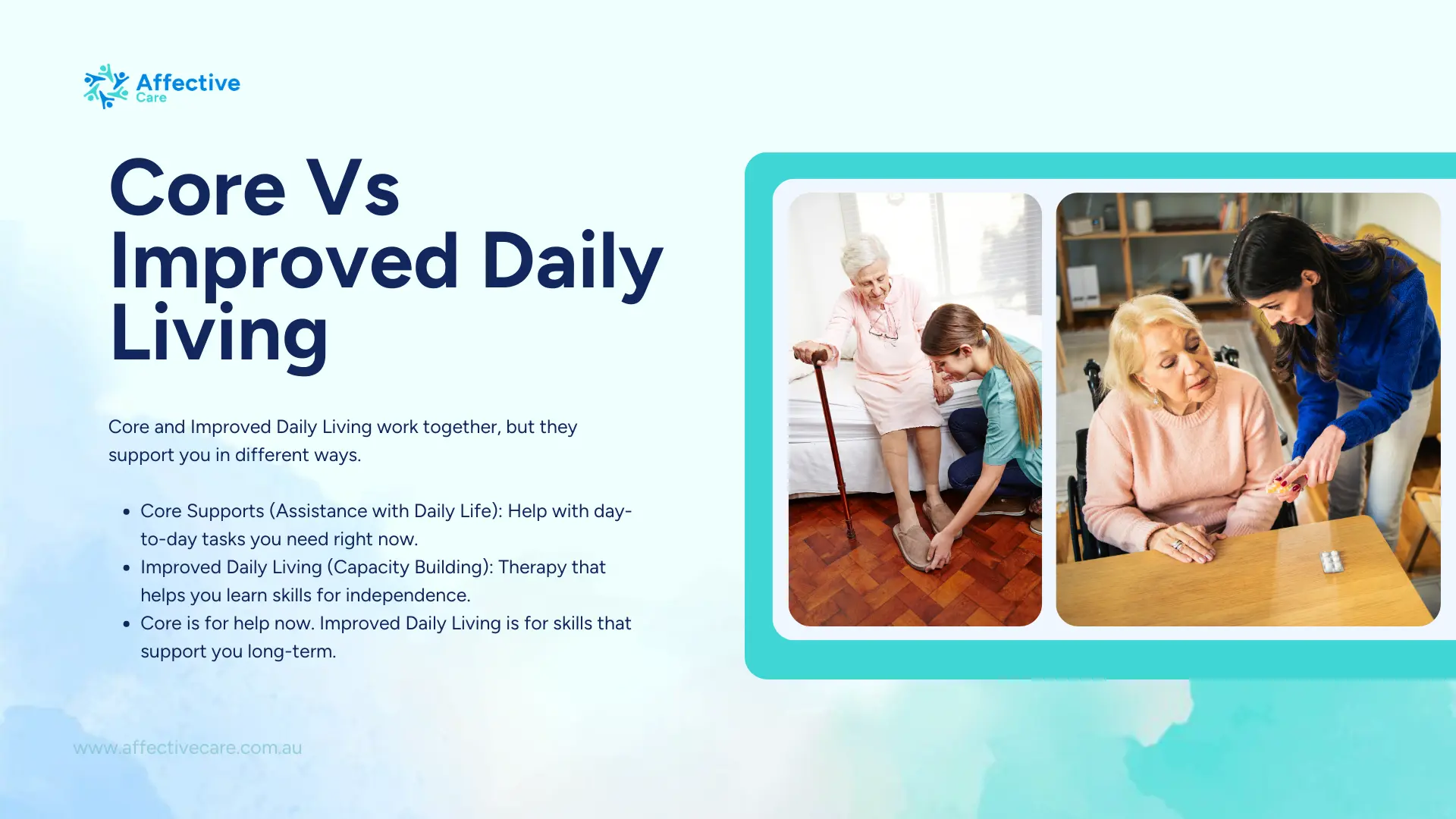
 

Core vs Improved Daily Living


The “Fish” Metaphor: Core Vs. Improved Daily Living 

Understanding the difference between Core Supports and Capacity Building Supports is one of the biggest challenges for NDIS participants, parents, and even new support coordinators.

A simple metaphor makes this clear:

  • Core Supports (Assistance with Daily Life): Giving you a fish. 
    Someone helps you prepare meals, clean your home, or complete daily tasks.
  • Improved Daily Living (Capacity Building / CB Daily Activity): Teaching you to fish. 
    An occupational therapist (OT) teaches you to cook safely, organise your kitchen, or plan your meals independently. 

Comparison Table 

Support Type 

What It Means 

Example 

Purpose 

Core Supports (Assistance with Daily Life) 

Help for daily tasks right now 

A support worker helping you shower or get dressed 

Supports immediate needs 

Improved Daily Living (CB Daily Activity) 

Learning skills for independence 

An OT teaching you to shower safely or build routines 

Builds long-term ability 

Many people feel confused because the tasks look similar, but the funding intentions are very different.  

NDIS Improved Daily Living is all about strengthening your future independence, confidence, and everyday functioning.
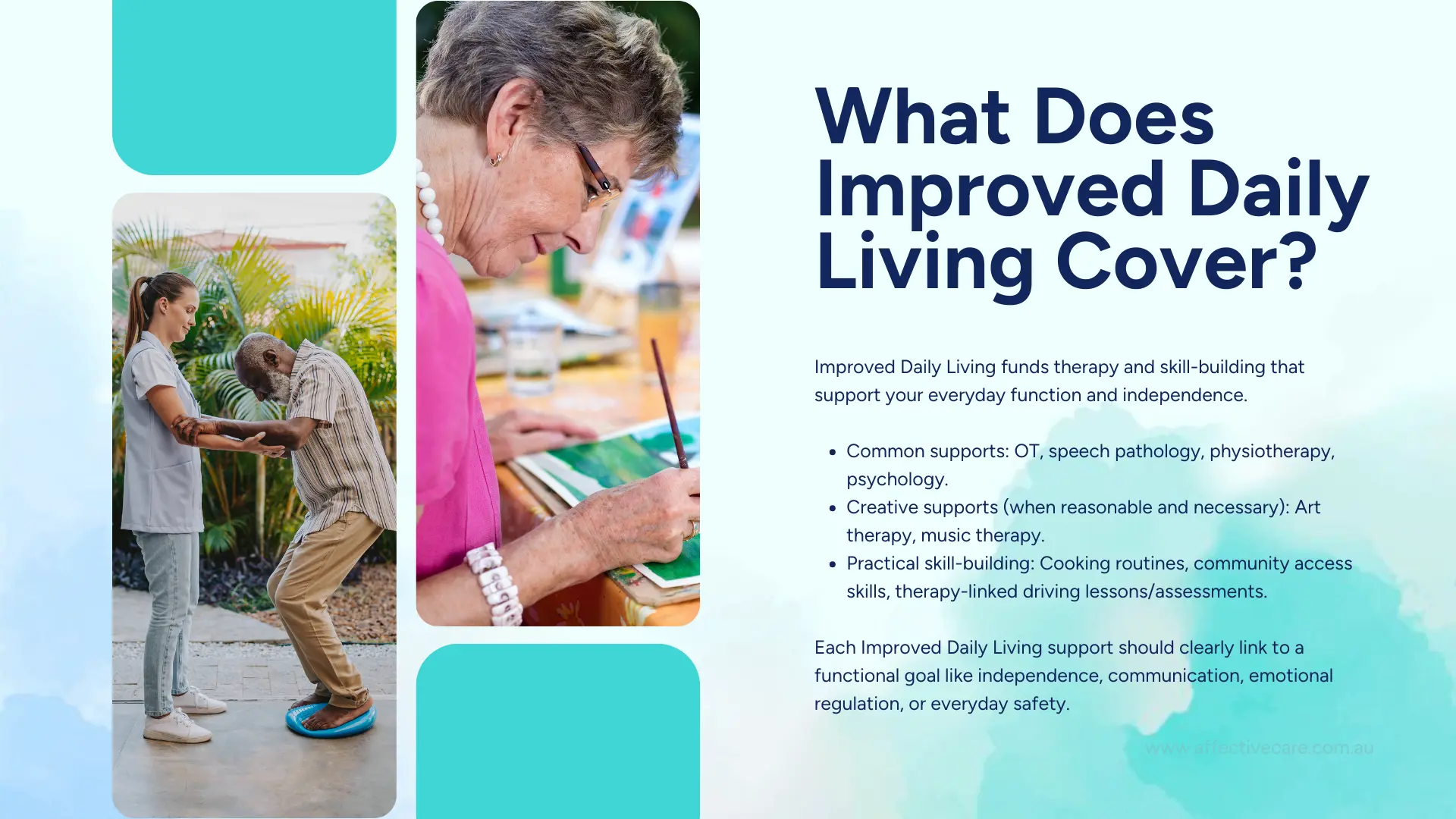
What does NDIS Improved Daily Living Cover


What Does Improved Daily Living Cover?

Most people think of OT, speech pathology, physiotherapy, or psychology under NDIS when they hear Improved Daily Living.  

And yes, these are the classics, but the scope is much broader, and often people don’t realise how creative, meaningful, or life-changing these supports can be. 

When used well, this budget can become a part of your plan that unlocks potential you never realised you had. 

The Classic Supports (The Foundations of Daily Living)

NDIS Occupational Therapy 

OT focuses on building capacity, independence and safety across everyday tasks, including:

  • Cooking and meal planning
  • Showering and personal care routines
  • Time management and executive functioning
  • Sensory regulation strategies
  • Community access skills
  • Home safety and accessibility recommendations

Speech Pathology NDIS 

Speech therapy supports communication, wellbeing and social connection through:

  • Expressive and receptive communication
  • Social interaction and relationship skills
  • Literacy and language development
  • Feeding and swallowing safety
  • Assistive communication (AAC devices) 

Physiotherapy 

Physio helps you move with confidence and safety by improving:

  • Strength, balance and mobility
  • Pain management
  • Functional capacity for daily tasks
  • Coordination and endurance
  • Safe movement strategies 

Psychology Under NDIS 

Psychology supports emotional well-being, behaviour, and mental health through:

  • Emotional regulation strategies
  • Behaviour support
  • Trauma-informed therapy
  • Anxiety management
  • Social confidence and community participation 

The Creative Supports (Often Overlooked but Powerful)

The NDIS recognises therapies that support emotional expression, sensory integration, confidence and communication.

These supports must meet the “reasonable and necessary” criteria, but are increasingly valued for long-term capacity building. 

Art Therapy NDIS

  • Emotional expression
  • Sensory regulation
  • Trauma-informed support
  • Non-verbal communication pathways 

Music Therapy NDIS

  • Emotional connection
  • Memory and rhythm
  • Social participation
  • Confidence and self-regulation 

The Practical Supports (Life Skills That Create Independence)

This training can transform daily life for families who feel unsure how to reinforce therapy.

Specialised Driving Lessons

Therapy-linked driving lessons for people using adaptive controls, needing specialist instructors, or undergoing driver capability assessments. 

NDIS Skill-Building Cooking Classes

Structured, goal-focused cooking programs that build independence, not recreational classes. 

Parent and Carer Training

The NDIS funds training that helps families support therapy goals at home, including:

  • Behaviour support strategies
  • Sensory routines
  • Communication systems
  • Emotional regulation frameworks


The hidden power of reports and assessments


The Hidden Power of Reports & Assessments 

One of the most strategic uses of NDIS Improved Daily Living funding is for reports and assessments, especially the Functional Capacity Assessment (FCA) 

These documents do far more than summarise what happened in therapy; they shape your future plan. 

Strong assessments can be the difference between:

  • Getting the funding you need
  • Being approved for SIL or SDA
  • Accessing assistive technology
  • Receiving increased therapy hours or personal supports


Reports tell the NDIS:

  • What progress you’ve made
  • What your ongoing needs are
  • What supports are essential for safety and independence
  • Why certain supports (e.g., SIL, STA/MTA, ILO) are reasonable and necessary
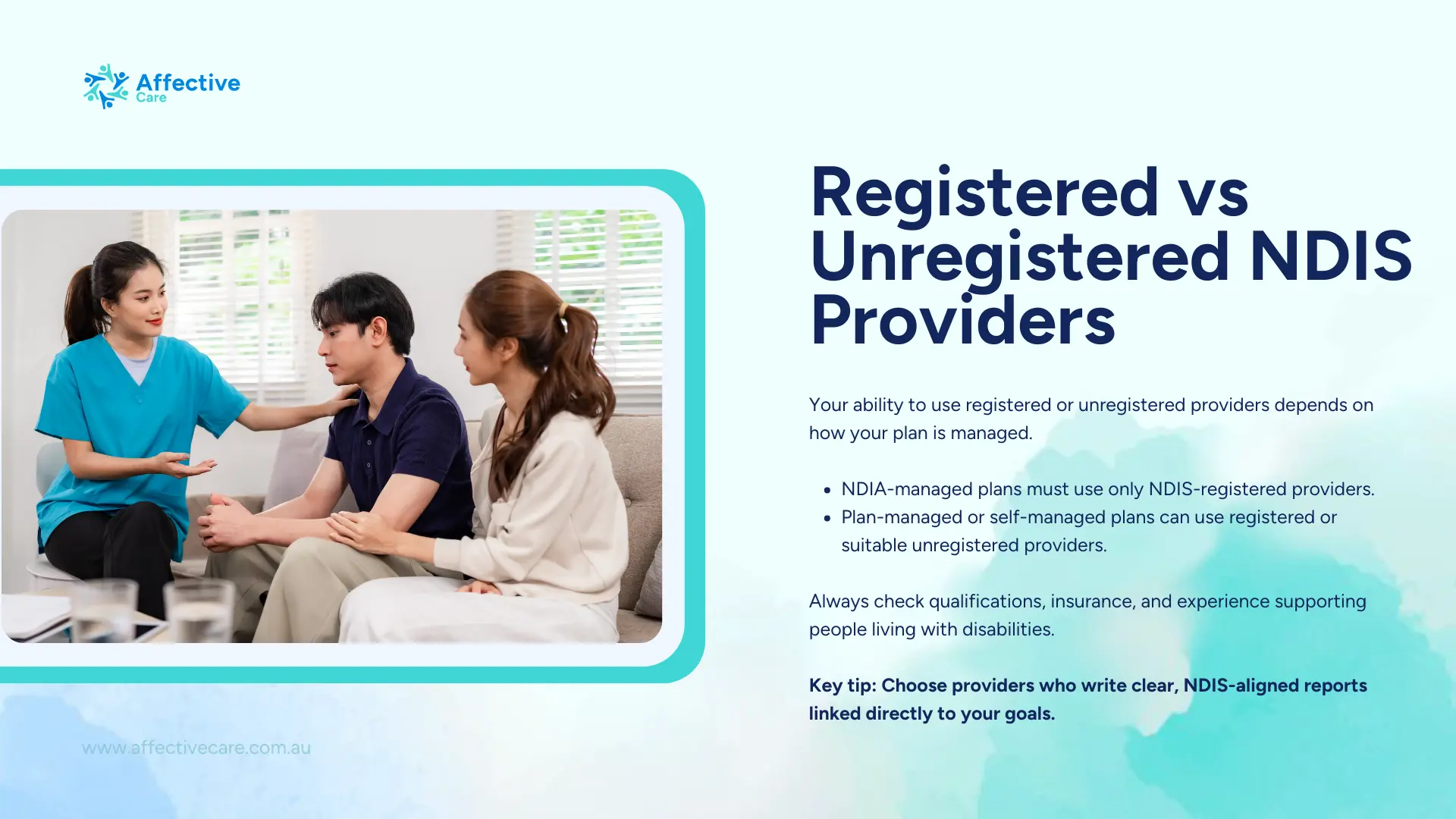
 

Registered vs Unregistered NDIS provider


Can I Use Unregistered Providers? 

One of the most common questions participants ask is whether they must see an NDIS registered provider for therapy under Improved Daily Living.  

The answer depends entirely on how your plan is managed, and knowing the difference helps you make informed, confident choices about your supports. 

Agency-Managed Plans (NDIA Managed) 

If your plan is agency-managed, you can only use NDIS registered providers.

This option suits participants who feel safer knowing the provider has been externally assessed and regulated. 

Registered providers must follow strict quality and safety requirements, including: 

  • Audits under the NDIS Practice Standards
  • Mandatory reporting obligations
  • Verified qualifications and compliance checks 

Plan-Managed or Self-Managed Plans

If your plan is plan-managed or self-managed, you have many more choices.

You can see registered or unregistered providers, as long as they meet NDIS requirements for invoicing and qualifications.

Unregistered does not mean unqualified; many are simply not registered because the audit process is expensive and time-intensive for small providers. 

This flexibility allows you to access: 

  • Highly experienced therapists in private practice
  • Specialists (e.g., trauma psychologists, art therapists) who may not be NDIS registered
  • Culturally aligned providers
  • Therapists with niche skill sets 

Registered Vs. Unregistered Providers: What’s the Difference? 

Feature 

Registered Provider 

Unregistered Provider 

Can NDIA-managed plans use them? 

✔️ Yes 

❌ No 

Can plan-managed/self-managed use them? 

✔️ Yes 

✔️ Yes 

NDIS Quality Audit Required? 

✔️ Yes 

❌ No 

Flexibility in pricing 

Must follow NDIS price limits 

Can charge outside price caps (self-managed only) 

Range of options 

Often limited to larger organisations 

Wider choice, more specialists 

Best for 

Participants seeking structured compliance 

Participants wanting flexibility & personalised options 

What to Look for in Any Provider (Registered or Not)

Choosing the right provider isn’t just about ticking boxes. 

It’s about safety, skill-building, trust, and feeling understood. Here are some steps to guide your decision. 

Step 1: Check Qualifications & Professional Registration

Qualifications matter because the Improved Daily Living funding is about building skills, not just providing support. 

While choosing the right NDIS provider, you should start by confirming the provider’s professional background.

You may ask these questions;

  • Are they a qualified occupational therapist, speech pathologist, psychologist, physiotherapist, or behaviour support practitioner?
  • Are they registered with the relevant professional body (e.g. AHPRA, SPA, OTA, APS)? 

Step 2: Confirm Insurance Cover

Any legitimate provider must hold appropriate insurance. They should have: 

  • Professional Indemnity Insurance: It protects you if a provider makes a professional error that causes harm or financial loss.
  • Public Liability Insurance: It covers injuries or accidents that may happen during sessions or on the provider’s premises.

Step 3: Look for Genuine Disability Experience

Not all therapists understand disability-specific needs. Check whether they have: 

  • Experience supporting autism, intellectual disability, psychosocial disability, sensory processing differences, or developmental delays
  • A trauma-informed or neuro-affirming approach
  • Lived experience or a strong clinical background in disability services 

Step 4: Ask About NDIS-Compliant Reporting

Strong reporting is essential for your plan, not just paperwork.

If a provider can’t explain how their reports help your NDIS goals, that’s a red flag. 

A good provider can clearly explain how their reports support: 

  • NDIS plan reviews and funding renewals
  • SIL or SDA evidence
  • Assistive technology requests
  • Progress tracking and outcome reporting

Step 5: Pay Attention to Emotional Safety & Communication

This step is just as important as qualifications.

The right provider makes learning feel safe, empowering, and collaborative, not stressful or clinical. Ask yourself:

  • Do I feel listened to and respected?
  • Are things explained in plain language?
  • Do they adjust their communication to suit my family member? 

Step 6: Ensure Transparency Around Fees & Billing

Transparency protects your funding and avoids unpleasant surprises. Before starting, everything should be clear.

They should openly explain: 

  • Hourly rates
  • Travel charges
  • Non-face-to-face time
  • Cancellation policies 

Step 7: Confirm a Person-Centred Approach

Improved Daily Living NDIS must align with your goals. A quality NDIS provider will: 

  • Build sessions around your personal goals
  • Adapt strategies to your strengths and environment
  • Avoid one-size-fits-all programs 

Step 8: Extra Safety Checks for Unregistered Providers

If choosing an unregistered provider, be extra thorough. You should always confirm: 

  • Qualifications and professional memberships
  • Insurance coverage
  • Disability-specific experience
  • Understanding of NDIS reporting and evidence requirements 

A Final Reminder

Choosing a provider is not just about credentials. It’s about trust, emotional safety, and feeling genuinely understood. 

At Affective Care, we support participants in finding therapists who align with their communication style, goals, and lived experiences, so that learning feels supportive, respectful, and meaningful

Plan Your Therapy Smartly
Avoid overspending and keep enough for reports and assessments.

NDIS therapy pricing guide


How Much Does Therapy Cost? (The Price Guide) 

NDIS therapy pricing is set by the annual NDIS Pricing Arrangements and Price Limits, which outline the maximum hourly rates providers can charge.  

Most therapies delivered under NDIS Improved Daily Living are capped at approximately $193.99 per hour, depending on the profession and location. 

These price limits ensure fairness, consistency, and transparency across all providers.

Therapists can also charge for travel, non-face-to-face work, and report writing, which are billable under Capacity Building rules. 

Understanding these fees helps you plan your budget, avoid unexpected expenses, and ensure that funding lasts for the full plan period. 

Always check the latest NDIS price guide for therapy rates, as they may change annually. 

NDIS Therapy Pricing Table (Example) 

Item 

Approx. Price Cap (per hour) 

Notes 

Allied Health Therapy (OT, Speech, Physio, Psych) 

$193.99/hr 

Standard rate under Improved Daily Living 

Therapy Assistant Level 1 

$86.79/hr 

Works under therapist supervision 

Therapy Assistant Level 2 

$96.59/hr 

Higher skill level 

Provider Travel 

$193.99/hr (pro-rata) 

Charged for the time spent travelling to you 

Non-Face-to-Face Time 

$193.99/hr 

Includes report writing, notes, planning, and assessment reviews 

Why choose Affective Care for NDIS Improved Daily Living


Why Choose Affective Care for Improved Daily Living?

Choosing the right therapy provider can shape your confidence, independence, and long-term progress.  

At Affective Care, we go beyond standard sessions. We focus on your whole emotional world, your goals, and the life you’re trying to build.  

Our NDIS Improved Daily Living supports are designed to feel empowering, safe, and tailored to the way you learn, communicate and grow. 

Here’s what sets Affective Care apart: 

Emotionally-Centred, Person-First Care

We take time to understand your story, sensory needs, communication style, and strengths, so therapy feels supportive, not overwhelming.

For example, sessions may be adapted with visual supports, slower pacing, or sensory breaks so learning feels calm and achievable.

A Complete Therapy Team Under One Roof 

OT, speech pathology, psychology, behaviour support, art therapy, physiotherapy, therapy assistants and more, working together toward your goals.

This means strategies taught in OT can be reinforced by speech or behaviour support, creating consistency across everyday life.

Clear, NDIS-Compliant Reporting 

We write strong, respectful reports and Functional Capacity Assessments (FCAs) that clearly link progress to your NDIS goals.

For example, reports may include real-world evidence that supports funding for therapy continuity, assistive technology, or increased capacity building supports.

Flexible Sessions at Your Pace 

We offer in-home, online, and community-based support, whatever feels most comfortable and effective for you.

This could look like practising grocery shopping skills in the community or building routines at home where learning naturally happens.

Collaborative Support for Families and Carers 

We work closely with families and carers to ensure strategies feel realistic and sustainable between sessions.

For example, we might help parents implement simple communication tools or sensory routines that reduce daily stress at home.

A Commitment to Long-Term Skill Building 

Every session is designed to build real-world confidence, independence and meaningful daily life skills. 

At Affective Care, we don’t just deliver therapy, we walk beside you with compassion, clarity and heart.

 

Investing in your future self


Investing in Your Future Self 

NDIS Improved Daily Living is more than just a budget category; it’s an investment in your long-term independence, confidence, and wellbeing.  

Whether you’re working towards learning daily skills, communicating more effectively, managing emotions, or strengthening mobility, every hour of therapy contributes to a more empowered future. 

At Affective Care, we see the whole person behind the NDIS plan.

We honour your goals, your pace, and your emotional world. Our therapists walk beside you with empathy, clarity, and heart.

Make the Most of Your IDL Budget
Get simple guidance on how to use your therapy funds wisely.

Start your care
journey with someone
who understands.

FAQ

Improved Daily Living is a Capacity Building budget that funds therapies and assessments to help you build skills, independence and confidence. It covers supports like OT, speech, psychology, physio, assessments and skill-building programs based on your goals and needs.

Any NDIS participant with goals related to independence, communication, emotional regulation, mobility or daily living skills may receive this funding. It’s approved based on evidence showing how therapy supports your functional needs and long-term capacity.

It covers a wide range of therapies such as OT, speech pathology, psychology, physiotherapy, art therapy, music therapy, assessments, reports, and skill-development programs. It also funds training for families and carers when it directly supports your therapy goals.

No, NDIS does not fund diagnosis. It funds ongoing supports only after a disability is confirmed. You’ll need external assessments or medical reports before applying, though the NDIS may fund functional capacity assessments once you’re a participant.

Usually no. However, if therapy with an Exercise Physiologist is part of your plan and requires using a gym setting for functional training, the costs related to therapy delivery may be funded—not general memberships.

Yes, if your plan is self-managed or plan-managed. Agency-managed plans must use registered NDIS providers. Regardless of management type, always check qualifications, insurance and experience supporting people with disability before booking.

You cannot move funds from Core into Capacity Building. If you’re running low, speak with your therapists about pacing sessions, prioritising goals, and ensuring funding remains for reports before your next NDIS plan reassessment.

Yes, it covers progress reports, Functional Capacity Assessments, sensory assessments, behavioural assessments and end-of-plan reports. These documents are essential for future funding requests, SIL/SDA assessments and demonstrating ongoing needs.

Yes, if travel is reasonable and necessary. Therapists can bill for travel time, kms, and non-face-to-face work like planning or report writing. These charges must follow NDIS Pricing Arrangements.

Yes. Parent and carer training is allowed when it directly supports a participant’s therapy goals. This may include behaviour support strategies, communication systems, sensory routines or emotional regulation techniques.

Skill-building supports include cooking programs, household routines, community access skills, communication training, emotional regulation, safety awareness and daily independence tasks guided by therapists or therapy assistants.

Yes, you have full choice and control. You can select therapists who understand your needs, communication preferences, cultural background and goals. If plan-managed or self-managed, you can also choose unregistered providers.

Yes. Therapy assistants can deliver parts of your program under supervision from an allied health professional. This can stretch your budget further while still supporting meaningful progress.

Frequency depends on your goals, functional needs, and available funding. Many people use weekly or fortnightly sessions, while others combine regular therapy with periodic reviews or intensive intervention blocks.

Review your plan with your therapist or plan manager. Check how much remains, estimate upcoming session and report costs, and adjust frequency if needed. Always leave funding for essential end-of-plan assessments.

JOIN OUR NEWSLETTER & GET FREE UPDATES

Core Essentials

Affective Care Instrument
Affective Care New Branded Post
Affective Care AED

Why Affective Care?

Trusted Partner in Your Life Journey

Affective Care Why To Choose Us Image

Care with
Heart

Affective Care offers more than services. We bring genuine compassion and empathy to your NDIS and aged care journey, supporting your goals with kindness, respect and personalised care everyday.

Why Choose Us Affective Care BG

Empowering Your Journey

Your goals matter. Affective Care partners with you to build confidence, independence, and joy in your daily life through tailored NDIS and aged care support, always delivered with heart.

Affective Care Why To Choose Us

Support with
Trust

Trust matters in care. That's why our experienced, compassionate team puts your wellbeing first. Delivering reliable, personalised NDIS and aged care support that makes a real difference every day.

Affective Care Why To Choose Us

Together We
Thrive

At Affective Care, we walk beside ypour goals anmd live life ypour way. Our care empowers people living with disability and older Australians to thrive with confidence.

You May Like

Autism and sign language in Australia

When families search for autism and sign language in Australia, they are usually looking for practical, evidence-informed ways to support communication in everyday life.   Questions about Key Word Sign, Auslan, AAC devices, and NDIS communication supports are common, especially for parents wanting clear guidance tailored to Australian settings.  In Australia, “sign language for autism” often refers to Key Word Sign, […]

......
NDIS Price Guide Rates 2025-2026

If you’re searching for NDIS price guide rates, wondering how much NDIS support services cost, or trying to understand NDIS support worker hourly rates, this complete 2026 guide explains everything clearly. Furthermore, the NDIS sets maximum price limits for supports, but the way pricing works depends on your plan type, service category, location, and time of support.   Below, […]

......
NDIS $15000 Holiday Real or Myth

If you’ve seen posts online about a “$15,000 NDIS holiday,” you might be wondering whether the NDIS actually provides a lump-sum payment for travel.  This article explains the truth behind the $15,000 holiday claim, what the NDIS actually funds for travel and short breaks, and how Short-Term Accommodation (STA) and respite supports work in 2026.  […]

......
How to Choose the Right NDIS Online Psychologist

How to choose the right NDIS online psychologist is one of the most important decisions you can make when using your NDIS funding for mental health support.  The right psychologist can help you build skills, strengthen emotional wellbeing, and work towards meaningful NDIS goals. The wrong fit can leave you feeling unheard or unsure.  This guide […]

......
Jessica Boumelhem

Jessica Boumelhem

Advanced Behaviour Support Practitioner | PBS Manager

NDIS-aligned | Systems-aware | Values-led

Jessica supports individuals and teams through:

Jessica brings over two decades of experience as an educator and a strong foundation in psychology to her role as an Advanced Behaviour Support Practitioner. As PBS Team Manager, she leads with clarity and accountability, ensuring practice aligns with both NDIS standards and ethical, person-centred care.

Her approach is holistic and collaborative, taking into account sensory, environmental, emotional, and relational factors that influence behaviour. Jessica works closely with individuals, families, and support teams to ensure behaviour support plans reflect personal values, lived experience, and real-world contexts.

Jessica’s leadership supports consistency, quality, and confidence across multidisciplinary teams. Her work ensures behaviour support is not just compliant, but compassionate, practical, and genuinely empowering.

Chady Aoun

Chady Aoun

Senior Psychologist and Behaviour Support Practitioner

Multidisciplinary | Assessment-driven | Governance-focused

Chady supports individuals through:

Chady is a highly experienced psychologist whose work spans both public and private sectors. At Affective Care, he delivers integrated behavioural and psychological services, supporting clients of all ages through assessment, therapy, and tailored intervention.

Known for his leadership within multidisciplinary teams, Chady brings structure, insight, and consistency to complex presentations. His expertise includes early intervention, rehabilitation, and complex case management, with a strong commitment to clinical governance and quality care.

Chady’s work is grounded in evidence-based practice and collaborative problem-solving. He supports individuals, families, and teams to navigate complexity with clarity, ensuring care remains ethical, coordinated, and effective.

Miray El-Hachem

Miray El-Hachem

Positive Behaviour Therapist & Registered Counsellor (ACA Level 2)

Holistic | Education-informed | Adolescent-focused

Miray supports individuals through:

Miray brings over 20 years of experience in education into her clinical work as a Positive Behaviour Therapist and Registered Counsellor. Her practice integrates behavioural science with a deep understanding of human development, particularly during adolescence.

She takes a holistic approach, blending structure with empathy to support individuals through behavioural challenges. Miray’s work is grounded in understanding the whole person—their environment, relationships, and emotional world.

Through compassion and insight, Miray supports individuals to develop self-awareness, regulation, and confidence. Her practice reflects a balance of science and humanity, creating space for growth that feels both supported and respectful.

Anabell Beattie-Bowers

Anabell Beattie-Bowers

Registered Psychologist

Relational | Empowerment-focused | Trauma-aware

Anabelle supports children and adults through:

Anabelle works alongside individuals with warmth, curiosity, and a deep respect for each person’s inner world. As a psychologist, she supports both children and adults to strengthen emotional awareness, build resilience, and develop healthier relationships with themselves and others.

Her therapeutic style is tailored and responsive, integrating approaches such as CBT, DBT, and Circle of Security to meet the unique needs of each client. Anabelle places strong emphasis on empowerment—helping people understand their patterns, reconnect with their values, and develop tools that support lasting change.

Anabelle’s work is grounded in safety, collaboration, and trust. She believes therapy is not about fixing people, but about creating space for insight, growth, and meaningful connection—supporting individuals to move forward with greater confidence and emotional clarity.

Brandon Boumelhem

Brandon Boumelhem

Occupational Therapist

Functional independence | Strengths-based | NDIS-focused

Brandon supports individuals through:

Brandon’s work centres on helping people build skills that translate into real, everyday independence. As an Occupational Therapist, he partners with individuals, families, and carers to identify what matters most in daily life and then builds practical pathways toward those goals.

His approach is client-centred and evidence-based, grounded in collaboration and respect for each person’s strengths, environment, and pace. Brandon understands that meaningful outcomes are rarely achieved in isolation, so he works closely with support networks to ensure strategies are realistic, sustainable, and supportive of long-term participation.

Through the NDIS, Brandon supports people to increase autonomy, confidence, and engagement in daily routines. His work is guided by a belief that independence is not about doing everything alone—it’s about having the right supports, skills, and systems in place to live with choice and dignity.

Natalie Soto

Natalie Soto

Registered Psychologist | PBS

Bilingual | Assessment-focused | Person-centred

Natalie supports children and adults through:

Natalie is a bilingual psychologist (English/Spanish) with extensive experience supporting individuals across the lifespan. Her work spans assessment and therapy, with a particular interest in forensic psychology and complex presentations.

She combines evidence-based practice with creativity and flexibility, tailoring interventions to each person’s needs, culture, and goals. Natalie’s approach is grounded in collaboration, ensuring clients feel understood, supported, and actively involved in their care.

Through thoughtful assessment and therapeutic intervention, Natalie supports individuals to build insight, resilience, and meaningful change.

Edric Limbo

Edric Limbo

Speech-Language Pathologist

Rehabilitation-focused | Goal-driven | Community-oriented

Edric supports individuals through:

Edric’s practice is centred on helping people reconnect—both with their communication and with their communities. Working with adults and children, he has a strong interest in stroke rehabilitation and supporting individuals through the process of rebuilding communication skills.

His approach is practical and goal-focused, ensuring therapy remains relevant to everyday life. Edric collaborates closely with clients and families to identify meaningful outcomes and develop strategies that support confidence, participation, and independence.

Edric finds deep fulfilment in witnessing people regain their voice and reconnect with others. His work is guided by respect, patience, and a belief in each person’s capacity for recovery and growth.

Heather Pinel

Heather Pinel

Positive Behaviour Support Practitioner & Registered Counsellor

Trauma-informed | Neuroscience-integrated | Relational

Heather supports individuals through:

Heather is an accomplished Behaviour Support Practitioner with over 20 years of experience supporting children and families. Her work integrates neuroscience, psychological theory, and trauma-informed practice to address complex presentations including attachment trauma, neurodevelopmental differences, and psychosocial disability.

Heather’s approach is collaborative and whole-person focused, ensuring behaviour support plans reflect both evidence and lived experience. She works closely with families and support networks to build strategies that enhance emotional wellbeing, safety, and functional independence.

Her commitment to holistic care ensures individuals receive support that honours identity, relationships, and long-term quality of life.

Charbel Azzi

Charbel Azzi

Speech-Language Pathologist

Communication | Connection | Technology-enhanced

Charbel supports children and adults through:

Charbel’s work is driven by a passion for helping people connect more fully with the world around them. As a Speech-Language Pathologist, he supports both paediatric and adult clients to strengthen communication, social interaction, and participation in daily life.

Since 2022, Charbel has worked across diverse settings, tailoring therapy to each person’s goals, strengths, and communication style. He has a particular interest in integrating technology into therapy, using innovative tools to enhance engagement and outcomes.

Charbel brings curiosity and creativity into his practice, believing communication is not just about words, but about connection, confidence, and belonging. His approach supports individuals to express themselves more clearly and engage meaningfully with others across home, school, work, and community environments.

Nisreen El-Saidi

Nisreen El-Saidi

Positive Behaviour Support Practitioner

Grace Boutros

Grace Boutros

Positive Behaviour Support Practitioner

Shayma Sadek

Shayma Sadek

Positive Behaviour Support Practitioner

Ali Bazzi

Ali Bazzi

Positive Behaviour Support Practitioner

Areeba Chaudhry

Areeba Chaudhry

Casual Allied Health Assistant

Joana Suh

Joana Suh

Paediatric Occupational Therapist

Neurodiversity-affirming | Strengths-based | Mental health-focused

Joana supports children, adolescents, and adults through:

Joana is a Senior Occupational Therapist with a strong commitment to neurodiversity-affirming practice. She works with children, adolescents, and adults experiencing complex emotional and behavioural needs, including bipolar affective disorder and other mental health conditions.

Her experience spans a range of developmental and neurodevelopmental presentations, including autism, ADHD, and Down syndrome. Joana’s clinical focus includes building fine motor, cognitive, sensory, and emotional regulation skills to support participation in everyday life.

Joana is particularly passionate about peer-mediated, client-centred, and strengths-based approaches. Her work supports individuals of all ages to increase social inclusion, functional independence, and overall quality of life.

Rita Dagher

Rita Dagher

Psychologist | Managing Director – Affective Care & Affective Health Services

Humanistic | Systems-led | Clinically grounded

Rita supports individuals, families, and communities through:

Rita works at the intersection of psychology, leadership, and purpose-driven care. As a psychologist and Managing Director, she brings both clinical depth and strategic clarity to every layer of service delivery at Affective Care and Affective Health Services. Her work is grounded in the belief that systems should adapt to people—not the other way around.

With a strong clinical foundation and a humanistic leadership style, Rita ensures that psychological therapy, allied health, and in-home supports remain emotionally intelligent, ethical, and genuinely person-centred. She leads teams with integrity, cultivating cultures of safety, reflection, and excellence so that practitioners can deliver their best work and clients can experience care that feels respectful and empowering.

Rita’s approach bridges therapeutic insight with organisational vision. She understands that sustainable outcomes require both skilled clinicians and well-designed systems. Through thoughtful leadership and clinical oversight, she supports services that respond to complexity with compassion, accountability, and innovation—creating meaningful, long-term impact for individuals, families, and the broader community.