

Understanding the NDIS can feel like learning a new language, especially when you encounter terms like NDIS Improved Daily Living, CB Daily Activity supports, or NDIS capacity building.
Many people hear “Improved Daily Living” and assume it simply means getting day-to-day support.
In reality, its purpose is completely different. NDIS Improved Daily Living sits within Capacity Building and focuses on learning.
It’s the part of your NDIS plan that helps you build new skills, strengthen independence, and move towards the life you want.
The confusion often begins because Improved Daily Living sounds similar to “Assistance with Daily Life”, which is a Core Support.
But, while Core supports help you with tasks you need today, Improved Daily Living helps you learn and grow for tomorrow.
Core is for help now. Improved Daily Living is for skills forever.
This article will help you understand what NDIS Improved Daily Living really supports, how it’s used within your plan, and who it’s designed for.
We’ll also guide you on how to choose the right provider so your funding genuinely supports long-term growth and independence.
The “Fish” Metaphor: Core Vs. Improved Daily Living
Understanding the difference between Core Supports and Capacity Building Supports is one of the biggest challenges for NDIS participants, parents, and even new support coordinators.
A simple metaphor makes this clear:
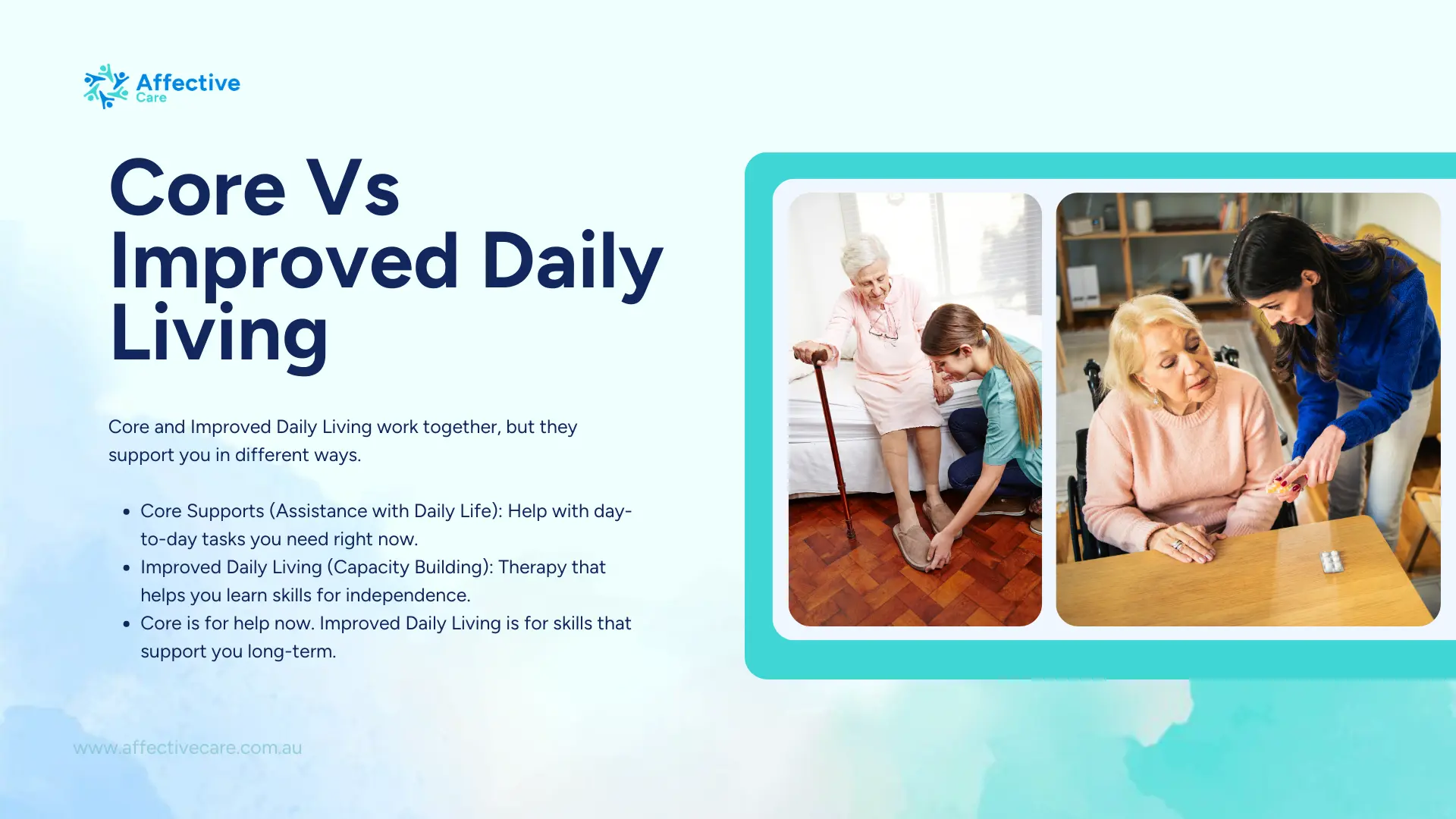
- Core Supports (Assistance with Daily Life): Giving you a fish.
Someone helps you prepare meals, clean your home, or complete daily tasks. - Improved Daily Living (Capacity Building / CB Daily Activity): Teaching you to fish.
An occupational therapist (OT) teaches you to cook safely, organise your kitchen, or plan your meals independently.
Comparison Table
|
Support Type |
What It Means |
Example |
Purpose |
|
Core Supports (Assistance with Daily Life) |
Help for daily tasks right now |
A support worker helping you shower or get dressed |
Supports immediate needs |
|
Improved Daily Living (CB Daily Activity) |
Learning skills for independence |
An OT teaching you to shower safely or build routines |
Builds long-term ability |
Many people feel confused because the tasks look similar, but the funding intentions are very different.
NDIS Improved Daily Living is all about strengthening your future independence, confidence, and everyday functioning.
If you are still learning how disability supports work, our guide on the NDIS explained can help you understand the scheme, eligibility and how participants may access services.
What Does Improved Daily Living Cover?
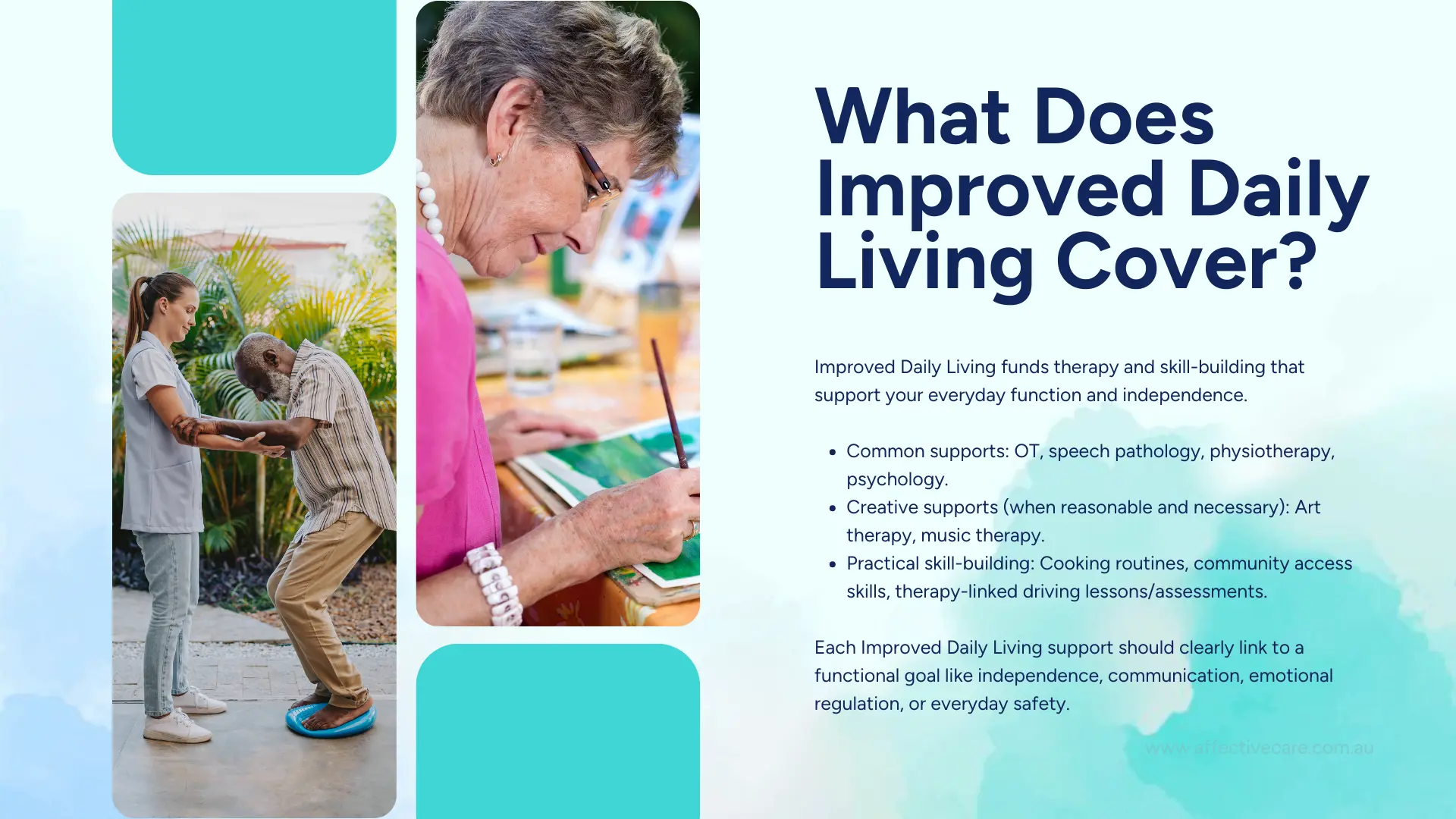
Most people think of OT, speech pathology, physiotherapy, or psychology under NDIS when they hear Improved Daily Living.
And yes, these are the classics, but the scope is much broader, and often people don’t realise how creative, meaningful, or life-changing these supports can be.
When used well, this budget can become a part of your plan that unlocks potential you never realised you had.
The Classic Supports (The Foundations of Daily Living)
NDIS Occupational Therapy
OT focuses on building capacity, independence and safety across everyday tasks, including:
- Cooking and meal planning
- Showering and personal care routines
- Time management and executive functioning
- Sensory regulation strategies
- Community access skills
- Home safety and accessibility recommendations
Many NDIS participants also benefit from Occupational Therapy support, which focuses on building independence, improving functional skills, and helping people manage daily tasks safely at home and in the community.
Speech Pathology NDIS
Speech therapy supports communication, wellbeing and social connection through:
- Expressive and receptive communication
- Social interaction and relationship skills
- Literacy and language development
- Feeding and swallowing safety
- Assistive communication (AAC devices)
Physiotherapy
Physio helps you move with confidence and safety by improving:
- Strength, balance and mobility
- Pain management
- Functional capacity for daily tasks
- Coordination and endurance
- Safe movement strategies
Psychology Under NDIS
Psychology supports emotional well-being, behaviour, and mental health through:
- Emotional regulation strategies
- Behaviour support
- Trauma-informed therapy
- Anxiety management
- Social confidence and community participation
Many NDIS participants also benefit from Psychology services, which provide professional support to help people build emotional resilience, manage stress, and develop strategies that support wellbeing and daily functioning.
The Creative Supports (Often Overlooked but Powerful)
The NDIS recognises therapies that support emotional expression, sensory integration, confidence and communication.
These supports must meet the “reasonable and necessary” criteria, but are increasingly valued for long-term capacity building.
Art Therapy NDIS
- Emotional expression
- Sensory regulation
- Trauma-informed support
- Non-verbal communication pathways
Music Therapy NDIS
- Emotional connection
- Memory and rhythm
- Social participation
- Confidence and self-regulation
The Practical Supports (Life Skills That Create Independence)
This training can transform daily life for families who feel unsure how to reinforce therapy.
Specialised Driving Lessons
Therapy-linked driving lessons for people using adaptive controls, needing specialist instructors, or undergoing driver capability assessments.
NDIS Skill-Building Cooking Classes
Structured, goal-focused cooking programs that build independence, not recreational classes.
Parent and Carer Training
The NDIS funds training that helps families support therapy goals at home, including:
- Behaviour support strategies
- Sensory routines
- Communication systems
- Emotional regulation frameworks
When using Improved Daily Living funding, it can also help to understand what are typical NDIS price guide rates for support services? so you can plan supports more confidently.

The Hidden Power of Reports & Assessments
One of the most strategic uses of NDIS Improved Daily Living funding is for reports and assessments, especially the Functional Capacity Assessment (FCA).
These documents do far more than summarise what happened in therapy; they shape your future plan.
Strong assessments can be the difference between:
- Getting the funding you need
- Being approved for SIL or SDA
- Accessing assistive technology
- Receiving increased therapy hours or personal supports
Reports tell the NDIS:
- What progress you’ve made
- What your ongoing needs are
- What supports are essential for safety and independence
- Why certain supports (e.g., SIL, STA/MTA, ILO) are reasonable and necessary
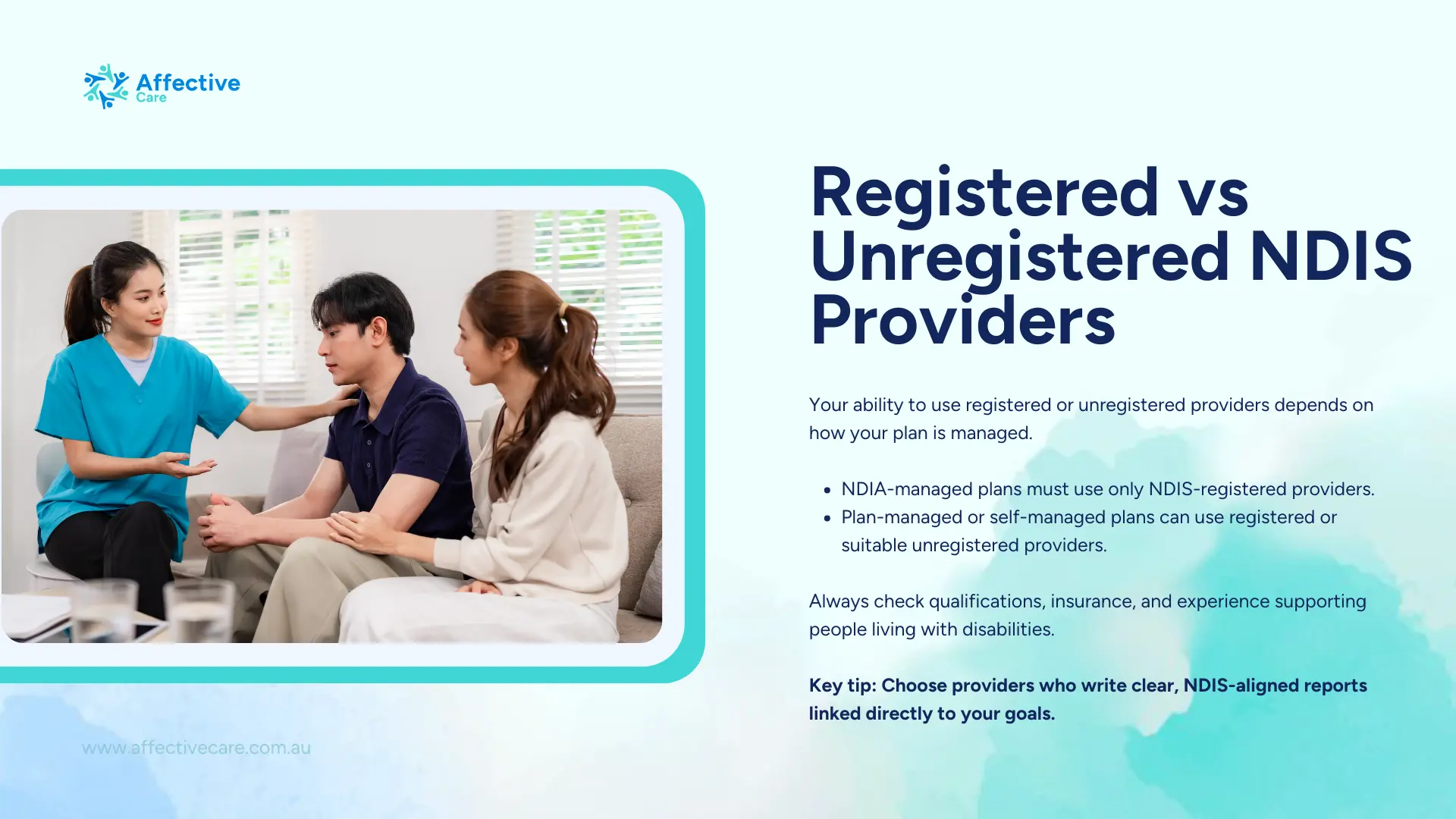
Can I Use Unregistered Providers?
One of the most common questions participants ask is whether they must see an NDIS registered provider for therapy under Improved Daily Living.
The answer depends entirely on how your plan is managed, and knowing the difference helps you make informed, confident choices about your supports.
Agency-Managed Plans (NDIA Managed)
If your plan is agency-managed, you can only use NDIS registered providers.
This option suits participants who feel safer knowing the provider has been externally assessed and regulated.
Registered providers must follow strict quality and safety requirements, including:
- Audits under the NDIS Practice Standards
- Mandatory reporting obligations
- Verified qualifications and compliance checks
Plan-Managed or Self-Managed Plans
If your plan is plan-managed or self-managed, you have many more choices.
You can see registered or unregistered providers, as long as they meet NDIS requirements for invoicing and qualifications.
Unregistered does not mean unqualified; many are not registered because the audit process is expensive and time-intensive for small providers.
This flexibility allows you to access:
- Highly experienced therapists in private practice
- Specialists (e.g., trauma psychologists, art therapists) who may not be NDIS registered
- Culturally aligned providers
- Therapists with niche skill sets
Registered Vs. Unregistered Providers: What’s the Difference?
|
Feature |
Registered Provider |
Unregistered Provider |
|
Can NDIA-managed plans use them? |
✔️ Yes |
❌ No |
|
Can plan-managed/self-managed use them? |
✔️ Yes |
✔️ Yes |
|
NDIS Quality Audit Required? |
✔️ Yes |
❌ No |
|
Flexibility in pricing |
Must follow NDIS price limits |
Can charge outside price caps (self-managed only) |
|
Range of options |
Often limited to larger organisations |
Wider choice, more specialists |
|
Best for |
Participants seeking structured compliance |
Participants wanting flexibility & personalised options |
What to Look for in Any Provider (Registered or Not)
Choosing the right provider isn’t just about ticking boxes.
It’s about safety, skill-building, trust, and feeling understood. Here are some steps to guide your decision.
Step 1: Check Qualifications & Professional Registration
Qualifications matter because the Improved Daily Living funding is about building skills, not just providing support.
While choosing the right NDIS provider, you should start by confirming the provider’s professional background.
You may ask these questions;
- Are they a qualified occupational therapist, speech pathologist, psychologist, physiotherapist, or behaviour support practitioner?
- Are they registered with the relevant professional body (e.g. AHPRA, SPA, OTA, APS)?
Step 2: Confirm Insurance Cover
Any legitimate provider must hold appropriate insurance. They should have:
- Professional Indemnity Insurance: It protects you if a provider makes a professional error that causes harm or financial loss.
- Public Liability Insurance: It covers injuries or accidents that may happen during sessions or on the provider’s premises.
Step 3: Look for Genuine Disability Experience
Not all therapists understand disability-specific needs. Check whether they have:
- Experience supporting autism, intellectual disability, psychosocial disability, sensory processing differences, or developmental delays
- A trauma-informed or neuro-affirming approach
- Lived experience or a strong clinical background in disability services
Step 4: Ask About NDIS-Compliant Reporting
Strong reporting is essential for your plan, not just paperwork.
If a provider can’t explain how their reports help your NDIS goals, that’s a red flag.
A good provider can clearly explain how their reports support:
- NDIS plan reviews and funding renewals
- SIL or SDA evidence
- Assistive technology requests
- Progress tracking and outcome reporting
Step 5: Pay Attention to Emotional Safety & Communication
This step is just as important as qualifications.
The right provider makes learning feel safe, empowering, and collaborative, not stressful or clinical. Ask yourself:
- Do I feel listened to and respected?
- Are things explained in plain language?
- Do they adjust their communication to suit my family member?
Step 6: Ensure Transparency Around Fees & Billing
Transparency protects your funding and avoids unpleasant surprises. Before starting, everything should be clear.
They should openly explain:
- Hourly rates
- Travel charges
- Non-face-to-face time
- Cancellation policies
To better understand financial responsibilities connected to disability supports, read our simple guide to NDIS Taxation.
Step 7: Confirm a Person-Centred Approach
Improved Daily Living NDIS must align with your goals. A quality NDIS provider will:
- Build sessions around your personal goals
- Adapt strategies to your strengths and environment
- Avoid one-size-fits-all programs
Step 8: Extra Safety Checks for Unregistered Providers
If choosing an unregistered provider, be extra thorough. You should always confirm:
- Qualifications and professional memberships
- Insurance coverage
- Disability-specific experience
- Understanding of NDIS reporting and evidence requirements
A Final Reminder
Choosing a provider is not just about credentials. It’s about trust, emotional safety, and feeling genuinely understood.
At Affective Care, we support participants in finding therapists who align with their communication style, goals, and lived experiences, so that learning feels supportive, respectful, and meaningful.

How Much Does Therapy Cost? (The Price Guide)
NDIS therapy pricing is set by the annual NDIS Pricing Arrangements and Price Limits, which outline the maximum hourly rates providers can charge.
Most therapies delivered under NDIS Improved Daily Living are capped at approximately $193.99 per hour, depending on the profession and location.
These price limits ensure fairness, consistency, and transparency across all providers.
Therapists can also charge for travel, non-face-to-face work, and report writing, which are billable under Capacity Building rules.
Understanding these fees helps you plan your budget, avoid unexpected expenses, and ensure that funding lasts for the full plan period.
Always check the latest NDIS price guide for therapy rates, as they may change annually.
NDIS Therapy Pricing Table (Example)
|
Item |
Approx. Price Cap (per hour) |
Notes |
|
Allied Health Therapy (OT, Speech, Physio, Psych) |
$193.99/hr |
Standard rate under Improved Daily Living |
|
Therapy Assistant Level 1 |
$86.79/hr |
Works under therapist supervision |
|
Therapy Assistant Level 2 |
$96.59/hr |
Higher skill level |
|
Provider Travel |
$193.99/hr (pro-rata) |
Charged for the time spent travelling to you |
|
Non-Face-to-Face Time |
$193.99/hr |
Includes report writing, notes, planning, and assessment reviews |
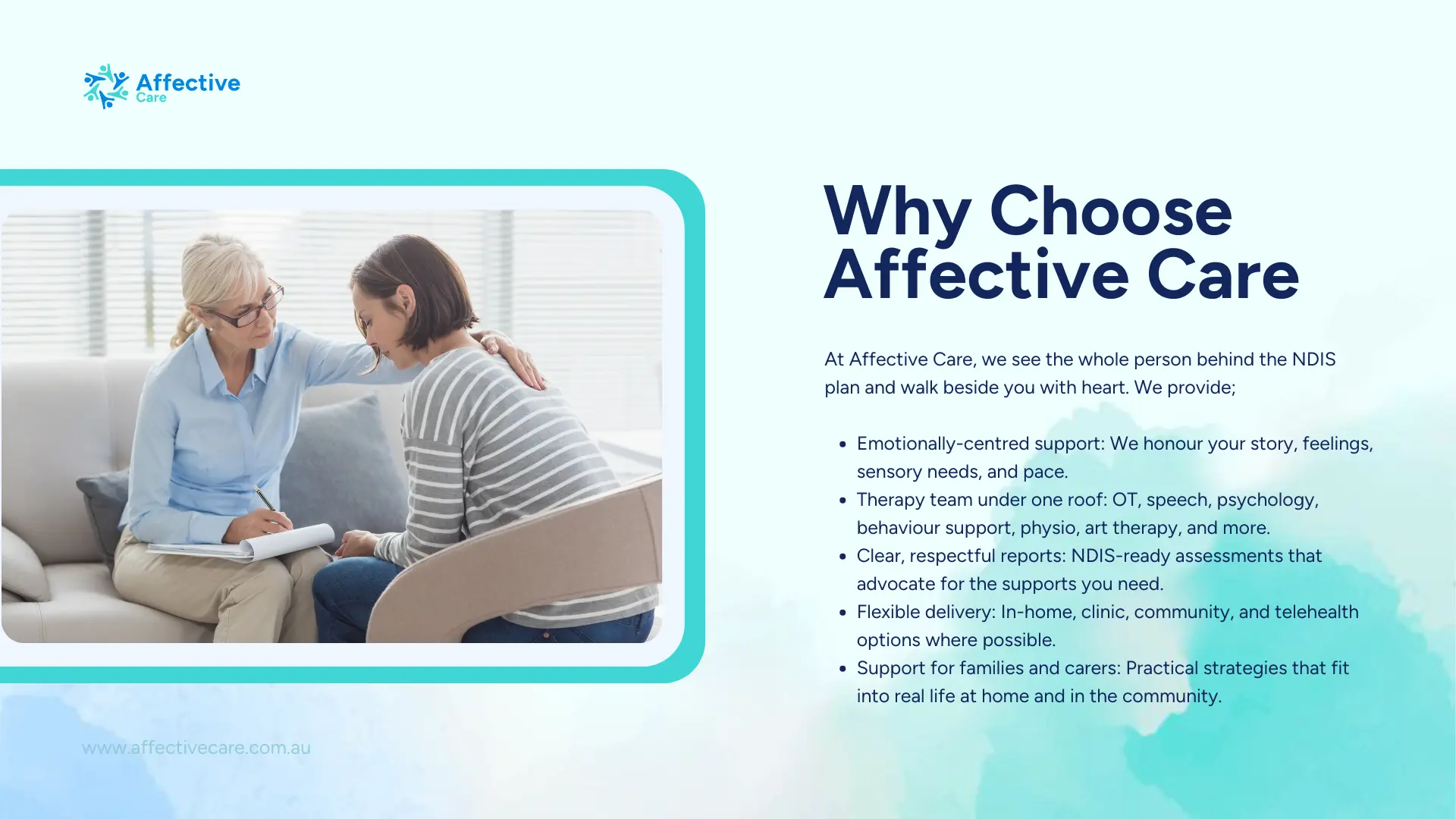
Why Choose Affective Care for Improved Daily Living?
Choosing the right therapy provider can shape your confidence, independence, and long-term progress.
At Affective Care, we go beyond standard sessions. We focus on your whole emotional world, your goals, and the life you’re trying to build.
Our NDIS Improved Daily Living supports are designed to feel empowering, safe, and tailored to the way you learn, communicate and grow.
Here’s what sets Affective Care apart:
Emotionally-Centred, Person-First Care
We take time to understand your story, sensory needs, communication style, and strengths, so therapy feels supportive, not overwhelming.
For example, sessions may be adapted with visual supports, slower pacing, or sensory breaks so learning feels calm and achievable.
A Complete Therapy Team Under One Roof
OT, speech pathology, psychology, behaviour support, art therapy, physiotherapy, therapy assistants and more, working together toward your goals.
This means strategies taught in OT can be reinforced by speech or behaviour support, creating consistency across everyday life.
Clear, NDIS-Compliant Reporting
We write strong, respectful reports and Functional Capacity Assessments (FCAs) that clearly link progress to your NDIS goals.
For example, reports may include real-world evidence that supports funding for therapy continuity, assistive technology, or increased capacity building supports.
Flexible Sessions at Your Pace
We offer in-home, online, and community-based support, whatever feels most comfortable and effective for you.
This could look like practising grocery shopping skills in the community or building routines at home where learning naturally happens.
Collaborative Support for Families and Carers
We work closely with families and carers to ensure strategies feel realistic and sustainable between sessions.
For example, we might help parents implement simple communication tools or sensory routines that reduce daily stress at home.
A Commitment to Long-Term Skill Building
Every session is designed to build real-world confidence, independence and meaningful daily life skills.
At Affective Care, we don’t just deliver therapy, we walk beside you with compassion, clarity and heart.

Investing in Your Future Self
NDIS Improved Daily Living is more than just a budget category; it’s an investment in your long-term independence, confidence, and wellbeing.
Whether you’re working to learn daily skills, communicate more effectively, manage emotions, or strengthen mobility, every hour of therapy contributes to a more empowered future.
At Affective Care, we see the whole person behind the NDIS plan.
We honour your goals, your pace, and your emotional world. Our therapists walk beside you with empathy, clarity, and heart.