




Navigating the NDIS can feel confusing, exhausting, and emotionally heavy, especially when you’re trying to balance everyday life, health needs, and support decisions at the same time.
Many people living with disability, along with their families and carers, describe the system as confusing at first.
NDIS support coordination exists to reduce that pressure.
At its core, support coordination helps people understand their National Disability Insurance Scheme plan, connect with the right services, and feel supported as they build confidence and independence over time. It is not about being told what to do.
It is about having someone walk alongside you, helping make sense of options, solving problems when things don’t go to plan, and supporting your right to choice and control.
This article explains what NDIS support coordination is, how the three levels work, who it’s for, and how it can make day-to-day life feel more manageable and supported.
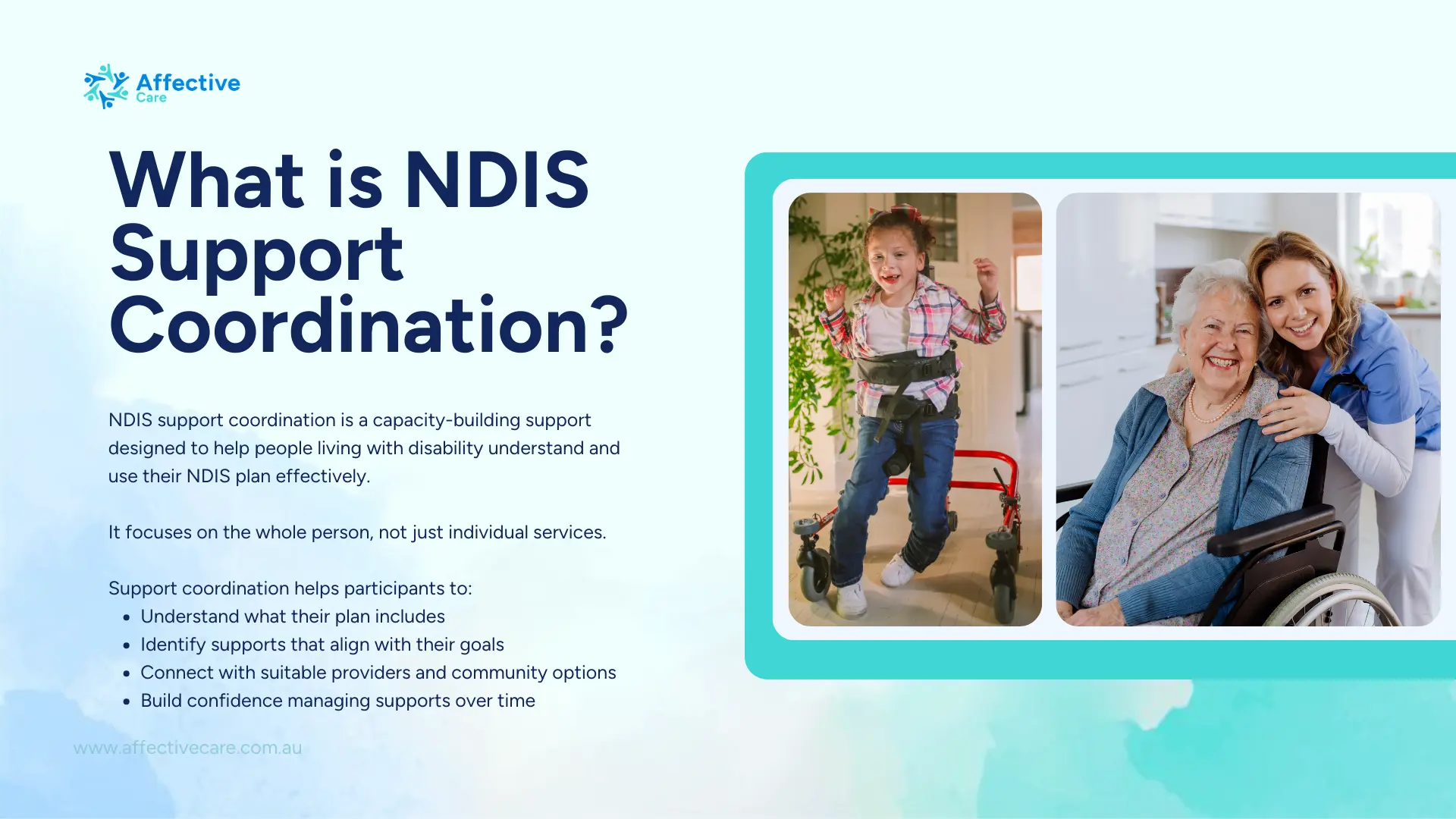
What is NDIS Support Coordination?
NDIS support coordination is a capacity-building support funded to help participants understand, implement, and use their NDIS plan effectively.
Rather than focusing on one specific service, support coordination looks at the whole picture of a person’s life, goals, and supports. A support coordinator works collaboratively with the participant to:
- Understand what their NDIS plan includes
- Identify which supports will best meet their goals
- Connect with suitable providers and community options
- Coordinate supports so they work together smoothly
- Build skills to manage supports with greater confidence over time
Support coordination is not automatically included in every NDIS plan.
It is funded where the NDIA identifies that a person may benefit from additional guidance due to complexity, change, or the need to build capacity.
Importantly, the participant remains an active partner, not a passive recipient.
Support coordination is about strengthening understanding and independence, not taking control away.
Clear billing is an important part of choosing the right provider, so participants may want to read about billable activities in NDIS Support Coordination before agreeing to services.
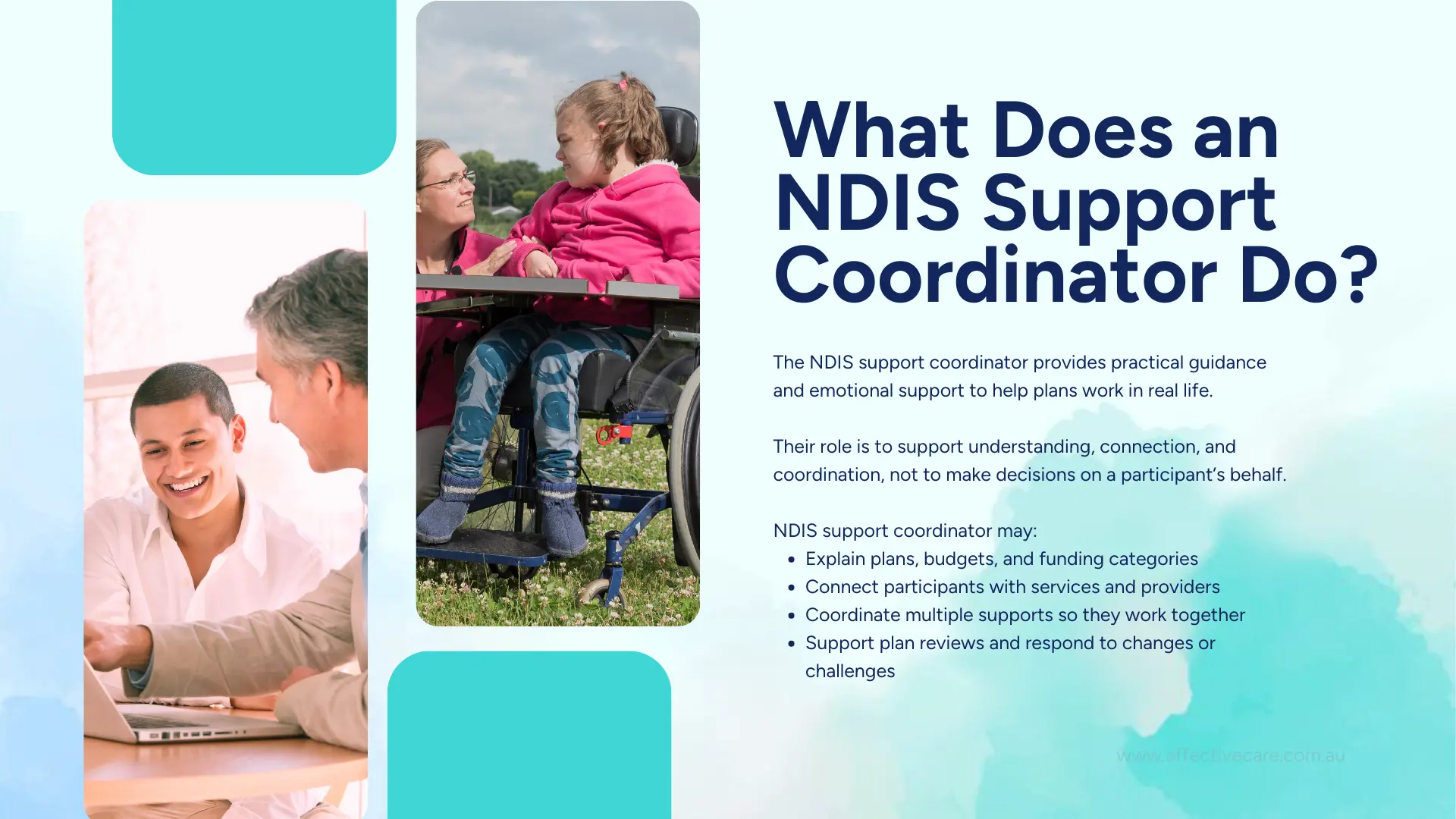
What Does an NDIS Support Coordinator Actually Do?
People often search for “what does a support coordinator do?” because the role can feel unclear at first.
Support coordinators are not NDIA decision-makers and cannot approve funding.
Instead, they act as navigators, connectors, and advocates, helping participants understand their options and make informed choices.
In practice, NDIS support coordinators provide practical, relational, and problem-solving support. Their role may include:
- Explaining NDIS plans, funding categories, and budgets
- Helping participants choose and connect with therapists, support workers, housing services, and community supports
- Coordinating multiple providers so services are aligned and communication is clear
- Supporting participants through changes, challenges, or unexpected situations
- Helping prepare for plan reviews by reflecting on progress, barriers, and future needs
- Building confidence, skills, and knowledge so participants can increasingly self-manage
A Day in the Life of a Support Coordinator
A typical day of NDIS support coordination in practice might begin with a check-in call to a participant who is adjusting to new support workers.
This conversation isn’t rushed. It’s a chance to listen, understand what’s working, and gently address any concerns before they become bigger issues.
Later in the morning, a support coordinator may organise therapy referrals, follow up waitlists, or attend a case meeting with allied health professionals to ensure everyone is working towards the participant’s goals.
They might also help a family understand correspondence from the NDIA, translating complex language into clear, practical next steps.
For example, one participant living with psychosocial disability recently experienced a sudden change in routine when a support worker resigned.
Their support coordinator stepped in to coordinate temporary cover, communicate with the plan manager, and check in emotionally with the participant to reduce anxiety during the transition.
In the afternoon, the coordinator may support someone preparing for a plan review, help problem-solve a service gap, or coordinate supports during a health or housing change.
Throughout the day, the focus remains consistent: listening carefully, responding with empathy, and supporting people living with disability to feel informed, safe, and respected even when things feel uncertain.
If you’re comparing providers and want clearer guidance, read our article on how to choose the right NDIS support coordinator.
The Three Levels of NDIS Support Coordination
The NDIS funds three levels of support coordination, based on a participant’s current needs, complexity, and circumstances.
Funding levels can change over time as a person’s needs, confidence, and circumstances evolve.
Most participants who receive support coordination funding are funded at Level 2.
These levels are:
- Level 1 – Support Connection
- Level 2 – Coordination of Supports
- Level 3 – Specialist Support Coordination
Level 1: Support Connection
Support Connection (Level 1) is an entry-level support designed to help participants begin navigating the NDIS.
This level supports people to develop foundational skills so they can increasingly navigate supports independently. It is not about “low needs”, but about building confidence early.
It focuses on:
- Connecting with informal, community, and funded supports
- Building early confidence, engaging with services
- Strengthening natural supports and community participation
Level 2: Coordination of Supports
Level 2 support coordination, also known as Coordination of Supports, offers more ongoing and practical assistance.
This level is often beneficial for individuals with multiple support needs, families balancing care responsibilities, or participants who desire guidance without compromising autonomy.
It supports participants to:
- Implement and manage their NDIS plan day to day
- Coordinate multiple services and providers
- Navigate challenges, changes, or service disruptions
- Build skills and confidence for future independence
Level 3: Specialist Support Coordination
Specialist Support Coordination (Level 3) is for participants with complex or high-risk circumstances.
This level is usually time-limited and focuses on reducing risk, coordinating complex systems, and supporting stability, safety, and long-term planning.
This may include:
- Housing instability or risk of homelessness
- Justice system involvement
- Complex behaviours of concern
- Hospital discharge or multiple service systems
If you are comparing different types of coordination support, our guide to Level 2 vs Specialist Support Coordination explains which option may better suit a participant’s needs, risks and support environment.
Who is Eligible for NDIS Support Coordination?
Eligibility for NDIS support coordination is assessed on a case-by-case basis.
It is not automatically included in every plan, and funding decisions are based on whether support coordination is considered reasonable and necessary for the individual.
Under current NDIS guidelines, support coordination may be funded when a participant needs help to understand or manage their plan and build capacity over time.
Here are some factors the NDIA commonly considers;
- Complexity of support needs, such as multiple therapies, providers, or funding categories
- Safety, wellbeing, or risk considerations, including vulnerability during change or instability
- Use of multiple service systems, such as health, mental health, housing, or justice
- Limited informal supports, or where family and carers are unable to coordinate supports alone
- Being new to the NDIS, particularly during the first plan
- Major life transitions, such as hospital discharge, changes in housing, schooling, or family circumstances
Support coordination is usually funded under the Capacity Building budget, with the intention of helping participants develop skills, confidence, and knowledge over time.
Participants are encouraged to discuss their circumstances openly during planning meetings or plan reviews, focusing on capacity building, safety, coordination challenges, and long-term independence, rather than entitlement.
You may also find our guide on NDIS and tax considerations helpful for understanding financial responsibilities connected with disability supports and services.
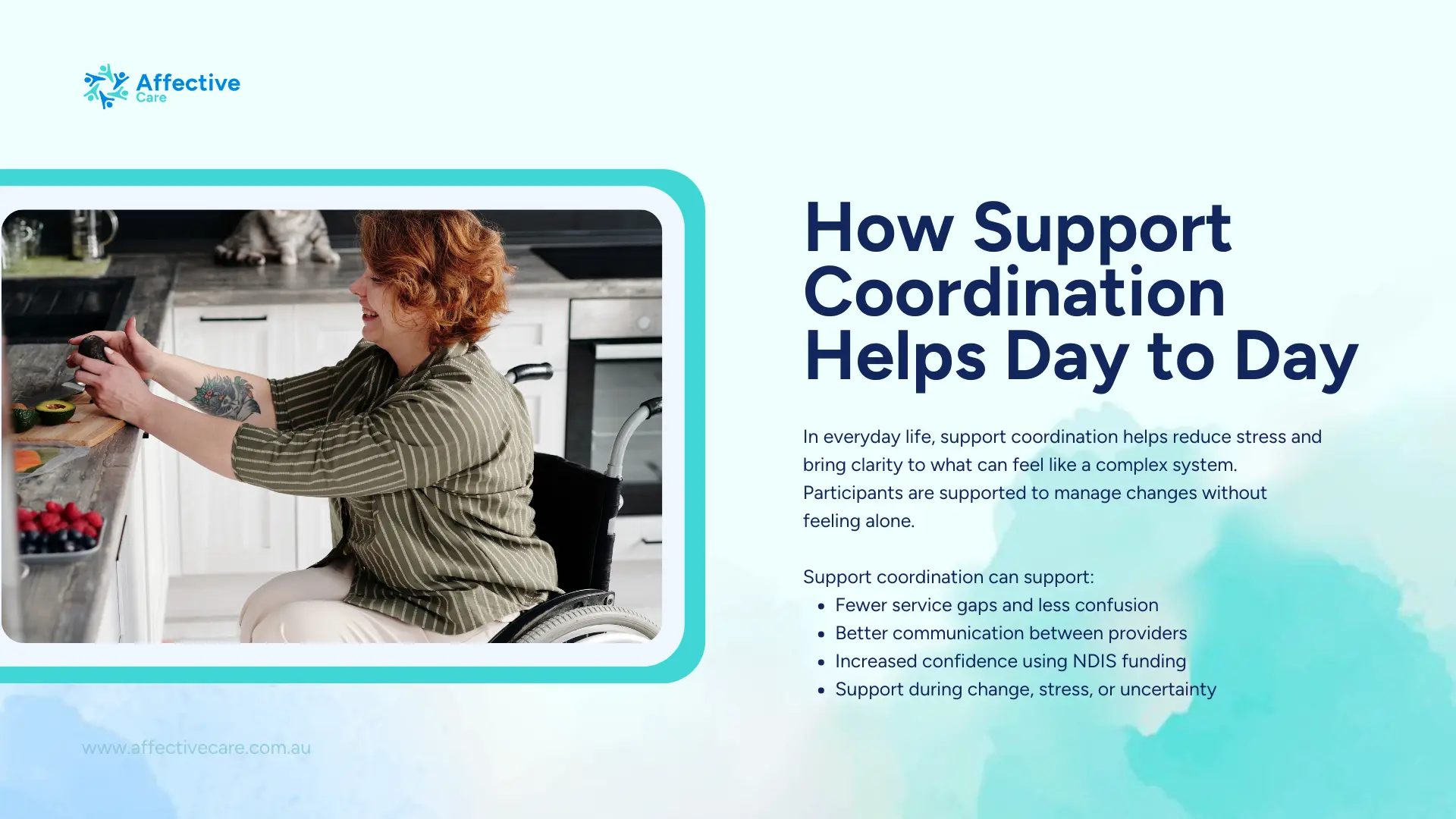
How Support Coordination Helps People Living With Disability Day to Day
In everyday life, NDIS support coordination can ease stress, reduce uncertainty, and bring a sense of clarity to what can otherwise feel like a complex system.
Rather than having to manage everything alone, participants have someone alongside them to help make sense of their plan and respond when things change.
For people living with disabilities, support coordination often means:
- Fewer service gaps and less confusion, because supports are planned and organised together rather than in isolation
- Better coordination between providers, so therapists, support workers, and services are working toward shared goals
- Increased confidence using NDIS funding, with a clearer understanding of what supports can be accessed and how
- Feeling supported during change or uncertainty, such as health changes, provider transitions, or life events
Support coordination can also play an important role in emotional wellbeing.
Having a consistent point of contact who listens, explains options clearly, and responds with empathy can make navigating the NDIS feel less overwhelming.
At its best, support coordination strengthens dignity, autonomy, and quality of life, supporting people to feel informed, respected, and in control of their own supports.
For families and carers, support coordination may mean:
- Less administrative and emotional burden, particularly when juggling care, work, and family responsibilities
- A trusted point of contact when questions arise or situations become complex
- Guidance during plan reviews, transitions, or crises, so families are not left to navigate difficult moments alone
Furthermore, when participants are using Support Coordination funding, it can also help to understand how NDIS Support Coordination hours are planned and used across the life of a plan.
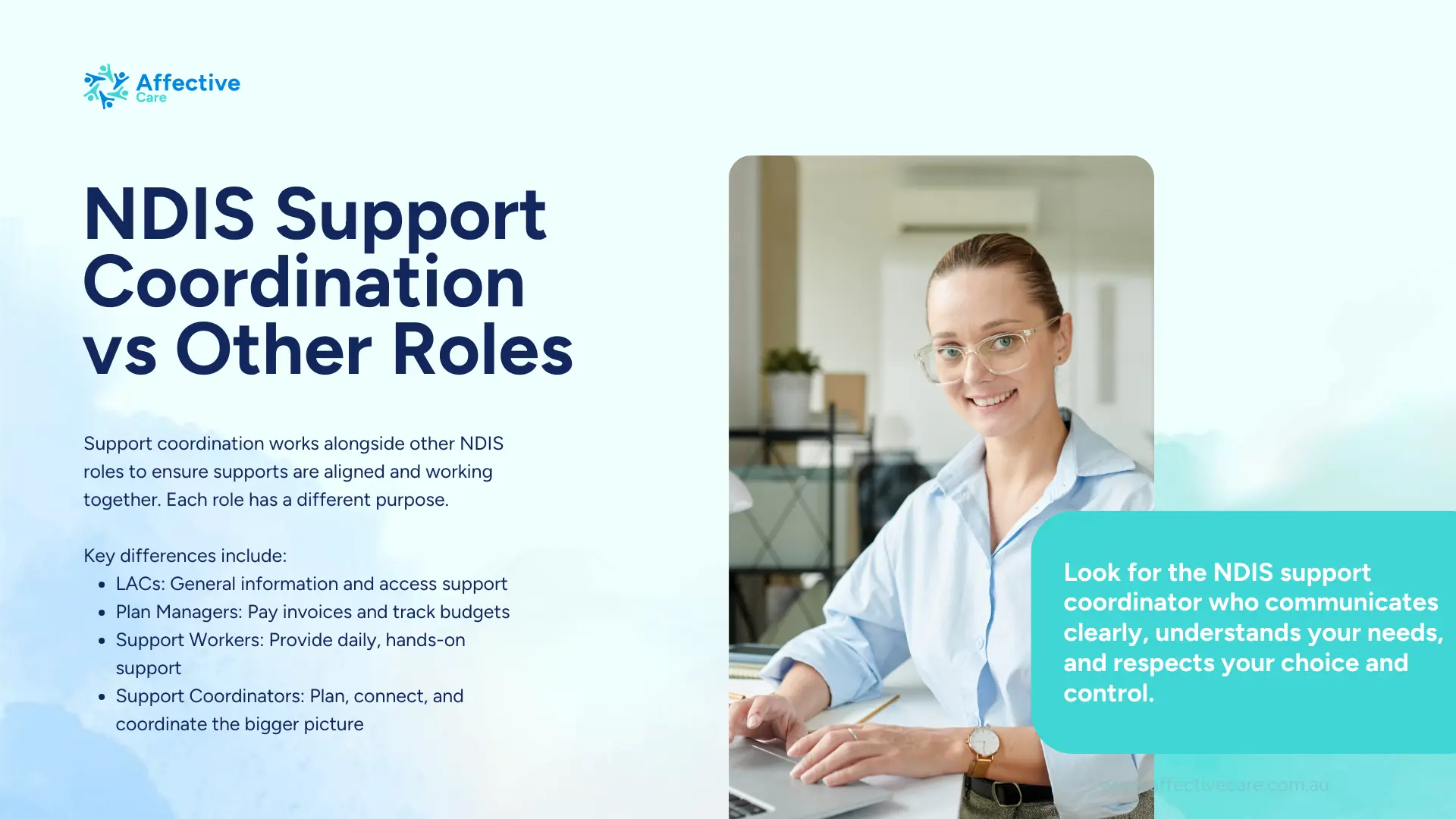
NDIS Support Coordination Vs Other Roles
NDIS support coordination does not replace other roles in the NDIS; it works alongside them, helping everything fit together more smoothly.
Understanding the difference between these roles can reduce confusion and help participants know who to contact for different needs.
Local Area Coordinators (LACs)
Local Area Coordinators support people to access the NDIS and understand general information about the scheme.
They are often involved when someone first applies to the NDIS or during planning and plan reviews.
For example, an LAC may help a participant understand the structure of their plan or explain how to request a review.
However, LACs do not usually provide ongoing, individual support coordination, manage service connections long term, or assist with day-to-day problem-solving.
Plan Managers
Plan managers support participants by paying provider invoices, tracking spending, and helping ensure budgets are used correctly.
For example, if a participant receives invoices from multiple providers, a plan manager helps process payments and provides budget reports.
While they can explain how funds are being used, plan managers do not usually coordinate services, arrange providers, or support planning decisions.
Support Workers
Support workers provide hands-on, day-to-day assistance, such as help with personal care, community access, or daily routines.
For example, a support worker may assist someone to attend appointments or participate in community activities.
A support coordinator, on the other hand, helps organise and coordinate those supports, ensuring the right services are in place and working toward the participant’s goals.
When using support coordination funding, it can be useful to review NDIS support service rates so participants can plan their supports more clearly.
How to Choose an NDIS Support Coordinator?
Choosing an NDIS support coordinator is a personal decision.
The right fit can make your plan feel clearer and more manageable, and you always have the right to change if it doesn’t feel supportive.
Step 1: Get clear on what you need help with
Before you contact providers, write down what you want support with, such as:
- Understanding your plan and budgets
- Finding reliable providers (therapy, support workers, housing, community programs)
- Coordinating multiple supports and appointments
- Help during transitions (new plan, moving house, hospital discharge)
Step 2: Check the level of support coordination in your plan
A good provider will explain what your funded level means and what they can realistically support you with.
You should look for:
- Level 1 – Support Connection
- Level 2 – Coordination of Supports
- Level 3 – Specialist Support Coordination
Step 3: Shortlist 2–3 providers
When comparing the providers you should look for:
- Experience supporting people with similar needs or life situations
- Strong knowledge of local services and options
- A calm, respectful communication style
- A genuine commitment to choice, control, and dignity
Step 4: Ask practical “fit” questions (don’t feel awkward; it’s your right)
Here are strong questions to ask:
- How often will you check in with me, and how do you communicate (call, text, email)?
- How quickly do you usually respond if something changes or a service falls through?
- How do you help with plan reviews (evidence, reports, progress notes, outcomes)?
- How do you support me to build confidence and independence over time?
- Will you involve my family/carer if I want that and respect my privacy if I don’t?
- Do you have experience with my type of support needs (e.g., housing, psychosocial, behaviours of concern)?
Step 5: Look for Values, not Just Availability
A quality support coordinator should feel:
- Respectful (doesn’t speak over you)
- Person-centred (your goals lead the plan)
- Transparent (clear about what they can/can’t do)
- Reliable (keeps agreements, follows through)
Step 6: Confirm the basics before you start
Before signing a service agreement, check:
- Fees and how they charge (hourly, travel, reporting time)
- Cancellation policy
- How can you pause or end the service
- How your information is kept private
Step 7: Start small and review after a few weeks
After the first few weeks, ask yourself:
- Do I feel listened to and respected?
- Am I clearer about my plan than before?
- Are supports becoming more organised and consistent?
Step 8: Remember: you can change support coordinators
You have the right to change coordinators if the relationship doesn’t feel safe, respectful, or helpful.
A good provider will support your choice, not take it personally.
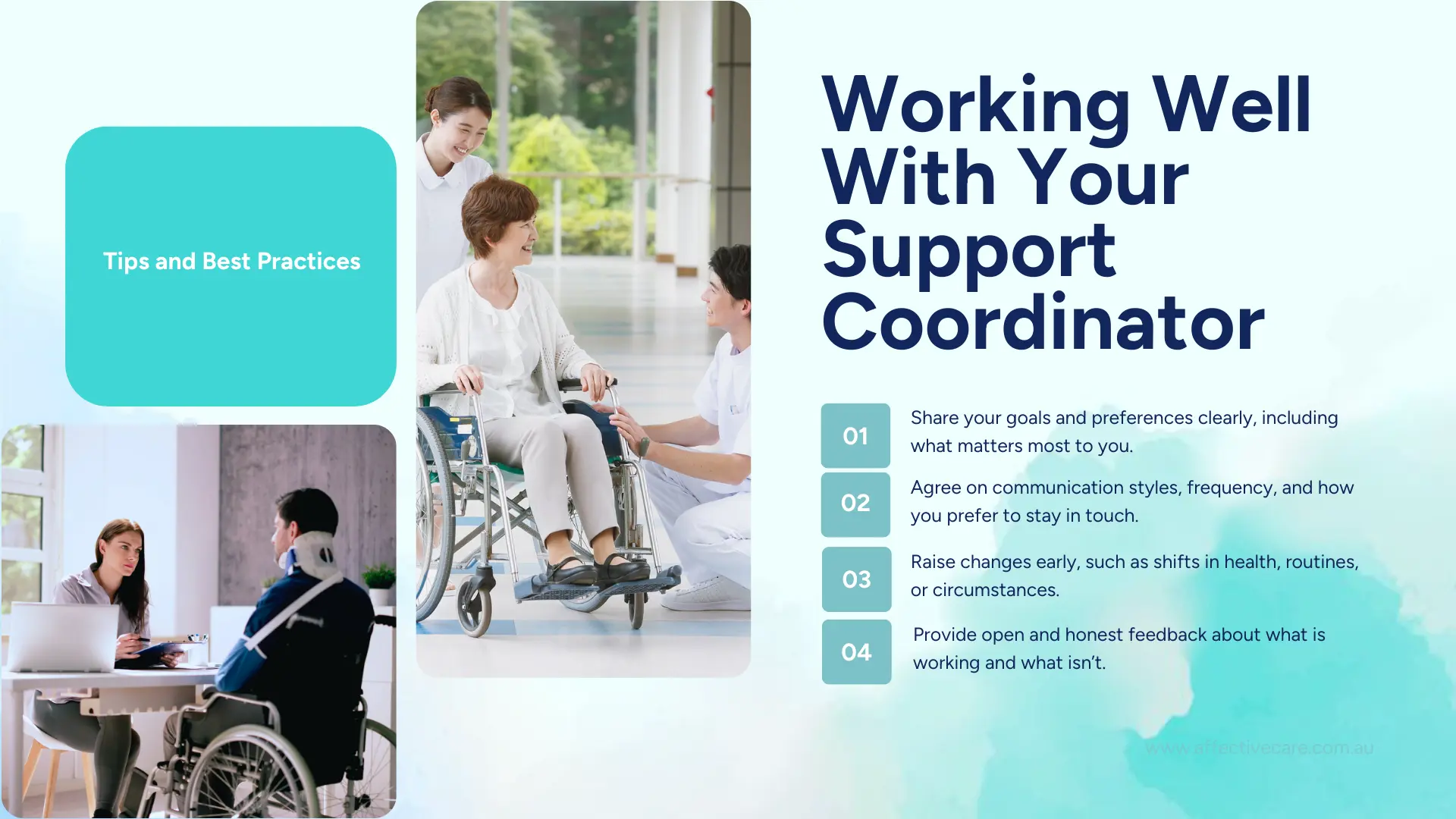
Working Well With Your Support Coordinator
Support coordination works best when it is built on partnership, trust, and mutual respect.
While a support coordinator brings knowledge of the NDIS and service systems, participants bring lived experience, personal goals, and insight into what works best for them.
Helpful ways to build a strong working relationship include:
Sharing your goals and preferences clearly
Let your support coordinator know what matters most to you, what you want to work towards, and what support feels helpful. Your goals can change over time, and that’s okay.
Agreeing on communication styles early
Talk about how often you’d like to be contacted and whether you prefer phone calls, emails, or messages. Clear expectations help communication feel safe and predictable.
Noting changes in your life as they happen
Changes in health, routine, housing, or relationships can affect your supports. Sharing these early allows your support coordinator to respond before challenges grow.
Providing feedback openly and honestly
Let your support coordinator know what’s working well and what isn’t. Feedback is part of your right to choice and control, and good coordinators welcome it.
Staying involved in decisions
Support coordinators can explain options and provide guidance, but decisions remain yours.
They should support you to understand the pros and cons of different choices, respect your preferences, and follow your direction even when your goals or needs change over time.
Moreover, to make the most of Support Coordination, it is also helpful to understand how NDIS Support Coordination hours are used and managed so each task stays connected to the participant’s goals.

How Affective Care Supports NDIS Support Coordination
At Affective Care, NDIS support coordination is grounded in emotional intelligence, respect, and genuine partnership.
We understand that navigating the NDIS is rarely just about funding or services; it often comes with stress, uncertainty, and emotional weight for participants and families alike.
Our approach begins with listening. We take the time to understand each person’s story, goals, cultural background, and emotional needs before moving into planning or coordination.
This helps ensure supports are not only appropriate on paper, but also feel right in everyday life.
Our support coordination focuses on:
- Listening first, supporting second, so people feel heard and understood before decisions are made
- Clear, compassionate communication, using plain language and checking in regularly to avoid confusion
- Respect for choice, control, and lived experience, recognising that participants are the experts in their own lives
- Coordinating supports in a way that feels safe and manageable, without rushing or overwhelming participants
- Supporting participants to build confidence over time, so they feel more capable of navigating their supports independently
We work collaboratively with participants, families, carers, and other providers, recognising that strong relationships and clear communication help supports work better together.
Throughout this process, we remain guided by dignity, trust, and participant empowerment, always keeping the participant’s voice, pace, and goals at the centre of support coordination.
Support Coordination as Part of Your NDIS Path
If you’re preparing for a new NDIS plan, it can be helpful to discuss support coordination during your planning meeting and share any challenges or barriers you’re experiencing.
If you already have a plan, you can request a review if your circumstances have changed or if managing supports feels harder than it used to.
When discussing support coordination, focusing on capacity building, safety, and long-term independence can help planners understand how this support may benefit you.
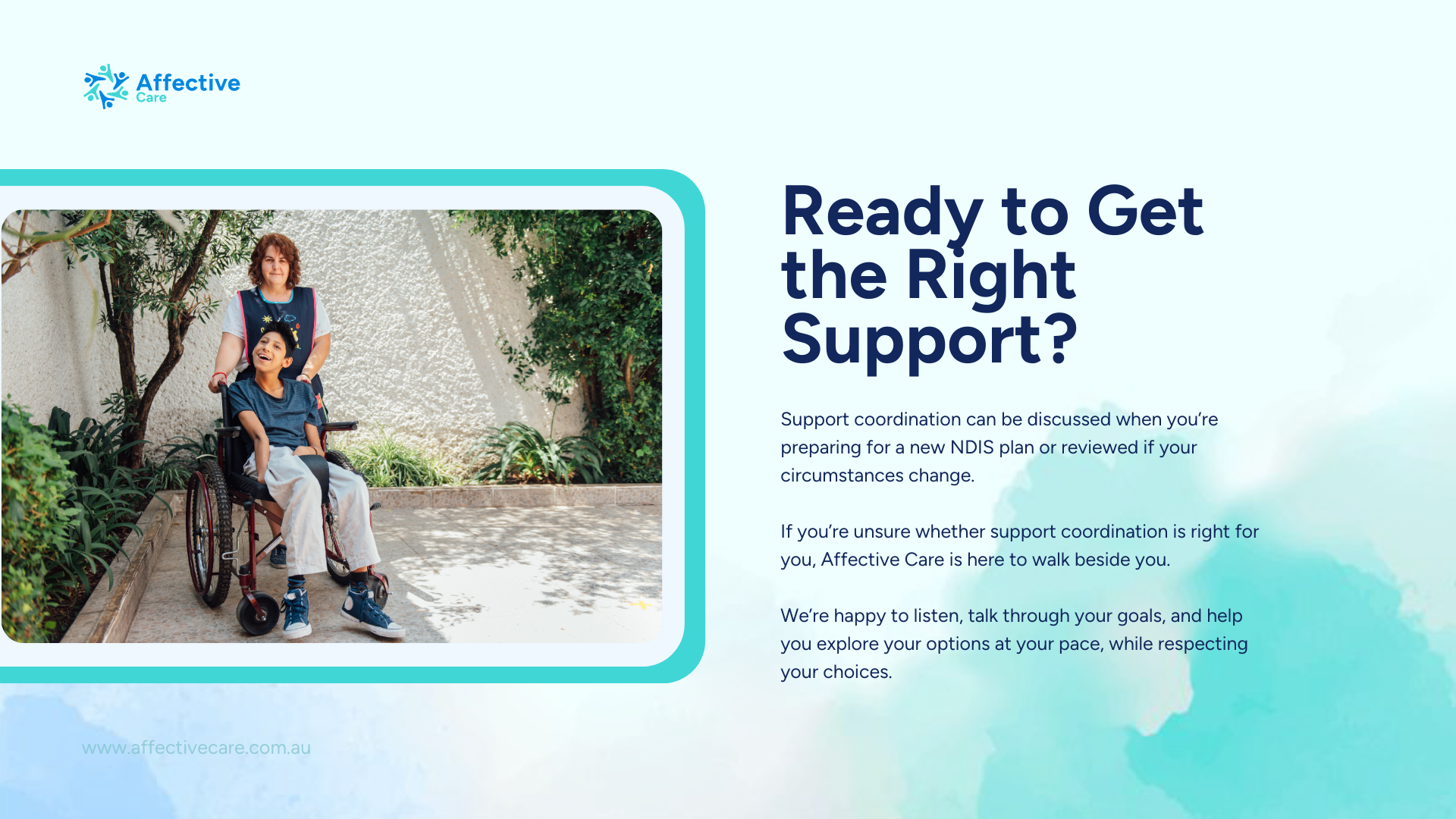
If you’re unsure whether NDIS support coordination is the right fit for you, Affective Care is here to walk beside you.
We’re happy to take the time to listen, talk through your goals, and help you explore your options at your own pace with respect for your choices and what matters most to you.


