Compassion fatigue is the physical and emotional exhaustion that builds up when you care for people who are struggling, day after day, without enough time to recover. For NDIS support coordinators, it often shows up as dread before calls, numbness towards participants' stories and trouble switching off. It is common, it is not a personal failing, and it can be prevented and treated.
This guide explains the signs, causes and recovery steps for compassion fatigue in NDIS support coordinators, and what providers can do to prevent it.
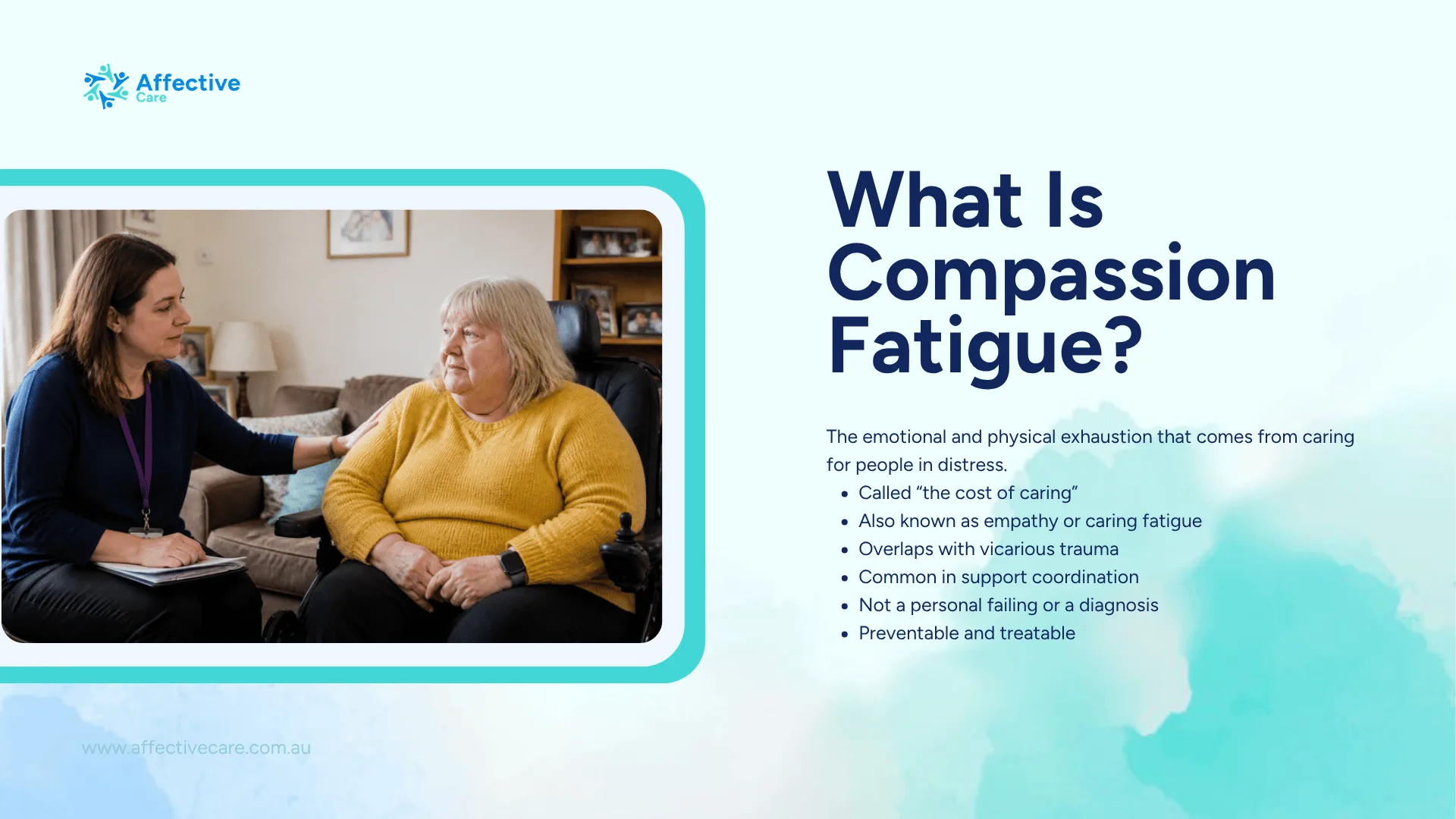
What is compassion fatigue?
Compassion fatigue is a state of exhaustion that comes from repeatedly absorbing other people's distress. Trauma researcher Charles Figley, who made the term widely known, described it as the "cost of caring" for people in pain. It affects your body, your emotions and how you relate to others.
Researchers often use compassion fatigue, secondary traumatic stress and vicarious trauma as overlapping terms. You may also hear it called empathy fatigue or caring fatigue. Whatever the label, the idea is the same: helping people through hard times takes something out of you, and that needs to be put back.
Compassion fatigue is not a diagnosis. It is a work-related risk, much like a back injury is a risk for people who lift all day. That framing matters because it puts prevention on the workplace, not just on the individual.
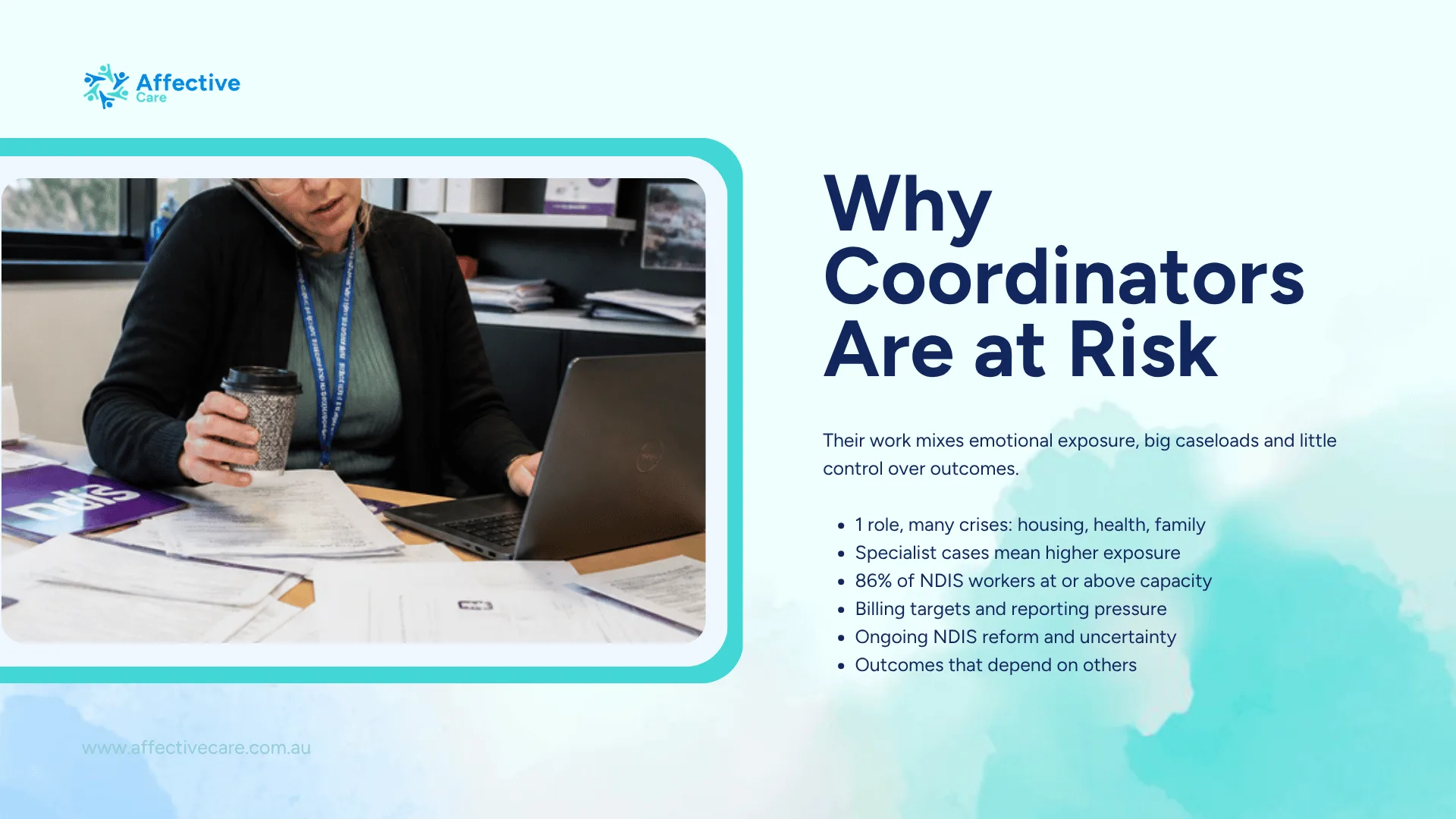
Why are NDIS support coordinators at risk of compassion fatigue?
NDIS support coordinators are at risk because their work combines emotional exposure, high caseloads and limited control over outcomes. A support coordinator helps participants understand and use their NDIS plan, connect with providers and build their own skills. You can read more about the role in our guide to NDIS support coordination and in what a support coordinator actually does.
Constant exposure to other people's crises
Coordinators hear about housing breakdowns, family conflict, hospital admissions and safety risks every week. Many participants have experienced trauma. Listening closely and caring about the outcome is part of doing the job well, and that is exactly what makes compassion fatigue possible.
Specialist support coordination carries a heavier load
Specialist support coordination (Level 3) is for participants with complex needs, such as high-risk situations, justice involvement or significant mental health conditions. These coordinators often manage crisis responses and difficult conversations, so their exposure to distress is higher. Our explainer on the levels of NDIS support coordination sets out the differences.
Workload, billing pressure and system change
Coordinators juggle many participants, billable-hour targets, reports and plan reviews. Research by the Australian Government's Behavioural Economics Team (BETA) found that 86% of NDIS workers surveyed said their workload was at or above capacity. Ongoing reforms add uncertainty too; see our summary of NDIS changes for support coordinators in 2026.
Caring about outcomes you can't control
A coordinator can do everything right and still watch a participant wait months for a plan review or lose a provider. Feeling responsible for outcomes that depend on the NDIA, providers or housing markets is a strong driver of moral distress and fatigue.
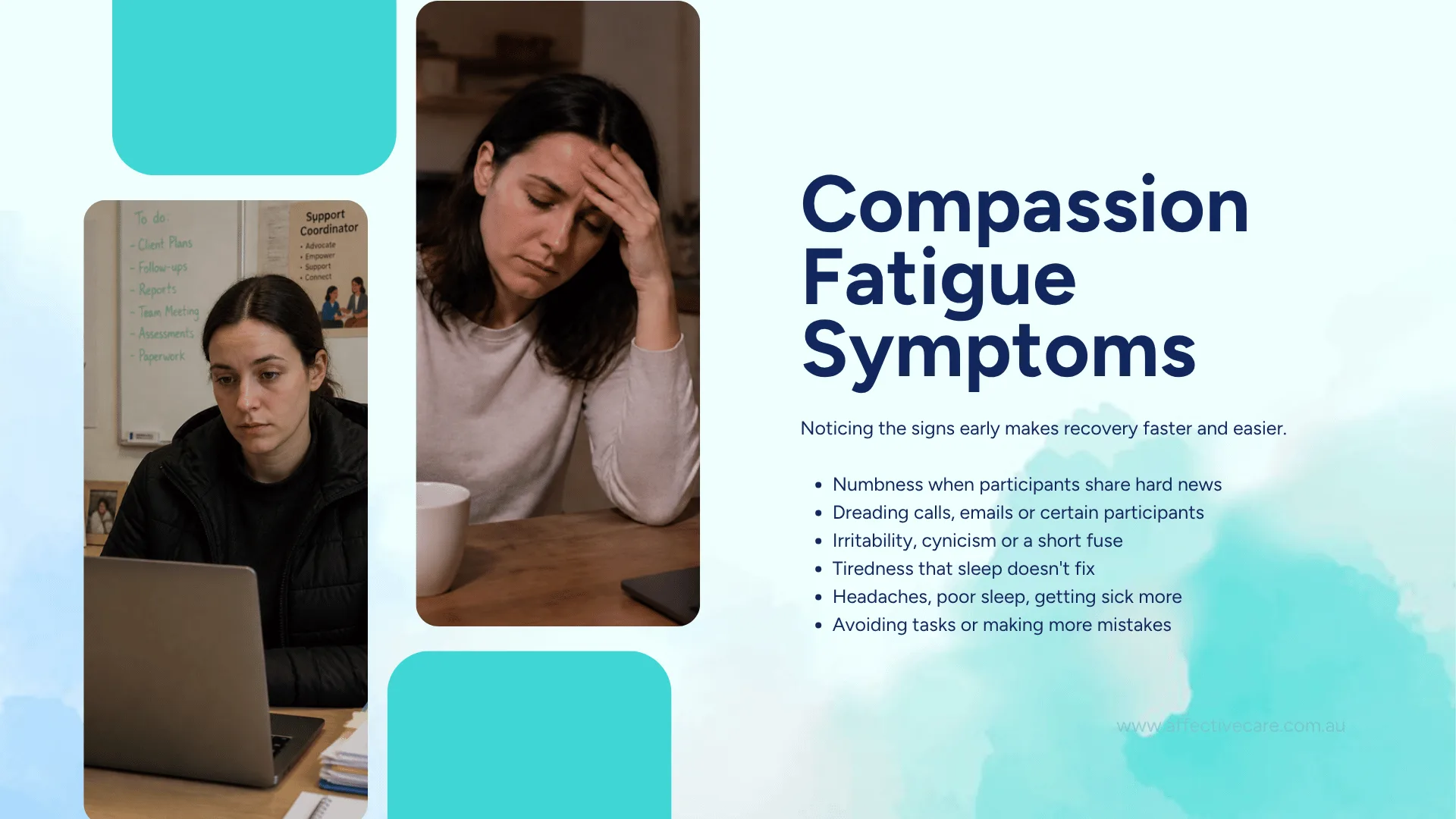
What are the signs and symptoms of compassion fatigue?
The most common compassion fatigue symptoms are exhaustion, emotional numbness, irritability and pulling away from people. Signs usually creep in over months, so they are easy to miss or explain away as "just a busy patch".
Emotional signs
- Feeling numb or detached when participants share hard news
- Dreading the phone or your inbox
- Irritability, cynicism or a short fuse with colleagues and family
- Feeling hopeless, or that nothing you do makes a difference
- Guilt when you take time off
Physical signs
- Tiredness that sleep doesn't fix
- Headaches, tension or stomach problems
- Trouble falling or staying asleep
- Getting sick more often
Behavioural signs at work
- Avoiding certain participants or putting off difficult calls
- Making more mistakes or missing deadlines
- Working longer hours but getting less done
- Leaning more on alcohol, food or screens to unwind
Signs of vicarious trauma
Vicarious trauma is a deeper change in how you see the world after repeated exposure to other people's trauma. Signs include intrusive images from participants' stories, feeling unsafe, and losing trust in people. If these signs appear, speak with a GP or psychologist rather than waiting for them to pass.
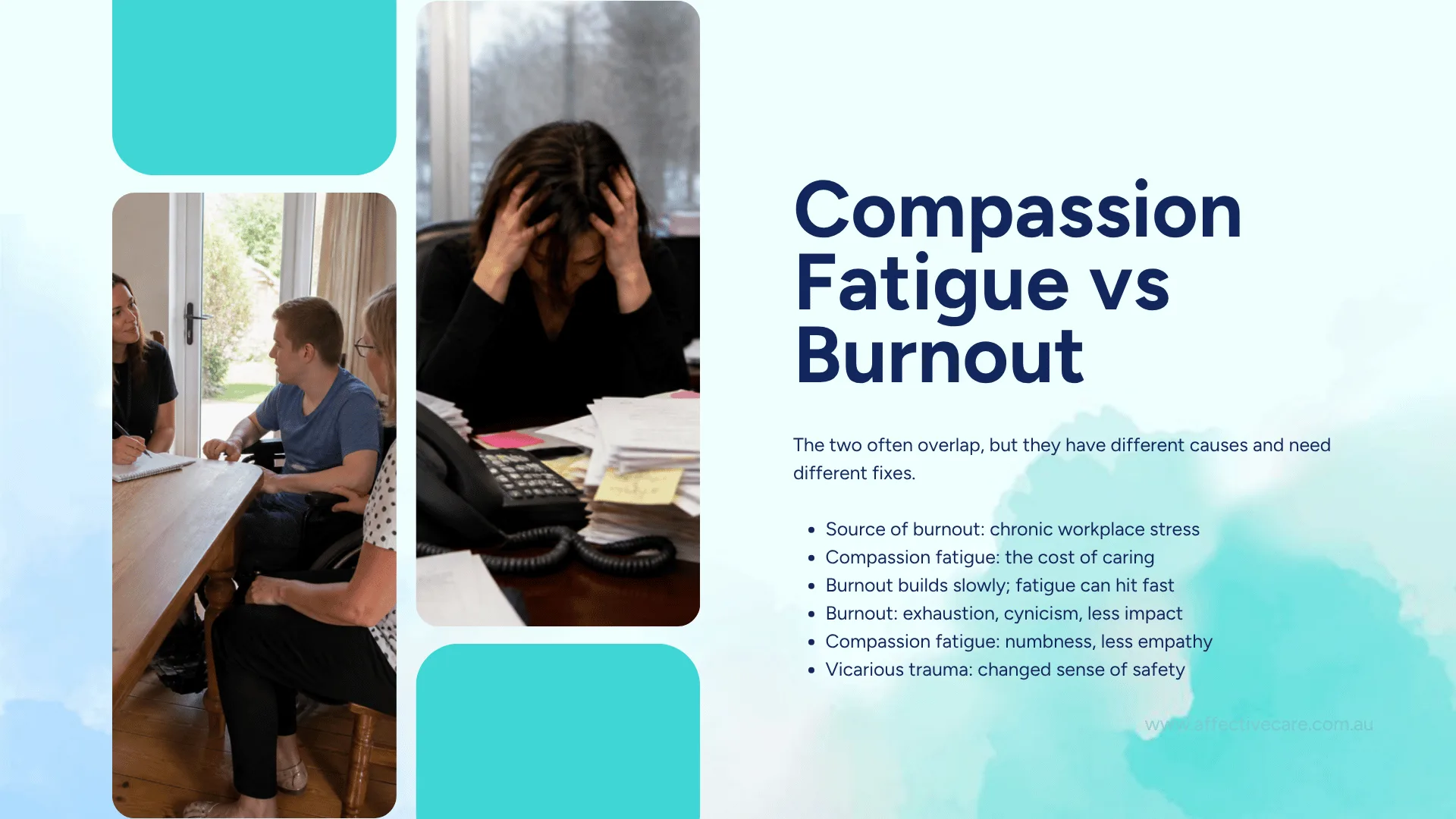
What is the difference between compassion fatigue and burnout?
Burnout comes from chronic workplace stress, while compassion fatigue comes from the emotional cost of caring for people who are suffering. The World Health Organization describes burnout as an occupational phenomenon with three dimensions: exhaustion, mental distance or cynicism about your job, and reduced professional effectiveness.
The two often happen together in support coordination, but they have different causes and need slightly different fixes.
| Feature | Compassion fatigue | Burnout | Vicarious trauma |
|---|---|---|---|
| Main cause | Emotional cost of caring for people in distress | Chronic, unmanaged workplace stress | Repeated exposure to others' trauma stories |
| How it starts | Can come on quickly after intense cases | Builds slowly over time | Builds over time |
| Key feeling | Numbness, reduced empathy | Exhaustion, cynicism about the job | Changed beliefs about safety and trust |
| Main fix | Recovery time, debriefing, boundaries | Workload and system changes | Trauma-informed supervision and therapy |
Knowing which one you are dealing with helps. A manager can reduce caseload to ease burnout, but compassion fatigue also needs space to process what you have heard.
How can support coordinators recover from compassion fatigue?
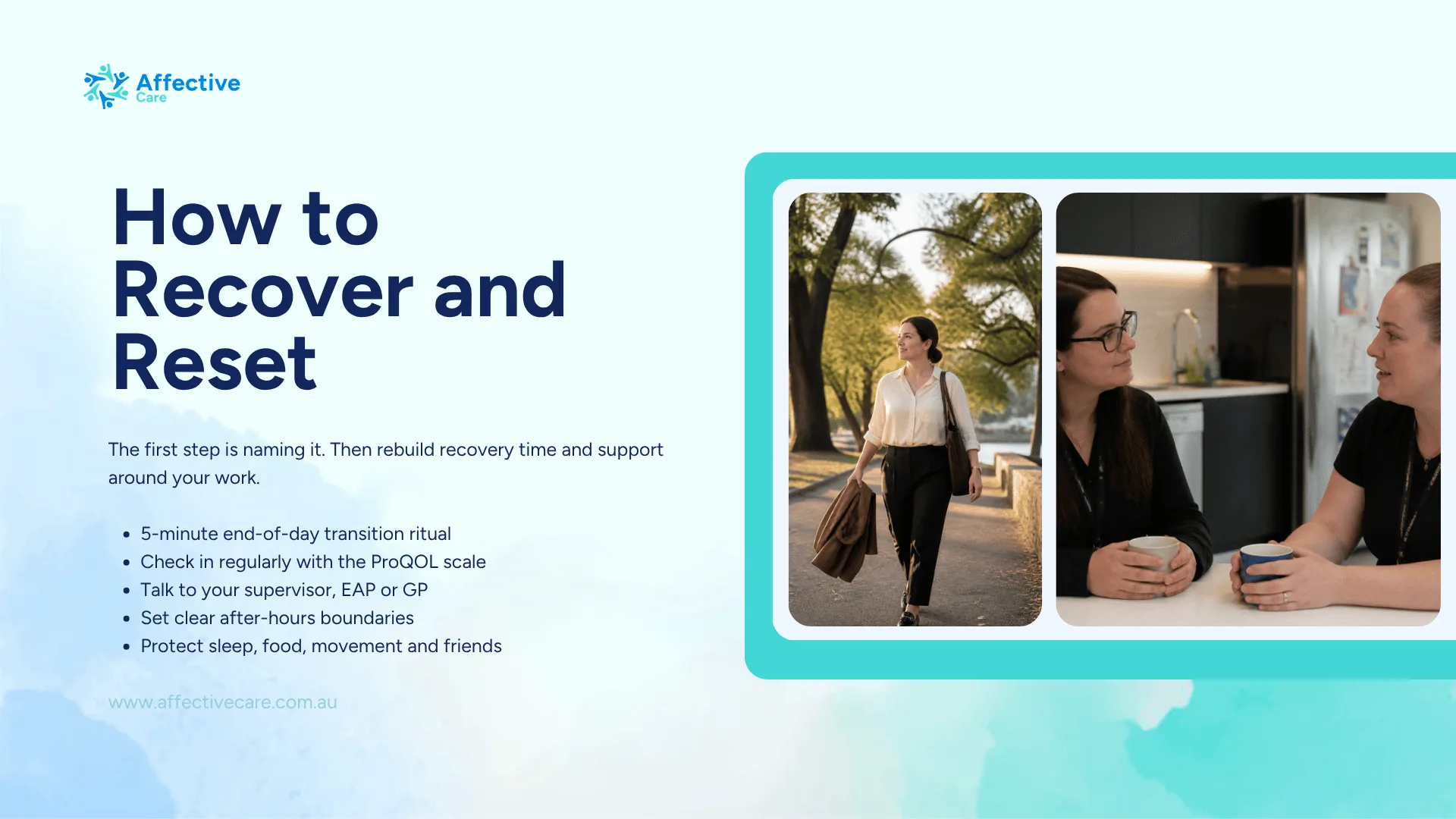
Recovery starts with naming what is happening, then rebuilding recovery time and support around your work. Most people improve within weeks to months once the load is reduced and they have somewhere to process their experiences.
1. Check in with yourself honestly
Tools such as the Professional Quality of Life Scale (ProQOL) help you measure compassion satisfaction, burnout and secondary traumatic stress. Doing it every few months lets you notice changes early.
2. Talk to someone
Tell your team leader or supervisor what you are noticing. Use your Employee Assistance Program (EAP) if your workplace has one, or ask your GP about a Mental Health Treatment Plan for Medicare-subsidised psychology sessions.
3. Set clear boundaries
- Turn off work notifications outside your hours
- Agree on response times with participants and providers
- Avoid taking participant files home
- Say no to extra cases when you are at capacity
Good systems help with boundaries too. Our article on time management for NDIS support coordinators has practical ideas.
4. Build a transition ritual
A short routine at the end of each day tells your brain work is over. It could be a walk, changing clothes, writing tomorrow's to-do list or a few minutes of slow breathing.
5. Protect the basics
Sleep, movement, food and time with people outside work are not luxuries. They are the first things to slip when you are fatigued, and the first things that help.
6. Reconnect with why you do the work
Compassion satisfaction is the positive side of caring work. Keeping a note of small wins, such as a participant's first independent trip or a successful plan review, helps balance the hard days.
How can NDIS providers prevent compassion fatigue in their teams?
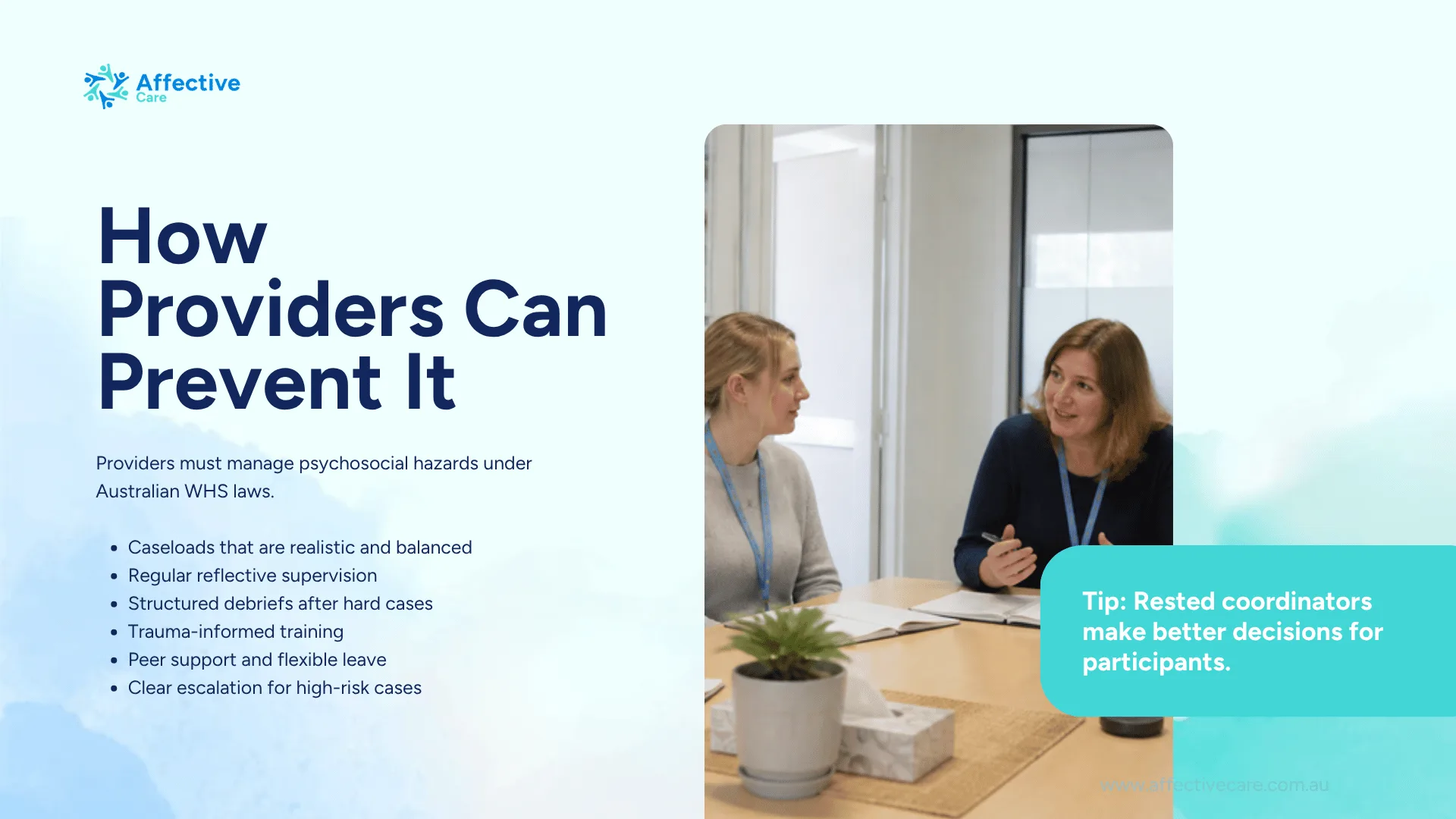
Providers can prevent compassion fatigue by managing it as a work health and safety risk, not leaving it to individual self-care. Under Australia's work health and safety laws, employers must manage psychosocial hazards, which include high job demands and exposure to traumatic events. Safe Work Australia's guidance on psychosocial hazards explains how.
Practical steps for organisations include:
- Realistic caseloads. Balance complex and simpler participants across the team and review caseloads regularly.
- Regular supervision. Offer reflective supervision, not just compliance check-ins.
- Structured debriefs. Debrief after critical incidents, crises or distressing calls.
- Training. Teach trauma-informed practice and early signs of compassion fatigue.
- Peer support. Create safe spaces for coordinators to share hard cases.
- Flexible leave. Make it easy to take time off before people reach crisis point.
- Clear escalation pathways. No coordinator should carry a high-risk situation alone.
At Affective Care, we believe looking after coordinators is part of looking after participants. Rested, supported staff build better relationships and make better decisions. If you want to work in a team that takes wellbeing seriously, take a look at our careers page.
When should you get professional help?
Get professional help if symptoms last more than a few weeks, affect your sleep or relationships, or include thoughts of self-harm. A GP is a good first step and can refer you to a psychologist.
If you need support now, you can call:
- Lifeline: 13 11 14 (24 hours)
- Beyond Blue: 1300 22 4636 (24 hours)
- Emergency: 000
This article is general information only. Please speak with your doctor or a mental health professional about your own situation.
Affective Care's support coordinators work in supported teams so they can give participants their best. If you are looking for an NDIS support coordinator, contact our team or make a referral today.
Frequently asked questions
What is compassion fatigue in simple terms?
Compassion fatigue is the emotional and physical tiredness that comes from caring for people who are suffering. It happens when you give out empathy faster than you can recover. People who have it often feel numb, drained and irritable, and may start avoiding the people they are meant to help.
What are the first signs of compassion fatigue?
Early signs include dreading work, feeling numb when people share hard news, poor sleep, irritability and tiredness that rest doesn't fix. Many support coordinators first notice they are avoiding certain calls or emails. Catching these signs early makes recovery faster and easier.
Is compassion fatigue the same as burnout?
No. Burnout comes from chronic workplace stress such as heavy workloads and poor systems. Compassion fatigue comes from the emotional cost of caring for people in distress. They often happen together in support coordination, so it helps to address both workload and emotional recovery.
How long does compassion fatigue last?
It depends on how long it has been building and what changes are made. With reduced workload, good supervision and personal support, many people feel better within a few weeks to a few months. If symptoms continue or worsen, speak with a GP or psychologist.
Can you still work with compassion fatigue?
Many people keep working while they recover, especially with a lighter caseload, regular supervision and time off when needed. Talk with your manager about adjustments. If symptoms are severe or affecting your judgement, a short break may be the safest choice for you and participants.
Who is most at risk of compassion fatigue?
People in caring roles are most at risk, including support coordinators, support workers, nurses, social workers and counsellors. Risk is higher for those with large caseloads, frequent crisis work, little supervision, their own trauma history, or a strong sense of personal responsibility for outcomes.