




Navigating mental health support can feel overwhelming, especially when you are already managing daily responsibilities, emotional challenges, or caring for someone you love.
Many people across Australia find themselves unsure where to start, what support they are eligible for, or how psychology services actually work.
Psychology services in Australia cover a wide range of supports, from Medicare-subsidised therapy through the Better Access initiative to NDIS-funded psychology services for people living with disabilities.
Whether you are seeking support for anxiety, trauma, child development concerns, or emotional well-being linked to disability, help is available.
This guide is designed to give you clear, compassionate information about psychology services in Australia, including funding pathways, service types, and practical next steps so that you can make informed choices at your own pace.

Types of Psychologists in Australia
Psychologists in Australia are all registered with the Australian Health Practitioner Regulation Agency (AHPRA), but they may have different areas of training and endorsement.
Therefore, understanding these differences can help you choose the most appropriate support.
Clinical Psychologists
Clinical psychologists are trained to assess and treat complex mental health conditions, including anxiety disorders, depression, trauma, and severe emotional distress.
They commonly work with adults, children, and families, and may support people living with disabilities alongside other allied health professionals.
They often provide:
- Evidence-based therapies (such as CBT and trauma-informed approaches)
- Assessments and reports
- Medicare-rebated psychological therapy under Better Access
Counselling Psychologists
Counselling psychologists focus on emotional wellbeing, life transitions, relationships, and personal development.
They often support people experiencing:
- Stress, grief, or burnout
- Relationship or family challenges
- Adjustment to life changes
- Mild to moderate mental health concerns
Educational and Developmental Psychologists
Educational and developmental psychologists often work closely with families, schools, and NDIS teams.
These psychologists specialise in learning, development, and behaviour, particularly in children and young people.
They commonly support:
- Learning difficulties
- Autism and ADHD assessments
- Emotional regulation and behaviour support
- School-based challenges
Other Psychology Specialties
Not every person needs a specialist endorsement; the most important factor is finding a psychologist whose experience aligns with your goals.
Depending on need, people may also access:
- Neuropsychologists (brain injury, neurological conditions)
- Forensic psychologists (legal and justice settings)
- Organisational psychologists (workplace wellbeing)
If you need support sooner rather than later, our guide to same day psychology appointments in Australia and how urgent booking options work can help you understand what may be available and what to expect when seeking faster access to care.
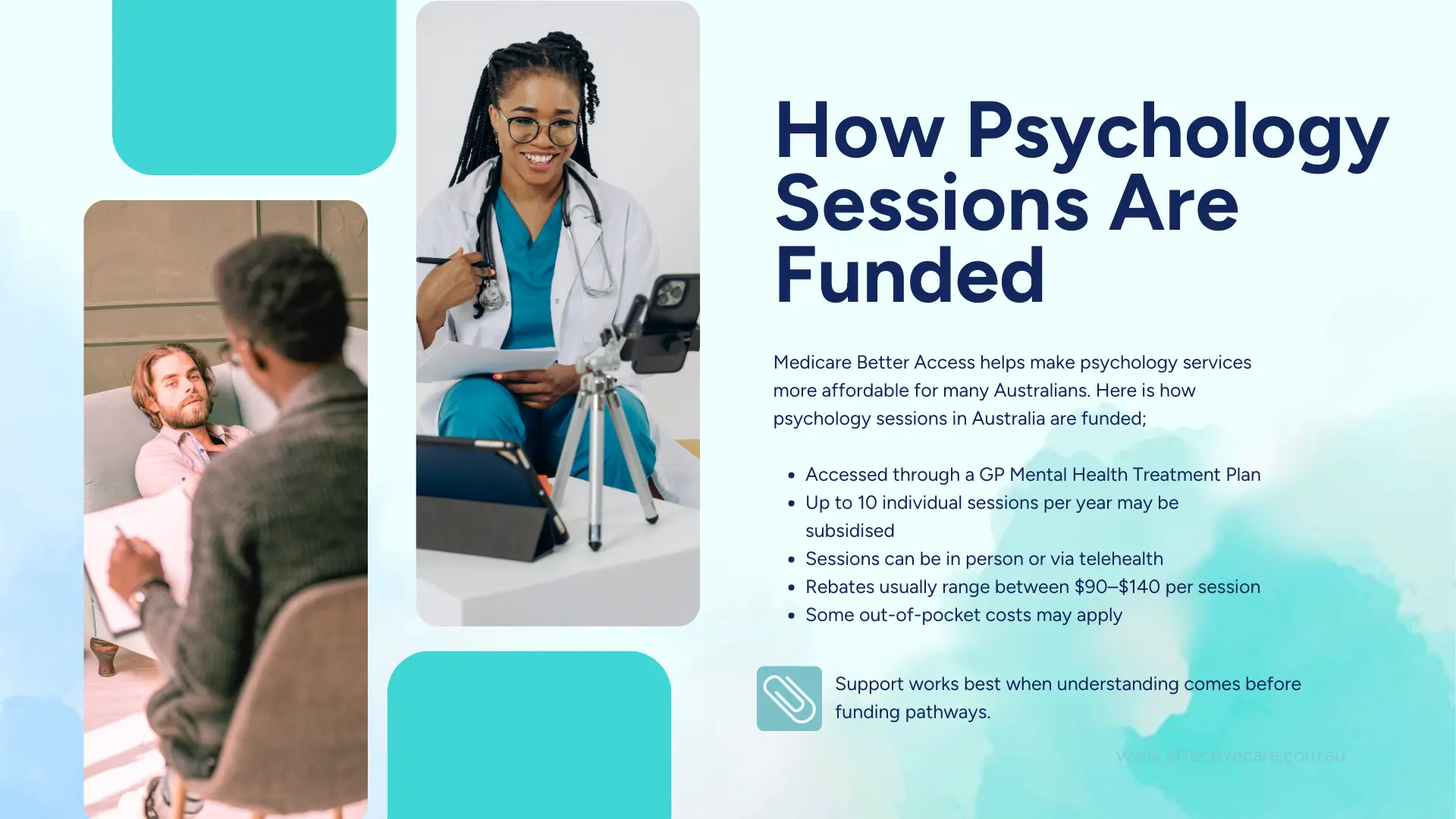
Medicare Better Access: How Psychology Sessions Are Funded
One of the most common ways people access NDIS psychology services in Australia is through the Medicare Better Access initiative.
This pathway is designed to make mental health support more affordable and accessible for people experiencing emotional or psychological challenges.
What is the Better Access Initiative?
Better Access allows eligible people to receive Medicare-subsidised psychology sessions with registered mental health professionals.
To access Better Access, you need a Mental Health Treatment Plan prepared by your GP.
This plan outlines your mental health needs, goals for support, and provides a referral to a psychologist or other eligible professional.
Many people find this first step reassuring, as it offers guidance rather than pressure to have everything figured out straight away.
How Many Sessions Are Covered?
Under the Better Access initiative, people may be eligible for up to 10 individual psychology sessions per calendar year, as well as up to 2 group therapy sessions.
In some situations, additional sessions may be approved following review by your GP.
Sessions can be delivered in person or via telehealth, including secure video appointments.
Telehealth can be especially helpful for people living in regional areas, managing mobility challenges, or balancing therapy with work or family commitments.
People considering online appointments can learn more about the process in our guide to how telehealth psychology works, including preparation, privacy and what to expect during a session.
Who Can Provide Better Access Services?
Better Access sessions can be delivered by a range of registered professionals, including clinical psychologists, registered psychologists, and, in some cases, occupational therapists and accredited mental health social workers.
Each professional brings different training and approaches, so it’s okay to ask questions and choose someone who feels like the right fit for you.
Medicare rebate amounts vary depending on the provider type and usually range between $90 and $140 per session.
Some psychologists charge above the rebate amount, meaning there may be an out-of-pocket cost.
Your GP or psychologist should explain fees clearly before you begin, so there are no surprises.
Furthermore, if cost is one of your main concerns, our guide to Medicare rebates for psychology in Australia explains rebate amounts, gap fees, and what to ask before starting therapy.

NDIS Psychology Services for People Living with Disability
For people living with disabilities, psychology services may be funded through the National Disability Insurance Scheme (NDIS) when the support is directly related to disability needs and individual NDIS goals.
NDIS psychology services focus on building skills, emotional well-being, and meaningful participation in everyday life rather than providing crisis or acute mental health treatment.
How Psychology Fits Within the NDIS
NDIS psychology services in Australia are usually funded under Capacity Building supports, most commonly:
- Improved Daily Living, which supports therapy and assessments that build independence and emotional skills
- Improved Relationships, where behaviours of concern are present, and Positive Behaviour Support (PBS) is required
Psychology support under the NDIS is practical, goal-focused, and designed to be used in real-life environments.
NDIS-funded psychology services may support people living with disability to develop:
- Emotional regulation and coping strategies for daily challenges
- Support around the mental health impacts of disability
- Behaviour support delivered within a Positive Behaviour Support framework
- Skills that build independence, confidence, and social participation
- Strategies to support relationships at home, school, work, or in the community
Accessing Psychology Through the NDIS
Psychology funding can be requested at different points, including:
- During initial NDIS planning
- At a scheduled plan review
- Through a change of circumstances, where needs or supports have changed
To support an NDIS psychology funding request, evidence is usually required. This may include reports or letters from psychologists, GPs, occupational therapists, behaviour support practitioners, or other allied health professionals.
These documents explain how psychological support is reasonable and necessary and how it relates directly to the person’s NDIS goals.
Person-Centred, Everyday Support
NDIS psychology services in Australia are person-centred and led by the individual’s preferences, strengths, and goals.
Support is often delivered in familiar environments such as the home, community, or via telehealth, helping skills transfer into everyday routines.
The focus is not on diagnosis or labels, but on supporting people living with disabilities to feel safer, more confident, and better supported in daily life.
People seeking psychology support may also require psychological assessments for NDIS applications and plan reviews to document functional needs and recommended supports.

Private vs Public Psychology Services: What to Choose
Many people find it difficult to decide between private and public psychology services. There is no single “right” option.
The best choice often depends on how quickly support is needed, what type of care feels right, location, and whether cost is a concern.
Understanding the differences can help you choose a pathway that suits your situation and preferences.
Private Psychology Services
Private psychology services are commonly chosen by people who value flexibility, choice, and faster access to support.
These services allow you to choose a psychologist based on experience, approach, and areas of interest, which can help build a stronger therapeutic relationship.
Private psychology services often offer:
- Shorter wait times, sometimes within days or weeks
- Choice of psychologist and specialty areas
- Flexible appointment times, including evenings or telehealth
Private psychologists may work with Medicare Better Access referrals, NDIS funding, or private payment.
After Medicare rebates, out-of-pocket costs typically range between $100 and $200 per session, depending on the provider and session length. Your psychologist should clearly explain fees before you begin.
Bulk-Billing Psychology Services
Some psychologists bulk bill under Medicare Better Access, meaning there is no out-of-pocket cost for eligible sessions.
This can make psychology services more accessible for people experiencing financial pressure.
However, bulk-billing availability is limited and varies significantly depending on location, demand, and provider capacity.
Wait times may be longer, and the choice of a psychologist may be more restricted.
Public Psychology Services
Public psychology services are usually accessed through public hospitals, community mental health teams, or government-funded services.
These services are often low-cost or free, making them an important option for people who cannot access private care.
Public services may involve:
- Longer wait times
- Eligibility criteria or referral requirements
- Care focused on more acute or complex needs
Telehealth psychology has significantly improved access to public mental health services, particularly for people living in rural and regional areas.
While public services may be less flexible, they play an important role in Australia’s mental health system.
Choosing What’s Right for You
It’s okay to take time to decide what feels right. Some people use a combination of services over time, such as starting with public support and later transitioning to private care, or using telehealth alongside in-person sessions.
The most important factor is finding support that feels safe, respectful, and suited to your needs, circumstances, and goals.

Child and Family Psychology Services
Child and family psychology services in Australia aim to support both the child and the people around them, recognising that children grow and thrive best within supportive, understanding environments.
Common Areas of Support
Support is always tailored to the child’s age, strengths, and individual needs, with a strong focus on emotional safety and trust.
Psychology support for children and families may include:
- Developmental and behavioural assessments to better understand learning, communication, or emotional needs
- Support with emotional regulation, anxiety, and coping skills
- Psychology support for children living with autism or ADHD
- Guidance around behaviour, routines, and transitions
- Parenting strategies that support connection, confidence, and consistency
- Strengthening family relationships and communication
Funding Options for Children
Children may be able to access psychology services through several funding pathways, depending on their needs and circumstances. These include:
- Medicare Better Access, with a GP Mental Health Treatment Plan
- NDIS Early Childhood supports (ages 0–6), focused on development and family capacity building
- NDIS school-age supports, linked to capacity building goals such as emotional regulation or behaviour support
- Private psychology services, which may offer shorter wait times or specific expertise
The Importance of Family Involvement
Family involvement is strongly encouraged in child and family psychology services.
When parents, carers, and educators are supported with strategies and understanding, children are more likely to experience consistent, positive support across home, school, and community settings.
This collaborative approach helps reduce stress for families and supports more meaningful, long-term progress for children.

Telehealth and Online Psychology in Australia
Telehealth psychology has become a widely accepted and effective way to access mental health support.
How Telehealth Works
Telehealth psychology sessions are delivered remotely by registered psychologists using secure technology.
Sessions are most commonly provided via secure video platforms, which allow face-to-face interaction similar to in-person appointments.
In some circumstances, phone sessions may also be offered where appropriate and clinically suitable.
Both Medicare and the NDIS cover telehealth psychology services when delivered by eligible providers and linked to approved funding pathways.
This means people can access online psychology support without needing to travel, while still receiving professional, high-quality care.
Benefits of Telehealth and Online Psychology Services
Telehealth psychology in Australia offers several practical and emotional benefits, including:
- No travel time or transport stress
- Greater flexibility for work, school, or family commitments
- Improved access for people living in rural and remote communities
- Ongoing continuity of care, even when circumstances change
- The comfort of receiving support in familiar surroundings
If you are deciding how you would prefer to attend therapy, our guide comparing telehealth and face-to-face psychology explains the practical differences, benefits and situations where each format may be more suitable.
Privacy, Safety, and Quality of Care
All telehealth psychology providers must use secure, AHPRA-compliant platforms to protect privacy and confidentiality.
Sessions follow the same professional standards, ethical guidelines, and duty of care as in-person psychology services.
Telehealth does not replace face-to-face support for everyone, but for many people, it provides a safe, effective, and empowering way to access psychology services in Australia when they are needed.
For people who prefer flexible access from home, our article on telehealth psychologists in Australia and how online therapy works explains the benefits, suitability, and practical steps involved in booking remote support.

How to Find and Choose a Psychologist
Finding the right psychologist is about more than credentials. It’s about feeling safe, listened to, and respected.
When you feel understood, therapy is more likely to be helpful and meaningful.
Taking things step by step can make the process feel less daunting and give you confidence in your choice.
Step 1: Where to Search
There are several trusted places to start looking for a psychologist in Australia:
- APS Find a Psychologist directory lets you search by location, specialty, and therapy type
- Healthdirect Service Finder is a government-supported directory of health services
- AHPRA psychologist register helps you confirm registration and professional status
- Referrals from your GP or other allied health professionals are often useful if you’re accessing Medicare or NDIS-funded support
Step 2: What to Look For
When choosing a psychologist, it can help to consider both practical and personal factors, such as:
- Whether they are fully registered and appropriately endorsed
- Their experience with your specific needs, life stage, or concerns
- Their communication style and whether you feel comfortable talking with them
- Their cultural understanding, values, and approach to care
- Availability, wait times, and session format, such as in-person or telehealth
If you are still deciding which type of professional may suit your needs, our guide to counselling vs psychology under the NDIS explains differences in qualifications, assessments, reporting and support goals.
Step 3: Your First Session
Your first appointment is a chance to get a sense of whether the psychologist feels like the right fit. You can:
- Share what’s been bringing you in and what you hope to work on
- Ask questions about fees, rebates, and funding options
- Learn how they typically work and what sessions might look like
A Supportive Next Step
If you’d like gentle guidance on your options, you’re welcome to book a free 15-minute consultation with our team.
We can help you understand pathways, funding options, and what type of support might feel right for you with no pressure and no obligation.
Furthermore, if you are looking for disability-related support delivered remotely, our article on how to choose the right NDIS online psychologist for your needs and goals can help you compare providers with more clarity and confidence.

How Affective Care Supports Psychology Services
At Affective Care, our psychology services are grounded in emotional safety, dignity, and genuine human connection.
We support people living with disabilities, as well as families and carers, with care that feels practical, respectful, and tailored to everyday life, not clinical or overwhelming.
Our approach recognises that psychological support is not just about therapy sessions, it’s about feeling heard, supported, and empowered over time.
We take care to move at a pace that feels right, honouring each person’s experiences, strengths, and priorities.
Our psychology support may include:
- Emotional regulation, coping skills, and well-being support help individuals understand emotions, manage stress, and build resilience in daily situations.
- Psychology support is linked to the mental health impacts of disability, recognising the emotional load that can come with change, transitions, and ongoing support needs.
- Behaviour support aligned with Positive Behaviour Support (PBS) principles, focusing on understanding behaviour, building skills, and promoting safety and dignity.
- Family-inclusive therapy supports stronger relationships, shared understanding, and consistency across home and support environments.
- Person-centred, goal-led psychology, shaped around what matters most to the individual and their real-life goals.
- Collaborative care, working alongside carers, support workers, and NDIS coordinators to ensure consistent and supportive approaches.
- Flexible delivery options, including in-person and telehealth psychology services available across Australia.

Next Steps to Access Psychology Support
When you feel ready, taking the next step toward psychology support can be simple and unhurried.
You may want to start by consulting with your GP about a Mental Health Treatment Plan, exploring trusted psychology providers, or discussing funding and goals with your NDIS support coordinator.
Preparing a few questions about costs, session options, and the type of support you’re looking for can help you feel more confident.
You don’t need to have everything figured out; reaching out for guidance is a positive, supported first step.


