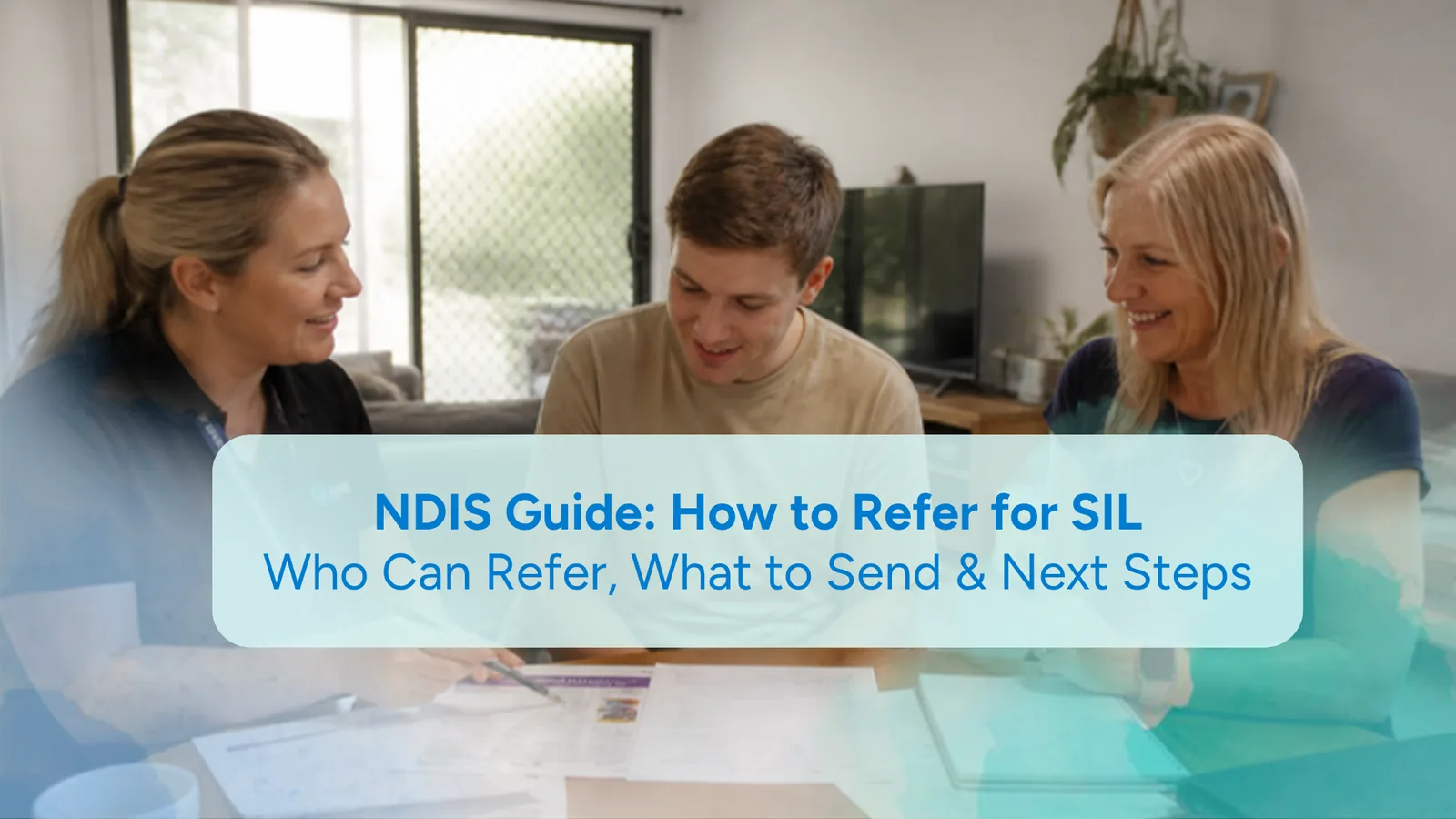
To refer a participant for Supported Independent Living (SIL), contact a registered SIL provider with the participant's consent, their NDIS details, their support needs and any recent reports. If SIL is not yet in their NDIS plan, you also need to ask the NDIA for home and living supports, with evidence from a treating health professional such as an occupational therapist.
This guide explains the SIL referral process step by step. It is written for support coordinators, families, hospital discharge teams, allied health professionals and participants who want to refer themselves.
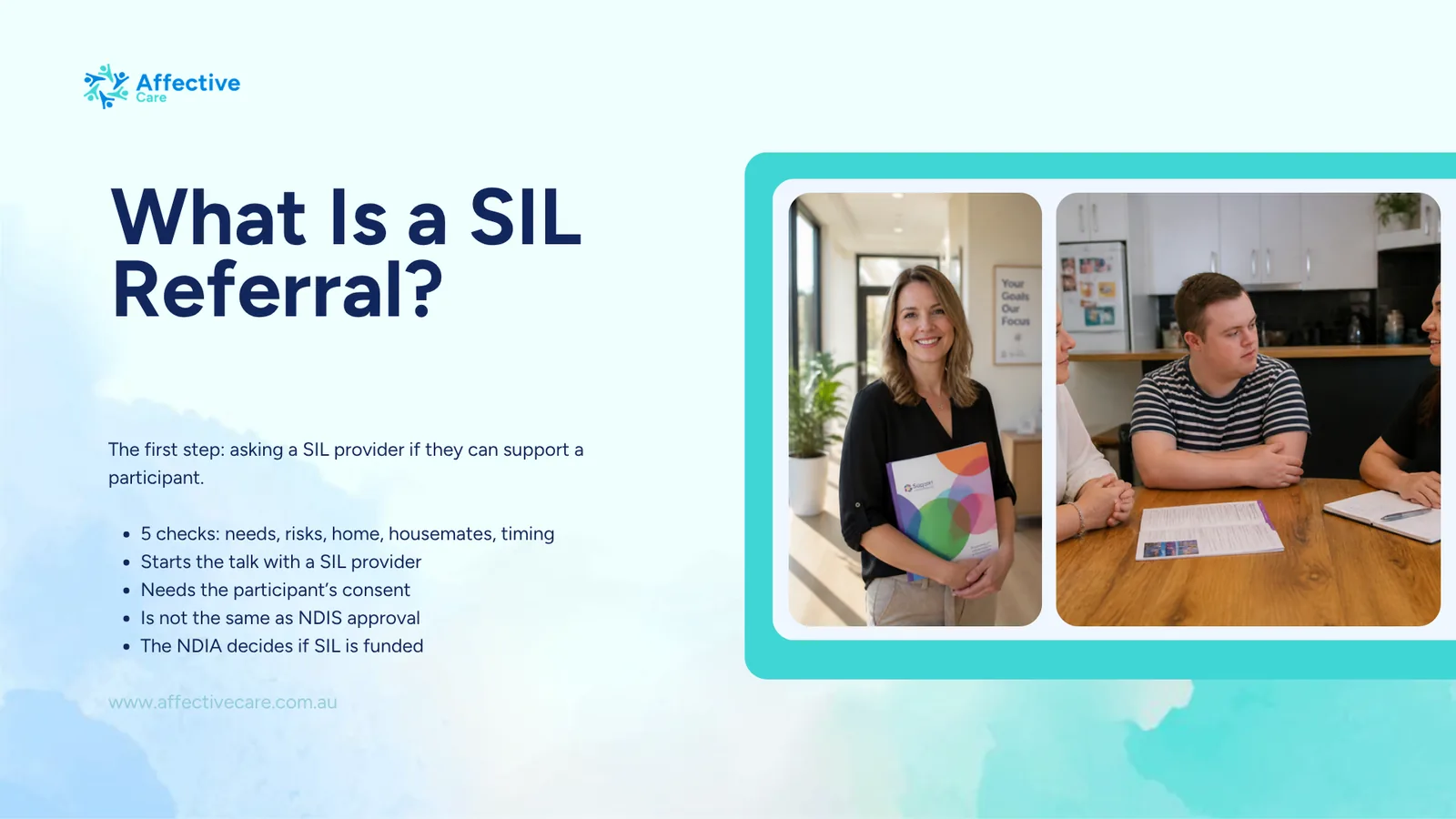
What is a SIL referral?
A SIL referral is a request to a SIL provider to assess whether they can support a participant and offer a suitable home or vacancy. It starts the conversation between the participant, their supports and the provider.
According to the NDIS, Supported Independent Living is funding for a support worker to help or supervise a participant 24 hours a day, 7 days a week. SIL may suit someone who needs a support worker with them around the clock, including overnight, and help with daily activities for at least 8 of those hours.
A referral is not the same as NDIS approval. The NDIA (National Disability Insurance Agency) decides whether SIL is reasonable and necessary and adds it to the plan. The SIL provider then delivers the supports. Not sure if SIL fits? Read our SIL eligibility criteria guide.
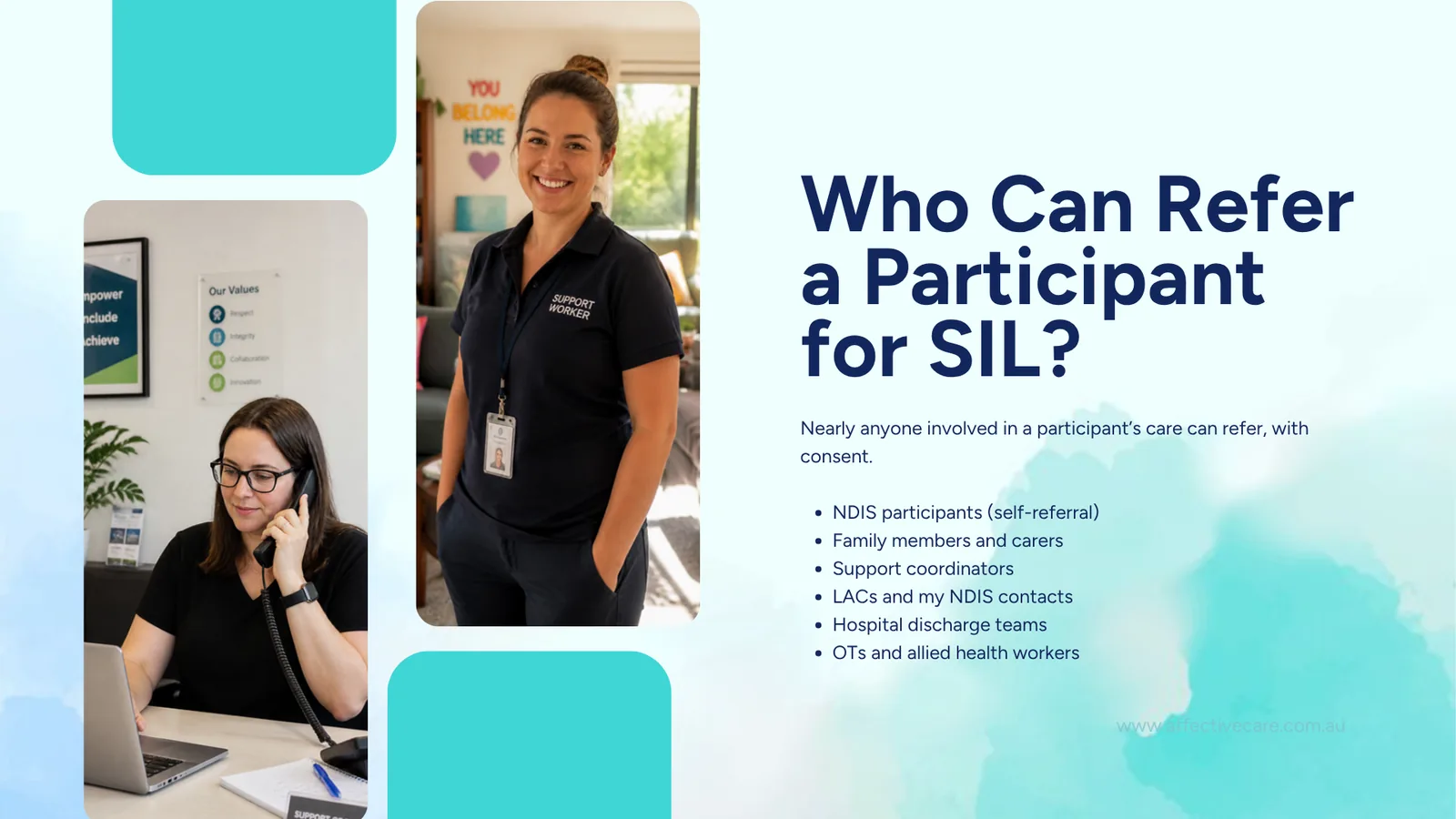
Who can refer a participant for SIL?
Anyone involved in a participant's care can make a SIL referral, as long as the participant (or their nominee or guardian) agrees. Many providers also accept self-referrals.
Common referrers include:
- The participant themselves
- Family members, carers or friends
- Support coordinators and specialist support coordinators
- Local Area Coordinators (LACs) or a my NDIS contact
- Hospital social workers and discharge planners
- Occupational therapists, behaviour support practitioners and other allied health professionals
- Public guardians, nominees or advocates
Support coordinators are often the main referrer. The NDIS says participants with SIL funding will typically also have funding for a support coordinator, who helps them find a suitable SIL provider. Learn more about our support coordination services.
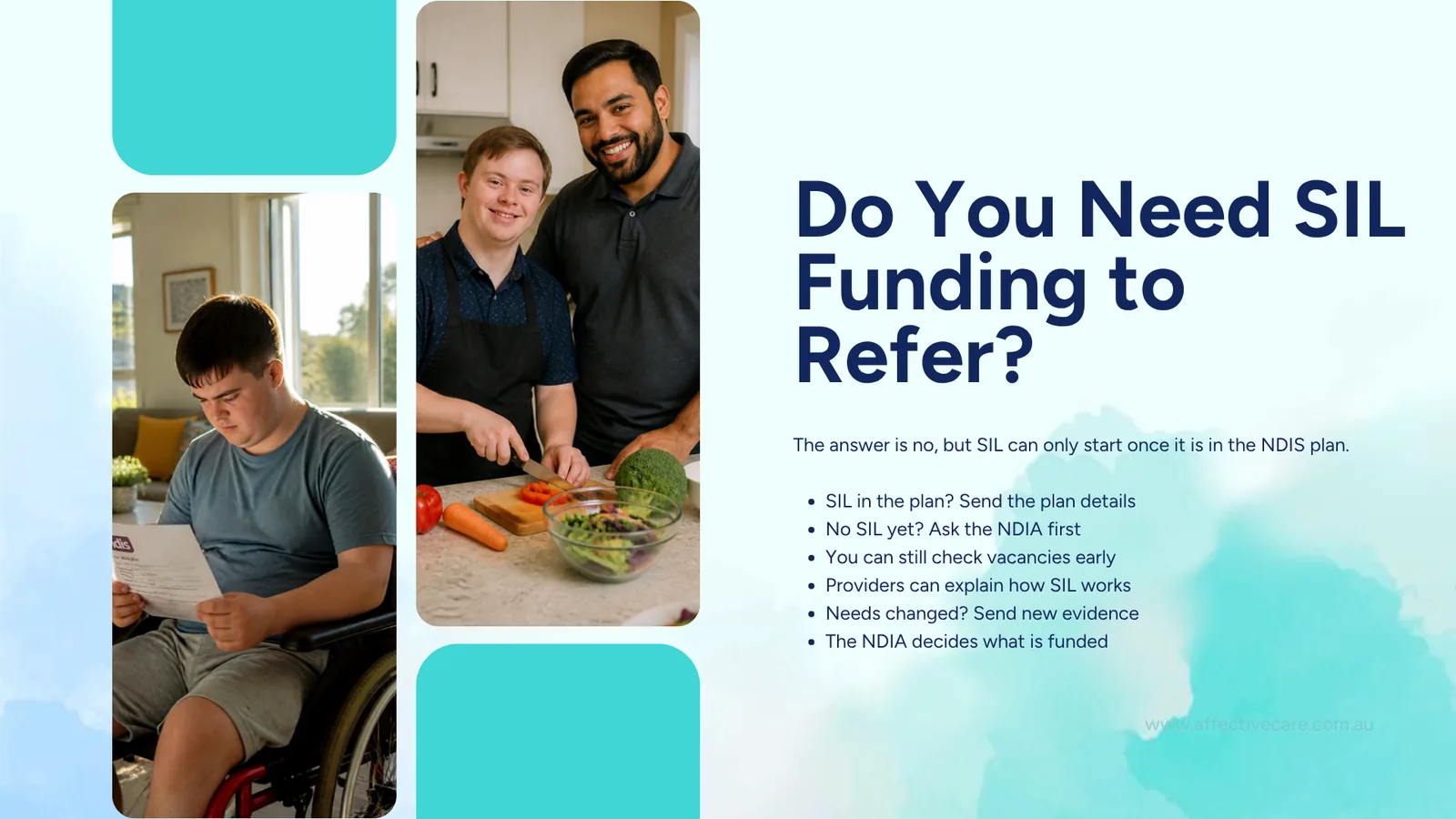
Does the participant need SIL funding before you refer?
No, but it helps. You can refer early to check for vacancies and get a quote, but a provider can only start SIL once it is funded in the participant's NDIS plan.
There are two common situations:
- SIL is already in the plan. The participant wants to move, change provider or start in a new home. Send the referral with a copy of the relevant plan details.
- SIL is not in the plan yet. The participant needs to ask the NDIA for home and living supports first. A provider can still meet them, talk about vacancies and help explain what support might look like.
If the participant has SIL but their needs have changed, the NDIS says new evidence should be dated after the last plan was approved.
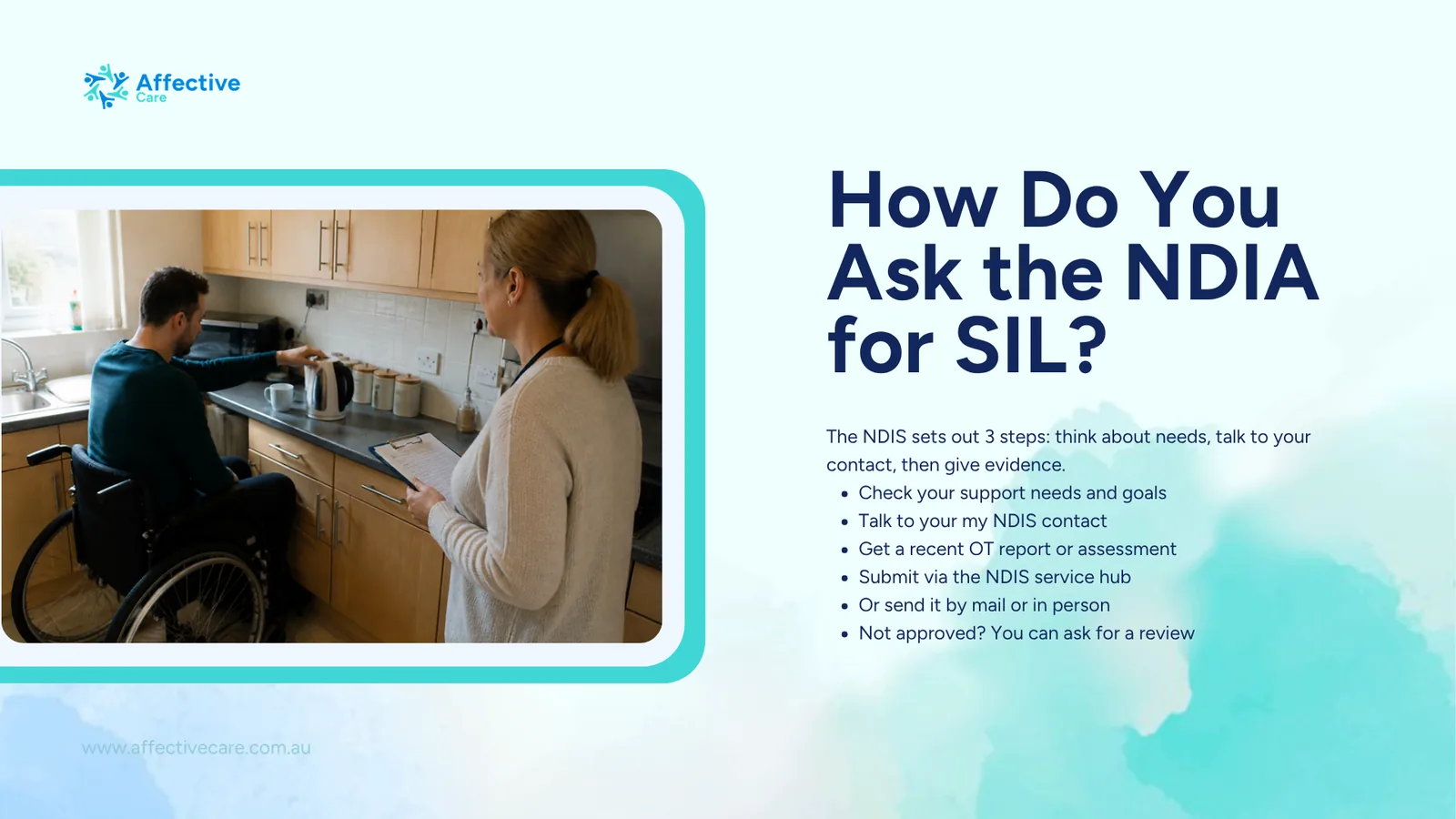
How do you ask the NDIA for SIL funding?
The NDIS sets out three steps to ask for home and living supports: think about what you need, talk to your my NDIS contact, then provide evidence. The NDIA then decides whether to include home and living supports in the plan.
- Think about what the participant needs. List their disability-related support needs, their goals for where and how they want to live, and the informal and community supports they already have.
- Talk to the my NDIS contact. This could be the participant's planner, LAC or partner. They can explain the home and living options and help explore what suits.
- Provide evidence. Ask a treating health professional, such as an occupational therapist, for a recent report or assessment.
- Submit the evidence. The NDIS says you can send it through the NDIS service hub, by mail to NDIA, GPO Box 700, Canberra ACT 2601, or in person at a local office. Say why you are providing it.
- Wait for the decision. If home and living supports are included, the NDIA invites the participant to a plan meeting. If not, it explains why, and the participant can request a review of the decision.
See the official steps on the NDIS page How to ask for home and living supports.
What evidence does the NDIA need for SIL?
The NDIS says evidence should be recent and from a relevant treating health professional. It should explain:
- The participant's daily support and housing needs, including how often and when support is needed each day
- What they can and can't do because of their disability, and how this affects daily life and housing
- What other home and living options have been explored, and why they don't meet their needs
A functional capacity assessment from an occupational therapist is often the key report. Behaviour support plans, GP or specialist letters and carer statements can add detail.
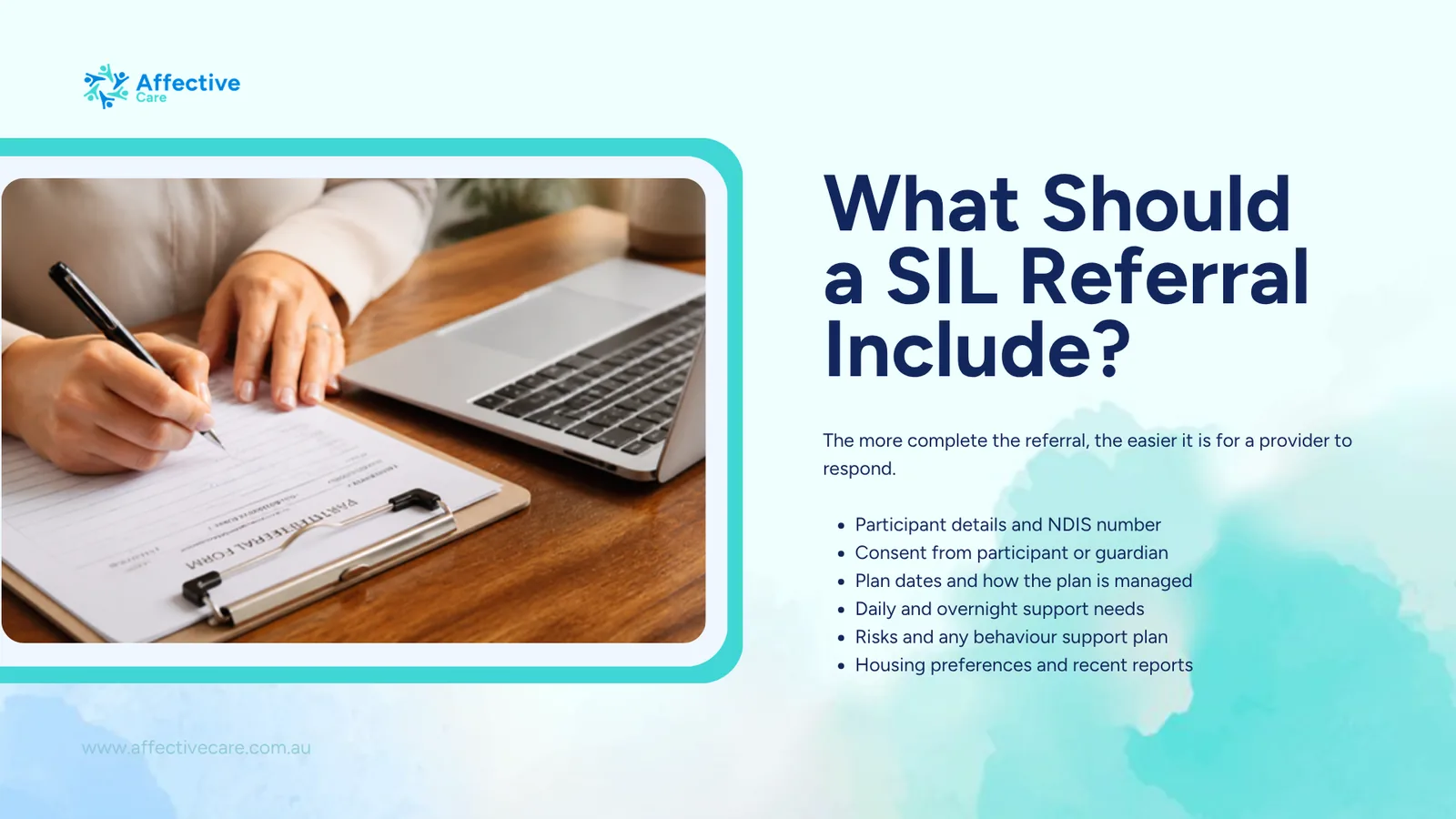
What information should a SIL referral include?
A good SIL referral gives the provider enough detail to judge fit, safety and vacancies on the first read. Missing details are the most common cause of delays.
Include:
- Participant details: name, date of birth, contact details, NDIS number and preferred communication method
- Consent: confirmation the participant, nominee or guardian agrees to the referral and to sharing information
- NDIS plan details: plan dates, how the plan is managed (NDIA, plan-managed or self-managed) and whether SIL is funded
- Support needs: daily living support, overnight support (active or sleepover), mobility, personal care, communication and health needs
- Risks and behaviours: any behaviour support plan, restrictive practices, medication and health conditions
- Housing preferences: preferred area, who they would like to live with, and any Specialist Disability Accommodation (SDA) eligibility
- Reports: functional capacity assessment, behaviour support plan and other recent reports
- Key contacts: support coordinator, family, guardian, treating team
- Timeframe: when the participant needs to move and any urgent factors, such as a hospital discharge date
Our free SIL readiness checklist and referral toolkit can help you gather everything in one go.
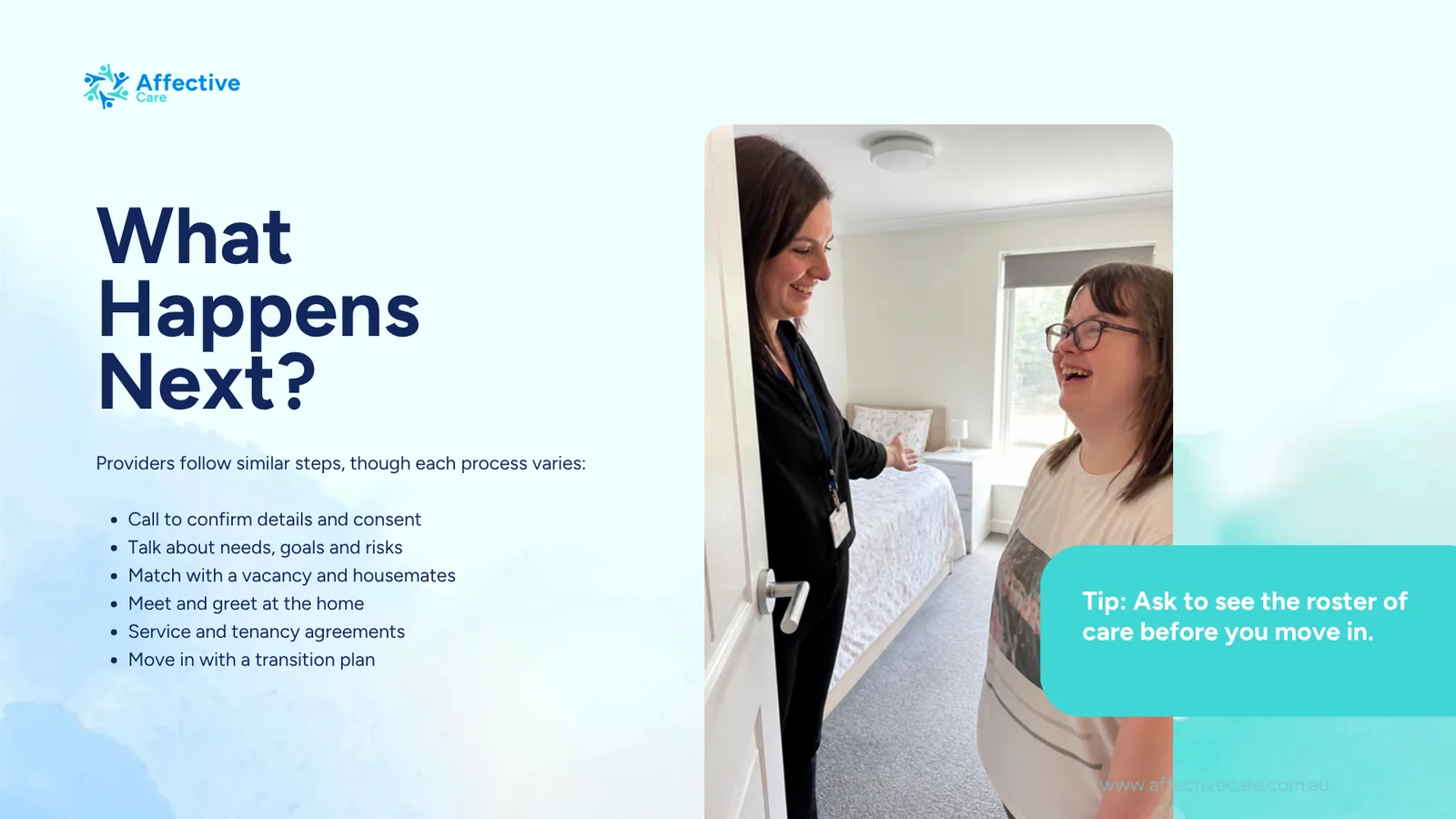
What happens after you send a SIL referral?
After a referral, the provider reviews the details, talks with the participant and their supports, and checks for a suitable home and housemates. The exact steps vary between providers.
A typical SIL referral process looks like this:
- Intake call. The provider confirms details, consent and urgency.
- Needs discussion. They talk about daily routines, overnight support, goals and risks.
- Matching. They look at vacancies, location and compatibility with current housemates.
- Meet and greet. The participant visits the home and meets housemates and staff, if they want to.
- Quote and roster of care. The provider explains the support they can deliver within plan funding. The NDIS describes a roster of care as an optional tool that breaks down weekly support and how it will be delivered.
- Agreements. The participant and provider agree a service agreement. If the provider also arranges housing, a separate tenancy agreement is needed.
- Move-in and transition. The participant moves in with a transition plan, and support is reviewed as they settle.
Browse current homes on our SIL houses page.
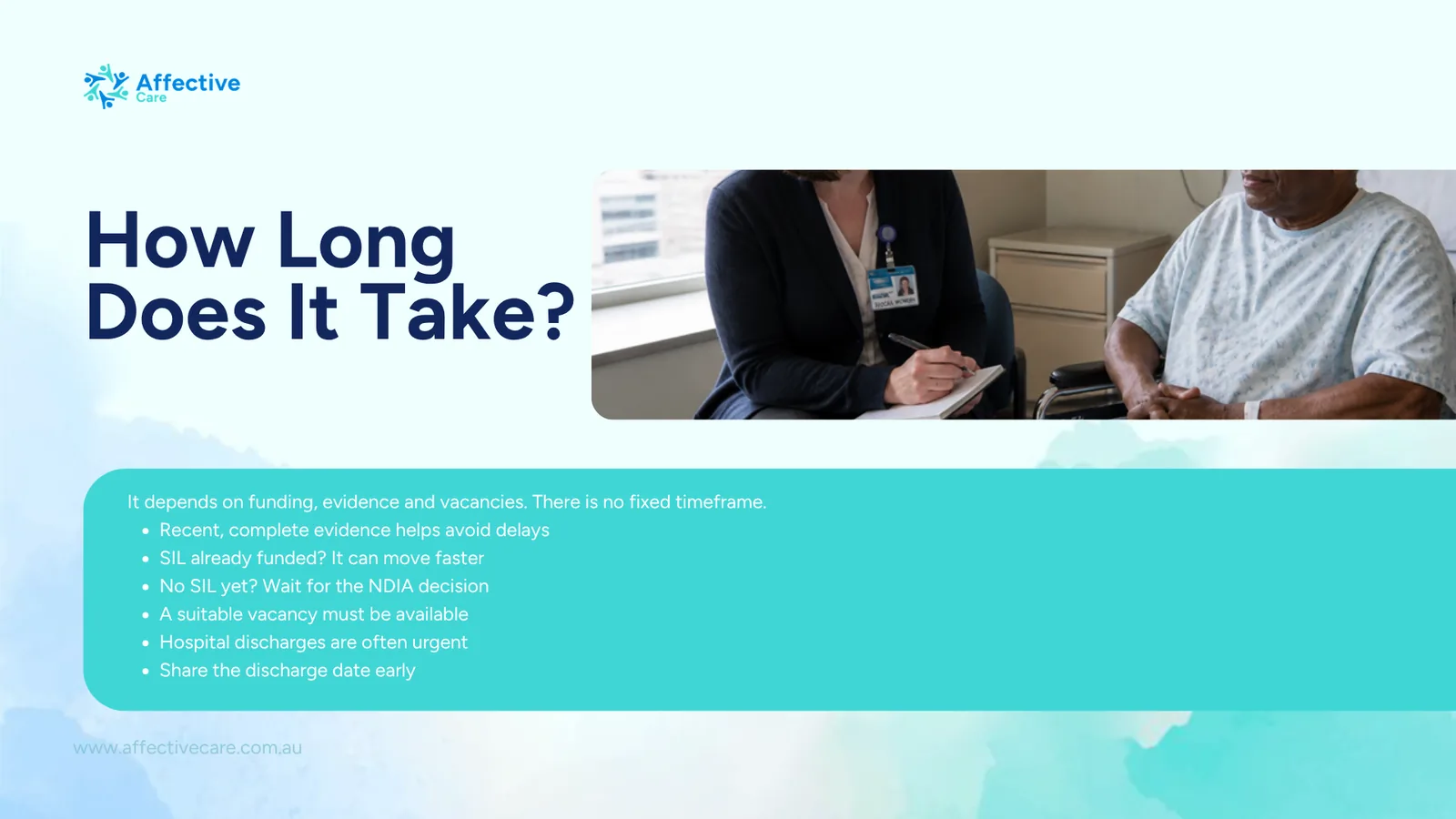
How long does a SIL referral take?
There is no fixed timeframe. It depends on whether SIL is already funded, how complete the evidence is and whether a suitable vacancy exists.
If SIL is in the plan and a vacancy fits, the move can happen fairly quickly. If the participant first needs to ask the NDIA for home and living supports, the wait depends on the NDIA's decision. The NDIS says it will tell you if it needs more information. Sending complete, recent evidence the first time is the best way to avoid delays.
Referring for SIL from hospital
Hospital discharge referrals are often urgent. Contact SIL providers as early as possible, share the expected discharge date and send the OT and social work reports. Our NDIS hospital discharge support team works with discharge planners on these moves.
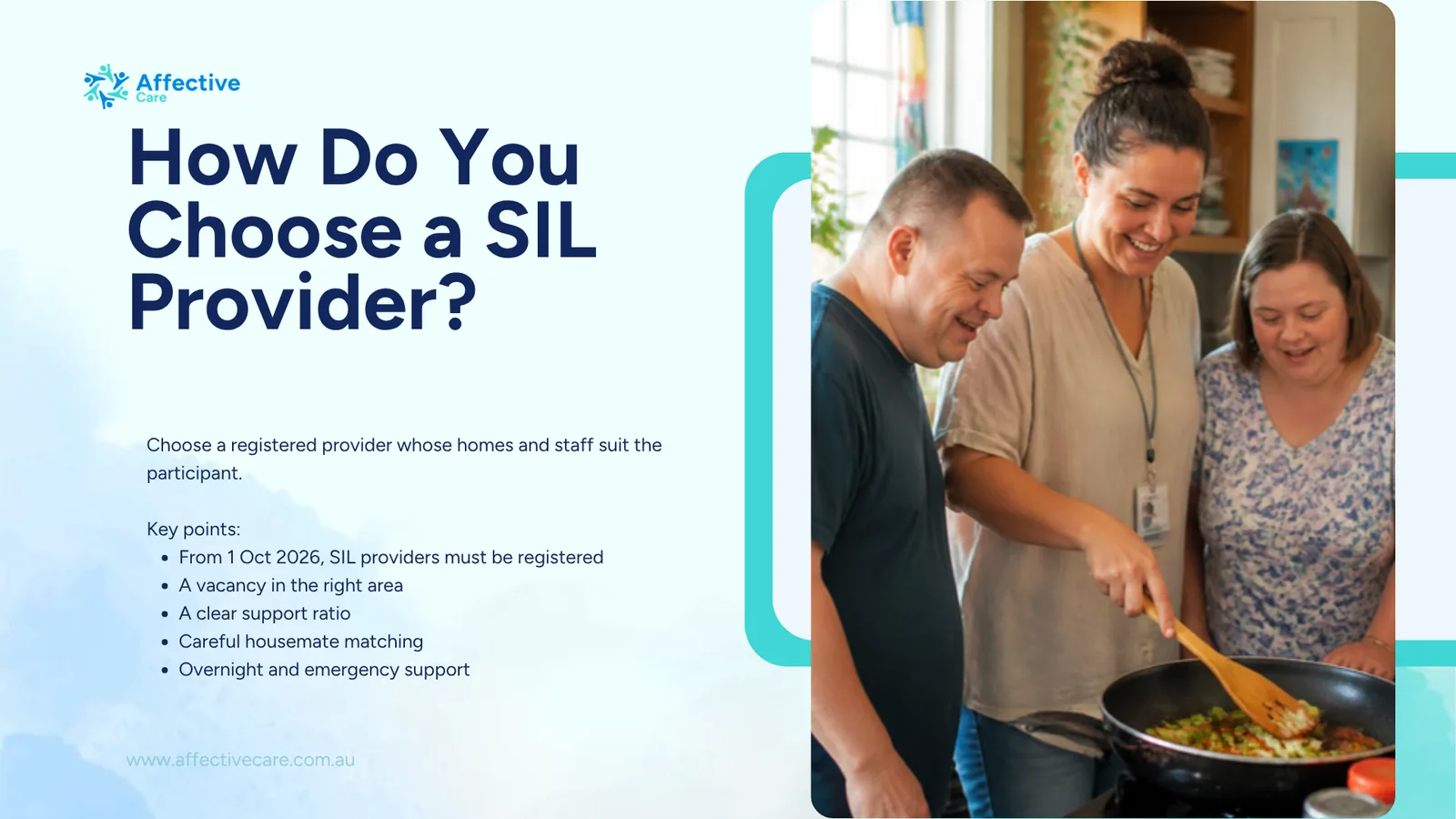
How do you choose the right SIL provider?
Choose a registered SIL provider whose homes, staff and approach suit the participant's needs and goals. From 1 October 2026, the NDIS says SIL can only be delivered by providers that are registered, or that applied to register before that date.
When comparing providers, ask:
- Are you a registered NDIS provider for SIL?
- Do you have a current vacancy in the right area?
- What support ratio would apply? (See our guide to SIL support ratios.)
- How do you match housemates?
- How do you handle overnight support and emergencies?
- Do you provide or partner with SDA?
- How do participants give feedback or make complaints?
You can also search for providers with the NDIS provider finder, or ask a support coordinator to compare options.
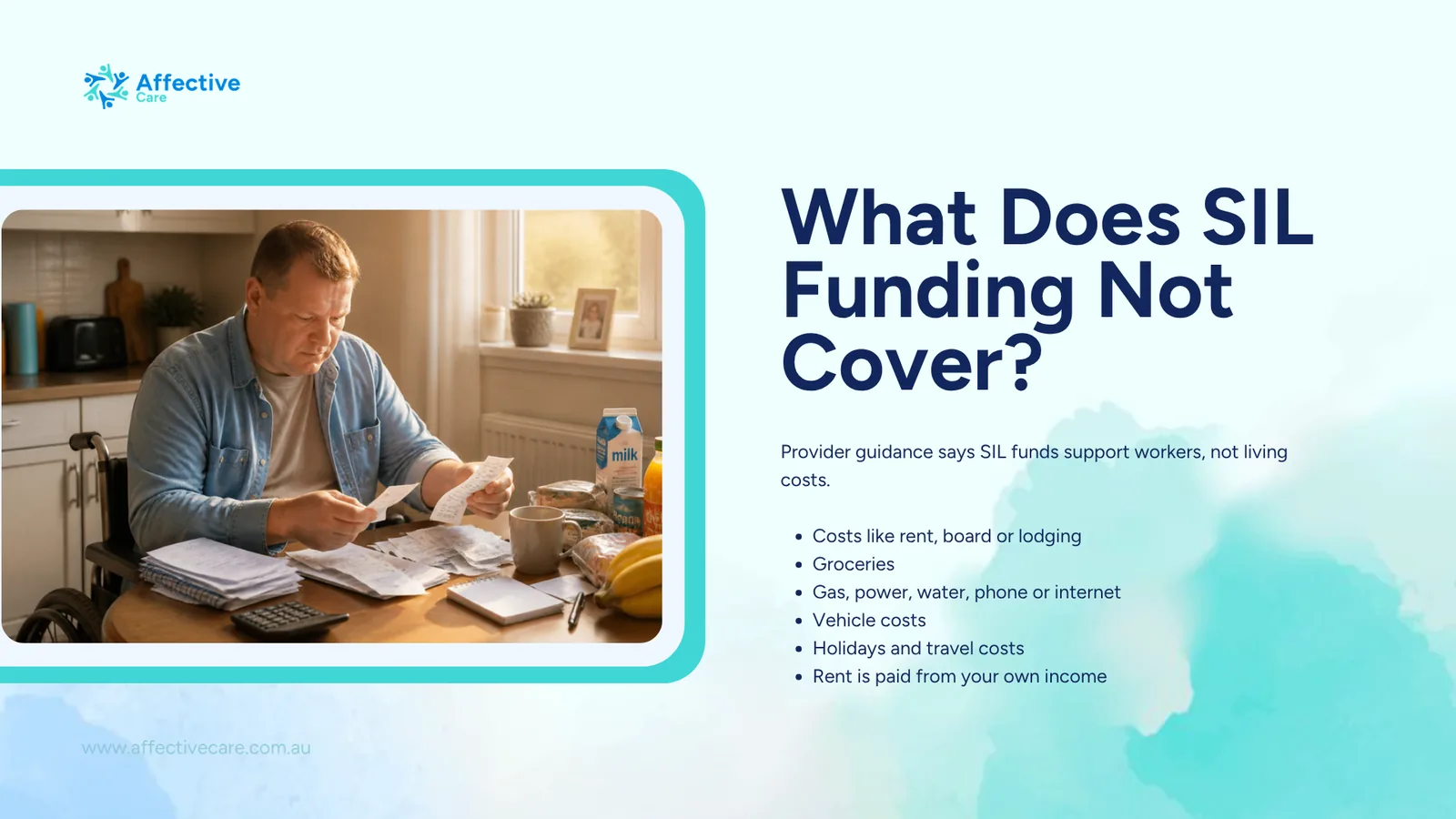
What does SIL funding not cover?
SIL funds support workers in the home. It does not pay for housing or everyday living costs.
According to NDIS provider guidance, SIL does not cover:
- Rent, board or lodging
- Groceries
- Utilities such as gas, electricity, water, phone or internet
- Vehicle costs
- Holiday and travel expenses
Participants usually pay rent and household costs from their own income, such as the Disability Support Pension. Find out more in our guide to NDIS SIL rent. If the participant needs a specially built home, that is SDA, which we compare in SIL vs SDA. For a flexible alternative, see NDIS SIL vs ILO.
This article is general information only. NDIS rules can change, so check the latest information on the NDIS website and speak with the participant's my NDIS contact, planner or support coordinator about their plan.
Frequently asked questions
Can a participant refer themselves for SIL?
Yes. Participants can contact a SIL provider directly to ask about vacancies and support. Family, a support coordinator or a guardian can help. If SIL is not yet in their NDIS plan, they will also need to ask the NDIA for home and living supports with evidence from a treating health professional.
Who completes the evidence for a SIL request?
The NDIS asks for recent evidence from a relevant treating health professional, such as an occupational therapist. It should describe daily support and housing needs, what the participant can and can't do because of their disability, and which other home and living options were explored.
How do you submit a home and living request to the NDIA?
The NDIS says you can submit evidence through the NDIS service hub, by mail to NDIA, GPO Box 700, Canberra ACT 2601, or in person to your my NDIS contact or local office. Let the NDIA know why you are providing the evidence.
Can you refer for SIL without SIL funding in the plan?
Yes. You can send a referral to check vacancies and talk about support, but the provider cannot start SIL until it is funded in the NDIS plan. The participant needs to ask the NDIA for home and living supports, and the NDIA decides what is reasonable and necessary.
Does a SIL provider need to be NDIS registered?
Yes. From 1 October 2026, the NDIS says SIL supports can only be delivered by providers that are registered or that applied to register before that date. Participants who organise or employ their own support workers do not need to change anything.
What should be included in a SIL referral form?
Include the participant's details and consent, NDIS number and plan details, daily and overnight support needs, risks and any behaviour support plan, housing preferences, key contacts, the move timeframe and recent reports, such as a functional capacity assessment from an occupational therapist.