

Autism Level 2 Explained (Support Needs, NDIS Funding & Examples)
Accessing NDIS funding for Autism Level 2 can feel overwhelming, especially in the early stages after a diagnosis.
Many families and support workers are unsure where to start, what documentation is needed, or how to create a plan that meets the participant’s unique needs. You are not alone.
NDIS funding for Autism Level 2 is designed to provide reasonable and necessary supports that build independence and improve daily quality of life.
This may include therapy services, personal care, communication tools, support with routines, and help with community or social participation.
With the 2026 updates in mind, this guide offers clear and compassionate advice to help you understand the process and make confident, informed decisions at every stage.

What is Autism Level 2?
Autism Level 2 is a diagnosis outlined in the Diagnostic and Statistical Manual of Mental Disorders (DSM-5).
It describes people living with autism who require substantial support to manage daily life due to more pronounced challenges in communication and behaviour.
Key Characteristics of Level 2 Autism
Autism Level 2 (also written as ASD Level 2) is defined in the DSM-5 as autism “requiring substantial support.” People with level 2 autism typically experience:
- Marked differences in social communication — conversations may be limited to strong interests, and initiating or responding to social contact is noticeably difficult even with supports in place
- Reduced or atypical nonverbal communication — eye contact, gesture and facial expression may be limited or unusual
- Inflexibility that affects daily life — routines and rituals are important, and changes cause visible distress; switching between activities is genuinely hard
- Restricted or repetitive behaviours obvious to others — stimming, strong sensory responses or intense focused interests that appear across settings
- Support needs that don’t disappear in familiar environments — unlike Level 1, difficulties remain substantial even in comfortable, well-known settings
Every autistic person is different — these characteristics describe a support level, not a personality. What matters for the NDIS is how they affect daily functioning, which is why functional assessment reports carry so much weight.
What does “Requiring Substantial Support” Mean?
People with Autism Level 2 often need ongoing, multidisciplinary support, including:
- Speech therapy
- Occupational therapy
- Behavioural or developmental interventions
These supports help individuals develop skills for communication, self-regulation, independence, and participation in community life.
The NDIS recognises Level 2 autism as a condition that typically meets the criteria for funded support.
If your child or someone you care for has this diagnosis, they may be eligible for a tailored NDIS plan to meet their individual needs.
Moreover, if you are comparing support levels, our guide to NDIS Funding for Autism Level 1 explains how NDIS supports may apply when a person needs some support but may not require the same level of assistance as Level 2.

Understanding Autism Level 2 and NDIS Eligibility
Autism Level 2, as defined by the DSM-5, refers to individuals who need substantial support in both social communication and behaviour.
For children, this may include difficulty coping with changes in routine, expressing needs, or joining group activities without help.
To access NDIS funding, a person must meet the general access criteria and provide appropriate documentation.
NDIS General Access Criteria
The key requirements to apply for the NDIS are:
- Age: Must be aged between 7 and 65
- Residency: Must be an Australian citizen, permanent resident, or hold a Protected Special Category visa
- Disability Evidence: Must show a permanent and significant disability
What Makes Level 2 Autism Eligible?
Level 2 autism is included in NDIS List of Disabilities A, which means the eligibility process is more streamlined.
People diagnosed with Level 2 or 3 autism usually do not need to provide additional evidence showing how their disability impacts daily life.
However, the NDIS may still request supporting information to help develop a personalised plan.
The documentation required includes:
- A DSM-5 diagnosis report confirming Autism Spectrum Disorder (ASD) Level 2
- A developmental or functional capacity assessment showing substantial support needs
- Reports from allied health professionals, such as psychologists, occupational therapists, or speech pathologists
Since the October 2024 NDIS reforms, eligibility is no longer based solely on diagnosis.
Instead, the NDIS also considers how autism affects everyday functioning in areas such as:
- Communication
- Learning
- Social participation
- Mobility and self-care
Why Autism Level 2 Often Qualifies for More Support
Autism is a spectrum with three levels of support needs:
- Level 1: Needs some support (e.g. occasional social coaching)
- Level 2: Needs substantial support (e.g. regular therapy, structured routines)
- Level 3: Needs very substantial support (e.g. daily, intensive assistance)
Level 2 sits in the middle and often involves structured support such as visual schedules, behavioural strategies, and regular therapy.
Because the impact on daily life is more noticeable, people with Level 2 autism may qualify for more funded supports under the NDIS.
Moreover, if you are still gathering evidence for NDIS planning, our article on autism diagnosis in Australia can help you understand assessments, referrals and the role of diagnostic reports.
Recent NDIS Changes Affecting Autism Funding (2026 to 2027)
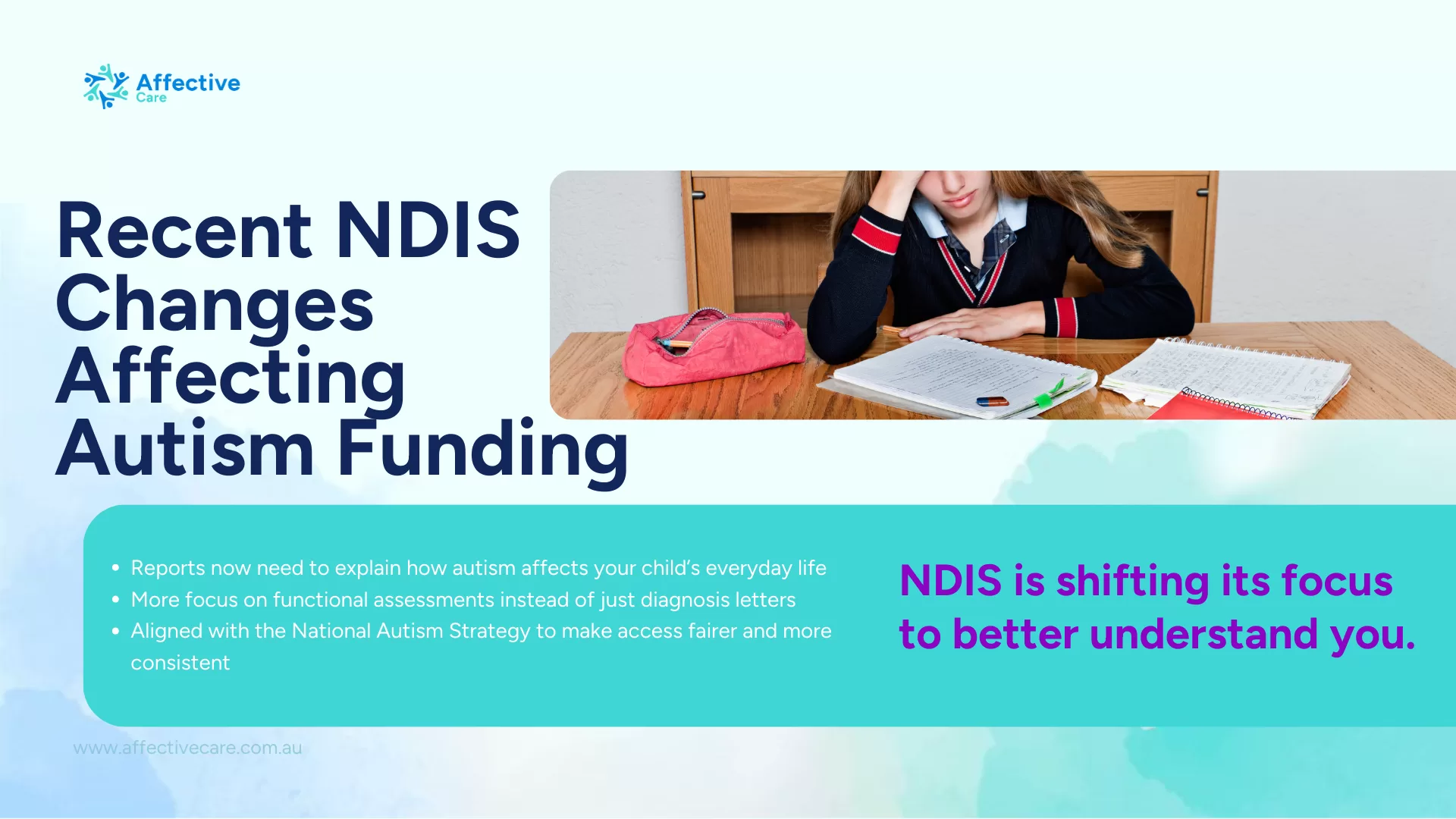
In late 2025, the NDIS shifted its focus to better understand what kind of support a person truly needs in their day-to-day life, rather than just relying on their diagnosis.
The changes include:
- Reports now need to explain how autism affects your child’s everyday life
- More focus on functional assessments instead of just diagnosis letters
- Aligned with the National Autism Strategy to make access fairer and more consistent
It’s a good idea to update reports before your plan is reviewed, especially if you’re hoping to keep or access early childhood supports.
For participants thinking about future independence, education or work goals, our guide to good jobs for autistic people explores strengths-based employment pathways, supportive work environments and how the right role can match a person’s communication style, interests and sensory needs.
New Changes to the NDIS for Autism in 2026
The latest changes to the NDIS for autism do not mean that every person with Autism Level 2 will lose access or funding. NDIS eligibility continues to consider permanent impairment, functional capacity and the person’s individual disability support needs.
New framework planning is beginning gradually from mid-2026. Participants will not all move to the new planning process at the same time, and current plans remain active until the NDIA formally replaces them.
The new approach is intended to make planning more consistent and focused on assessed support needs.
Thriving Kids is another important development. From 1 October 2026, children aged eight and under with developmental delay or autism and low-to-moderate support needs will begin accessing services through this new foundational-support program.
It will be introduced gradually and is expected to be fully rolled out by January 2028.
Children with substantial support needs may still meet NDIS eligibility requirements based on their individual circumstances.

NDIS Funding Amounts for Autism Level 2
Funding for NDIS Autism Level 2 varies depending on your child’s needs and the quality of supporting evidence. Approximately:
- Children under 7: Around $16,700 each year
- Typical range: Between $22,000 and $134,000
- Average allocation: Around $32,800 per year
NDIS funding is divided into three main support categories.
For people with Level 2 autism, these are often used in the following ways:
Core Supports
Covers day-to-day activities and supports, such as:
- Support workers for daily living or community outings
- Social skills groups and participation programs
- Consumables (e.g. continence aids, sensory items)
Capacity Building Supports
Support coordination can help you understand your plan, connect with suitable providers, and use your funding effectively, as explained in our detailed guide on Support Coordination Explained.
Supports that build independence and life skills, including:
- Occupational therapy for sensory regulation or daily routines
- Speech therapy for communication and language development
- Psychology for emotional regulation or behavioural support
Capital Supports
NDIS assistive technology Levels 1 and 2 generally refer to lower-risk and lower-cost assistive products that may help a participant communicate, follow routines, manage sensory needs or complete everyday activities.
Examples for a person with Autism Level 2 may include:
- Visual schedules and timers
- Basic communication aids
- Sensory-support products
- Reminder devices
- Simple daily-living equipment
Funding depends on the participant’s plan, disability-related need and whether the item represents value for money.
Higher-cost or higher-risk technology may require professional evidence or a formal assessment.

Step-by-Step NDIS Application Process
Here’s a simple step-by-step guide to help you through the process of applying for NDIS Funding for Autism Level 2.
Gather Your Paperwork
- A formal autism diagnosis that specifies Level 2 support needs
- Functional assessments from allied health professionals
- Reports from school or childcare, if relevant
Call the NDIA
- Phone 1800 800 110 to start your Access Request
- Ask for the Access Request Form and complete it
Submit Your Evidence
The NDIS autism diagnosis requirements may include evidence from an appropriately qualified health professional confirming the person’s diagnosis, impairment and likely permanence.
Supporting evidence may also include:
- A functional capacity assessment
- Speech pathology or Occupational Therapy reports
- Psychology or developmental reports
- School, workplace or community observations
- Evidence of communication, sensory and behavioural support needs
- Information about assistance required with self-care and daily routines
Prepare for Your Planning Meeting
- Think about your child’s strengths, challenges and priorities
- See social communication and behaviour for how to get ready
Create Your Plan with the NDIA
- Work together to choose the right supports
- Decide how you want your plan managed (Self-Managed, NDIA, or a Plan Manager)
Start Using Your Supports
- Choose trusted providers and start accessing your child’s funded services
Essential Documents for Your Application
Make sure you include:
- Autism diagnosis that states Level 2 and its specifications.
- Functional capacity assessments
- Reports from speech, occupational and behavioural therapists
- School or childcare reports (if available)
- Proof of your child’s identity and Australian residency
NDIS funding for Autism Level 2 may include therapy and behaviour support when these supports are linked to the participant’s goals and functional needs.
Our guide to positive behaviour therapy for autism explains how behaviour-focused support can help with communication, routines and emotional regulation.

Support Services Funded Under NDIS for Autism Level 2
NDIS support services for autism may include supports that are reasonable and necessary, related to the participant’s disability and connected to their goals.
Funding is individual and may include therapy, Positive Behaviour Support, communication assistance, support workers, community participation and assistive technology.
Examples of Core Supports NDIS autism funding may include:
- Help with personal care and daily routines
- Support to participate in community activities
- Assistance with meal preparation
- Support-worker assistance at home or in the community
- Disability-related consumables
The NDIS does not provide a standard package based only on Autism Level 2.
The funded supports and budget depend on the participant’s individual needs, informal supports, existing services and approved goals.
If your child has a Level 2 autism plan, you may receive funding for:
Therapies
- Speech therapy
- Occupational therapy
- Psychology
- Positive Behaviour support
Daily Support
- Help with routines
- Personal care, such as dressing or hygiene
- Meal preparation and support
Community Participation
- Group programs
- Social skills development
- Community outings with support workers
Educational Assistance
- Classroom aides
- Tutoring support
Assistive Equipment
- Communication tools
- Sensory regulation equipment
Support Coordination
- Speech therapy
- Occupational therapy
- Psychology
- Behaviour support
Moreover, if Positive Behaviour Support has been recommended, understanding how to access PBS funding through your NDIS plan can help you prepare for your planning or reassessment meeting.

Autism Level 2 Carer Payment Eligibility in Australia
An Autism Level 2 carer payment is not funded through the NDIS.
Carer Payment and Carer Allowance are Centrelink payments administered by Services Australia, while the NDIS funds disability-related supports for the person with autism.
An Autism Level 2 diagnosis does not automatically qualify a parent or family member for payment.
Services Australia considers the amount of daily care provided, the impact caring has on the carer’s ability to work, medical evidence, residency requirements and applicable income or assets tests.
NDIS Autism level 2 Carer Payment may apply when someone provides constant care, while Carer Allowance is a supplementary payment for ongoing daily care.
| Payment | Main purpose | Key eligibility factors | Income and assets rules |
|---|---|---|---|
| Carer Payment | Income support for someone providing constant care | The care provided takes up a significant part of the day and restricts full-time work | Income and assets tests apply to the carer and may also apply to the person receiving care |
| Carer Allowance | Supplementary payment for ongoing daily care | The person needs additional daily care because of disability or a medical condition | Income test applies, but there is no assets test |
| NDIS funding | Funds reasonable and necessary disability supports | Based on the participant’s disability, functional needs, goals and eligibility | Not a Centrelink income-support payment |
For children, Services Australia may compare their care needs with those of another child of the same age. Medical information from the child’s treating health professional may also be required.
Depending on individual circumstances, a carer may receive both Carer Payment and Carer Allowance.
Eligibility depends on the family’s individual circumstances. Families should check the latest Services Australia requirements before applying.

Creating Effective NDIS Goals for Autism Level 2
Designing a strong NDIS plan means setting meaningful goals and matching them with the right supports. This ensures each dollar is used with purpose.
A great goal is:
- Specific
- Measurable
- Achievable
- Relevant
- Time-based
Sample Goals for NDIS Plans for Autism Level 2
Setting strong NDIS goals can help guide the right supports and ensure that progress is meaningful and measurable.
Good goals focus on building functional skills and increasing independence and should be written in a way the NDIS can understand, clear, flexible, and focused on outcomes.
Below are examples of goal areas commonly included in NDIS plans for people with Level 2 autism.
Short-term (1 to 3 months)
- Build comfort and predictability in daily routines at home.
- Develop simple strategies to help manage transitions or changes.
- Begin exploring different ways to express needs, such as visuals, gestures, or simple phrases.
Medium-term (4 to 6 months)
- Increase independence with self-care activities like dressing or brushing teeth.
- Strengthen emotional awareness and begin using calming tools with support.
- Start engaging in supported play or group settings with guidance.
Long-term (7 to 12 months)
- Improve social skills and confidence in structured group environments.
- Communicate wants and needs more independently across home, community, and learning settings.
- Participate more actively in everyday activities like shopping, outings, or joining local programs.
When thinking about NDIS goals, it helps to focus on what matters most to the participant and those who support them.
This could include smoother daily routines, clearer ways to communicate, or feeling more included in the community.
Families and support workers can work together with therapists or support coordinators to turn these priorities into clear, achievable goals that meet NDIS requirements while still reflecting the participant’s unique needs and strengths.

Managing Your NDIS Plan and Budget
Choosing a Plan Management Option
You can decide how your NDIS funds are managed:
- Self-managed: You manage the budget and pay providers directly. This gives the most flexibility, including access to unregistered providers, but requires good record-keeping.
- Plan-managed: A plan manager takes care of invoices and budgeting on your behalf, making it easier to stay on top of your funding. This option offers a great balance of flexibility and support, allowing you to choose both registered and unregistered providers without handling the paperwork yourself.
- NDIA-managed: The NDIA takes care of payments directly, reducing the need for financial admin. This option is ideal for families who prefer a streamlined process and are happy to work with registered providers.
Finding the Right NDIS Providers for Autism Support
The right provider can make a big difference. Look for:
- NDIS registered providers with autism experience
- Positive feedback from other families
- Providers close to home, to reduce travel stress
- People who listen and work with you to meet your child’s needs
Positive Behaviour Support for autism is an evidence-based approach that explores the reasons behind behaviours and builds practical strategies to improve communication, emotional regulation, and everyday functioning.
Looking for the right NDIS provider? Start by searching for services with proven experience in autism support and positive feedback from other families.
It’s also helpful to reach out to local parent networks or community groups for personal recommendations you can trust.
Budgeting and Monitoring Tips
- Use a tracking tool: Keep a spreadsheet or use NDIS budgeting apps to monitor how much funding is left in each category.
- Review spending monthly: This helps prevent under or overspending and ensures funds are used consistently throughout the year.
- Request a plan review if needed: If your child’s needs change or you’re running out of funding early, you can request an early plan reassessment by submitting updated professional reports.
- Keep receipts and service agreements: Always store records of your spending and agreements with providers. This helps with transparency and future audits.
Managing your NDIS budget well gives you more control and ensures your child receives the right supports at the right time.
If you’re unsure where to begin, a support coordinator can help you track usage, plan future goals, and connect with the right services.
Plan Example: Level 2 Autism NDIS Plan
Let’s meet Sam, a 12-year-old participant living with Level 2 autism. Sam’s main challenges include communication delays, emotional regulation, and difficulties in unstructured environments like schoolyards.
Sam’s NDIS Goals
- Initiate peer conversations independently
- Reduce meltdowns during transitions
- Learn to follow a visual routine at home
Sam’s Supports and Budget
| Category | Support Type | Amount |
| Core | Support worker (social activities) | $12,000 |
| Capacity Building | Psychology and OT | $14,000 |
| Capacity Building | Speech therapy | $5,500 |
| Capital | Visual scheduling device | $1,300 |
Total: $32,800
Sam’s plan reflects practical goals, tailored supports, and a realistic budget based on daily needs.
This NDIS Autism Level 2 plan example for a child is illustrative only.
Actual funding depends on the child’s communication, daily living, sensory, behavioural and community participation needs rather than diagnosis alone.
NDIS Autism Level 2 Plan Example for an Adult
Alex is a 29-year-old adult with ASD Level 2 who needs substantial support with communication, planning daily routines, attending appointments and participating safely in the community.
Alex’s goals include improving independent living skills, building confidence using public transport and developing strategies for emotional regulation.
| Category | Example support | Illustrative purpose |
|---|---|---|
| Core Supports | Support-worker assistance | Daily routines and community access |
| Capacity Building | Occupational Therapy | Independent living and sensory strategies |
| Capacity Building | Psychology | Emotional regulation and coping skills |
| Capacity Building | Speech Pathology | Functional and social communication |
| Capital Supports | Communication or reminder technology | Support planning and everyday tasks |
This NDIS Autism Level 2 plan example for an adult is illustrative only. The NDIA does not use a standard funding amount for every adult with Level 2 autism.

Common Challenges and Solutions
While managing your NDIS plan can be empowering, it’s normal to face a few bumps along the way.
Below are some typical challenges families encounter, along with practical ways to work through them:
- Delays in application or approvals: Stay in regular contact with the NDIA and follow up politely. Submitting any requested documents promptly can help speed up the process.
- Funding doesn’t seem to cover your child’s needs: You can request a plan review by providing updated reports or assessments from your allied health team that show why additional supports are required.
- Difficulty finding available providers: Start looking early, ask about waitlists, and consider using telehealth options to increase flexibility and access.
- Feeling overwhelmed by the system: A support coordinator can guide you through each part of the process, help manage paperwork and connect you with suitable services.
Managing your NDIS budget well gives you more control and ensures your child receives the right supports at the right time.
If you’re unsure where to begin, a support coordinator can help you track usage, plan future goals, and connect with the right services.

Maximising Your NDIS Support and Next Steps
With a few gentle steps, you can keep your child’s NDIS plan moving in the right direction and make sure it continues to support their unique journey:
- Connect regularly with your Local Area Coordinator or Early Childhood Partner to stay informed about community programs and upcoming plan reviews.
- Check in on your child’s goals every few months to monitor progress and ensure supports remain aligned with their needs.
- Consider engaging a support coordinator to help manage your plan, reduce stress, and coordinate the services that best match your child’s goals.